
Confessor
George Lavrov
Archimandrite of Danilov Monastery
Archimandrite of Danilov Monastery in Moscow, born into a peasant family, who died at Nizhny Novgorod in 1932.
- Feast
- June 21old style July 4
- Reposed
- 193220th century
- Place
- Nizhny Novgorod
- Order
- Confessors
Life
Venerable Confessor George Lavrov (in the world Gerasim Dmitrievich Lavrov) was archimandrite of the Danilov Monastery in Moscow, born into a peasant family in the village of Kasimovka, in the Yelets district of the Oryol province, in 1868, according to our biography, or 1867, according to our table, and fallen asleep at Nizhny Novgorod on 4 July 1932. He was a confessor and elder, honoured in the time of persecution. He was numbered among the new martyrs and confessors of Russia in August 2000. He is remembered on 21 June (4 July on the new calendar).
Childhood and Optina
He was born on 28 February 1868, into a peasant family. His father was named Dmitry Abramovich, his mother Fekla Arkhipovna, and his elder brothers were Alexei and Peter. On a journey to holy places, at the Trinity-Sergius Lavra, the young Gerasim received a revelation at the tomb of Saint Sergius. At Optina he was received as a boy by the Elder Ambrose and blessed for the monastic way.
In 1890 he came to Optina Hermitage, was eight years a novice and on 10 October 1898 was enrolled among the brethren of the monastery. On 23 June 1899 he was tonsured a monk with the name George, in honour of the Great Martyr George, and on 24 October 1902 he was ordained hierodeacon.
Abbot
On 2 January 1914 he was moved to the Saint George monastery in Meshchovsk and appointed abbot by decree of the Holy Synod of 31 October 1915. On 1 January 1916 he was ordained hieromonk by Bishop George of Kaluga and Borovsk, in the hierarchal church of the Exaltation of the Cross in Kaluga. On 2 November 1917 he received a pectoral cross for his labours as abbot. At Meshchovsk he met Nikifor Terentievich Malanichev, the blessed Nikiforushka, who foretold much of what would happen in George's life.
Persecution
On 9 December 1918 the Meshchovsk monastery was seized by the Bolsheviks. Hieromonk George was arrested, on 13 March 1919 he was moved to the provincial prison at Kaluga, and on 4 June 1919 he was sentenced to be shot. The execution did not take place at the appointed time and was postponed, and on 5 November 1919 the sentence was changed to five years of imprisonment. In the Taganka prison, M. A. Zhizhilenko made him a prison orderly, and the hieromonk was able to care spiritually for the prisoners. There Metropolitan Cyril (Smirnov) of Kazan and Archbishop Theodore (Pozdeevsky), abbot of the Danilov monastery, noticed Hieromonk George for his spiritual experience, and Metropolitan Cyril blessed him for the labour of spiritual guidance.
Danilov
In 1922 he was released early and settled at the Danilov monastery in Moscow. Archbishop Theodore gave him a cell, and he was raised to archimandrite. Confession was his main obedience. Monastics and laity were guided by him, and to the young he gave special care. To those who asked whether they could serve in the Red Army, he explained that the army serves the Motherland, and that a Christian not only has the duty to serve her but also to die for her if needed, and he called such a death the death of a righteous man.
Arrested again and exiled
On 19 May 1928 he was arrested and held in the Butyrka prison, in a solitary cell, on the charge of using religious prejudices for anti-Soviet ends. On 15 June 1928 the Special Council of the OGPU Collegium sentenced him to three years of exile at Uralsk, in Kazakhstan. His spiritual daughters, Tatiana Borisovna Melnikova and Elena Vladimirovna Chicherina, accompanied him. In exile he was diagnosed with cancer of the larynx. Requests for treatment in Moscow went unanswered, for the authorities did not give permission. In the spring of 1932 he was released, without the right to live in Moscow, and settled in a suburb of Nizhny Novgorod. A few days before his death his spiritual children came from Moscow and took leave of their father.
On 4 July 1932, after receiving the Holy Mysteries of Christ, Archimandrite George passed to the Lord. Archimandrite Sergius (Voskresensky), with the clergy, served the funeral of the elder. He was buried at Nizhny Novgorod, in the Bugrovskoe cemetery.
Canonization
In August 2000, at the Jubilee Council of Bishops of the Russian Orthodox Church, Archimandrite George (Lavrov) was numbered among the new martyrs and confessors of Russia, for veneration throughout the Church. On 28 September (11 October) 2000 the relics of the venerable confessor were found, moved afterwards to Moscow, where they rest in the church of the Holy Fathers of the Seven Ecumenical Councils of the Danilov monastery.
Commemorated the same day June 21
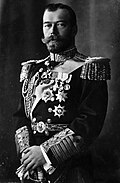 Nicholas IIPassion-Bearer · Emperor of RussiaJun 21
 Julian of TarsusMartyrJun 21
 Luarsab II of KartliMartyr · King of KartliJun 21
 Anastasia of SerbiaVenerable · Wife of Stefan NemanjaJun 21
 Archil of KakhetiMartyr · Georgian prince of KakhetiJun 21
 Julian of OrtaSaint · DeaconJun 21
 Fyodor IvanovichRight-Believing · Prince of StarodubJun 21
- Alexander IvanovskyHieromartyr · PriestJun 21
- Vasil DimitrovSaintJun 21
- Abraham of PinegaVenerable · Venerable of PinegaJun 21
- AgofredusVenerableJun 21
- Alexis SkvortsovHieromartyrJun 21