Hieromartyr
Alexander Smirnov
A Russian priest who died a martyr for his faith in Christ during the communist persecution.
- Feast
- November 1old style November 14
- Reposed
- 191820th century
- Order
- Martyrs
Life
Saint Hieromartyr Alexander Smirnov (1875 to 1918) was a priest in the village of Vyshegorod, in the Vereya district, Moscow province, and was killed by a punitive detachment of Latvians on 14 November 1918, together with the priest Theodore Lebedev. They are commemorated on 14 November, on 7 February with the synaxis of the new martyrs, on 8 October with the finding of the relics, and on 5 September with the saints of Moscow.
Father Alexander Smirnov and Father Theodore Lebedev were priests of two churches half a verst apart in the village of Vyshegorod, in the Vereya district. They lived and served side by side and suffered together. Alexander was born in 1875 into the family of the honorary citizen Basil Smirnov. In 1898 he finished the Moscow seminary and entered as teacher of religion at the church school in the village of Kruglino. In 1903 he was ordained priest at the church of the Exaltation of the Cross in Vyshegorod, built in 1754 by Count Alexander Ivanovich Shuvalov. He was loved by the parishioners for simplicity of manner and mercy; when anyone needed help, he gave it simply and without doubt. He kept the church order strictly, without abbreviations, and for that reason was much respected by the Old Believers, numerous in the district. He had a beautiful and strong voice, so that the church authorities several times wished to move him to a cathedral in Moscow.
In 1918 the Soviet authorities issued the decree on the separation of the Church from the state. The local authorities demanded of Father Alexander too that he stop walking about the village in a cassock and cut his hair. After counsel with his elder, he said that he would never submit to this lawless order and would not renounce the appearance of an Orthodox pastor. In the Vereya district a militiaman, Muzherov, was notorious for cruelty, whom the peasants, finding no justice from the local authorities, killed. In revenge a punitive detachment of fifty Latvian horsemen was sent from Moscow, who were to terrify the peasants by the cruelty of the executions; but they intended to kill also all the priests they could seize, and only denial of God could have saved their lives.
Father Theodore
Theodore Lebedev was the son of the priest Nicholas Lebedev and was ordained priest at the church of the Deposition of the Robe of the Mother of God in Vyshegorod, a wooden church of 1791, with two altars, dedicated to the Deposition of the Robe and to the holy Unmercenaries Cosmas and Damian. The priest and the psalm-reader had no houses, and lived in rented peasant huts, damp and cold. Until 1917 his brother, the priest Alexander Lebedev, had served at this church, who had six children and no place to live, and moved to another parish, and in his place Father Theodore came, who had no children.
Martyrdom
On 14 November 1918 the patronal feast was kept in the village, the commemoration of Saints Cosmas and Damian, and clergy and laity from the neighbourhood had come. After the Liturgy, prayer service and common meal the priests returned to their parishes. In the evening an armed detachment of Latvians rode into the village of Novaya Borisovka; on the way they cut down a church watchman. The peasants suspected of killing the militiaman were put to death without trial. Learning that Father Alexander was at home, the punishers sent a nurse to him to summon him to the village soviet; he answered simply: "Why should I go? I am guilty of nothing before the authorities." His wife and eldest daughter, Elena, had gone on their own to see what was happening; at home remained the priest and his four-year-old son, Alexander. The Latvians entered the house and demanded that he get ready to go to the commander; he answered that he could not leave a small boy alone, but they pressed with anger and threats. After prayer, Father put on a new warm cassock and went out. It was a quiet autumn evening, the first snow had recently fallen, and the whiteness shone in the darkness. The punishers, holding lit candles in their hands, led him toward the village soviet like a living dead man, but did not dare to mock him, sensing the blessed power of the priest. On the way they met Father Theodore, brought under guard, and they were told that they would be put to death. Father Alexander said: "Then we must pray." They knelt and prayed. Receiving assurance from above that his soul would be counted worthy of the martyr's crown, and even about the fate of the killers, he said: "I am ready. Do with me now what you will, but know that you will all perish soon." He had scarcely spoken the words when the executioner split his head with a sabre, from the right temple to the crown. The priest fell on his knees and raised his hand for the sign of the cross. A second blow followed, but the priest was alive. They shot him in the head and the neck and pierced his belly twice with a bayonet, then once crosswise. But the priest, by God's power, was still alive. Fear seized the tormentors; one came close and gave the last blow, to the heart. Then they fell on Father Theodore, who was rebuking them for cruelty; they struck him in the face and, when he fell, an executioner shot at him twice: one bullet in the ear, the other in the shoulder. Father Theodore was still alive, but they did not finish him, so deep an impression had the killing of the innocent priests made, that the killers hurried to leave the place. To the peasants in the village they said: "What a priest this Alexander was; we have never seen such a one," and told them what he had foretold. His words were fulfilled exactly: a few days later the whole punitive detachment was destroyed near the village of Balabanovo.
Burial and relics
The next morning, a local man heard groans at the entrance to Novaya Borisovka and found Father Theodore lying in the snow; not far away was the body of Father Alexander. When the peasants came, Father Theodore had died. On the third day the funeral of the holy martyrs took place, with many people. The authorities, fearing the people, hurried to declare the priests innocent and sent to the funeral representatives who walked with a white flag as a sign of their innocence. On the ninth day after his death, Father Alexander appeared in a dream to his daughter Elena and told her to gather the small bones of the heads left at the place of the killing. The relics were found in 1985; both priests were glorified by the Bishops' Council of the year 2000. On 20 September 2003, with the blessing of Patriarch Alexy II, the relics of the holy martyrs Alexander and Theodore were placed in the church of the Kazan Icon in the city of Reutov, where on 24 February 2001 a side chapel of the synaxis of the new martyrs and confessors of Russia had been consecrated.
Commemorated the same day November 1
 Benignus of DijonHieromartyr · Patron of DijonNov 1
 MaturinusSaint · Exorcist and missionaryNov 1
 Vigor of BayeuxSaint · Bishop of BayeuxNov 1
 David of EuboeaVenerable · Abbot in EuboeaNov 1
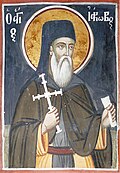 Jacob of KastoriaNew MartyrNov 1
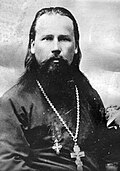 Theodore LebedevHieromartyr · ArchpriestNov 1
- Helen of SinopeNew MartyrNov 1
- Caesarius of DamascusMartyrNov 1
- Abbo of TroyesSaint · Bishop of TroyesNov 1
- Adalbert of TegernseeVenerableNov 1
- Adrian of DamascusMartyrNov 1
 AelhaearnConfessorNov 1