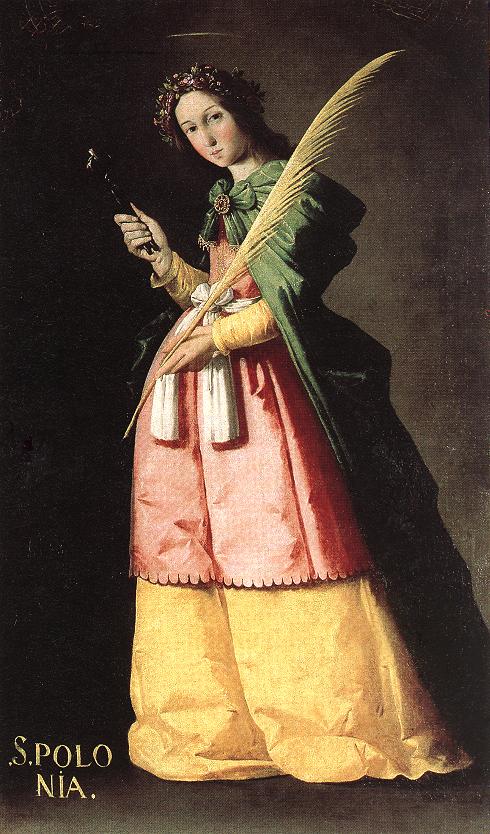
Martyr
Apollonia of Alexandria
of Alexandria
Maiden of Alexandria tortured and killed by a pagan mob before the persecution of Decius, around 249.
- Feast
- February 9old style February 22
- Reposed
- 2493rd century
- Place
- Alexandria
- Order
- Martyrs
Life
Saint Apollonia the Martyr was an elderly virgin of Alexandria who suffered martyrdom during an uprising of the pagan mob against the Christians, before the persecution of Decius, around 249. She is regarded as the patroness of those who suffer from toothache, because her teeth were broken. The Orthodox Church commemorates her on 9 February.
The uprising in Alexandria
In the last years of the emperor Philip the Arab, around 248, the pagan mob of Alexandria rose against the Christians, and the authorities did not defend them. Bishop Dionysius of Alexandria (247-265) tells these events in a letter to Fabius, bishop of Antioch, preserved in fragments by Eusebius of Caesarea in his Church History. Saint Dionysius says that the persecution began at Alexandria a year before it began elsewhere, stirred up by a "prophet and poet of evil." He mentions first the old man Metras, beaten with clubs and pierced with sharp reeds, then the woman Quinta, dragged over stones. The houses of many Christians were plundered.
Martyrdom
Then he writes of Apollonia, an elderly virgin held in high esteem, whom the mob seized. They struck her face until all her teeth were broken. They built a pyre outside the city and threatened to burn her alive if she would not speak words of blasphemy. Apollonia asked to be let go for a moment, and then threw herself into the fire and died in the flames. Dionysius gives her no blame: for him she is a martyr like the others, and the Church has received her so, with a double crown of martyrdom and virginity. Later tradition calls her a deaconess.
Veneration
Veneration of Apollonia spread in the West, where in the Middle Ages she was invoked against toothache, and today she is regarded as patroness of dentists. Her story was enlarged in the Golden Legend, and a later text wrongly made her a Christian virgin of Rome. In art she is shown with a pair of pincers holding a tooth. Several churches in Europe claim parts of her relics, among them Rome and Antwerp, but these claims come from Western medieval tradition. She is one of the patrons of the city of Catania. The Church remembers her on 9 February.
Commemorated the same day February 9
 Pancras of TaorminaHieromartyr · Bishop of TaorminaFeb 9
 Teilo of LlandaffSaint · Bishop of LlandaffFeb 9
 Peter of DamascusVenerable · Author in the PhilokaliaFeb 9
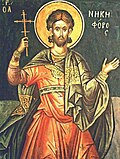 Nicephorus of AntiochMartyrFeb 9
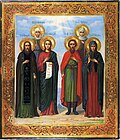 Gennady of VazheozeroVenerable · Hermit of VazheozeroFeb 9
- AthenodorusSaintFeb 9
- Nikephoros of VazheozeroVenerable · Founder of the Vazheozero hermitageFeb 9
- Alexander of VologdaRighteous · Priest of VologdaFeb 9
- Nikephoros of BorovskVenerable · HegumenFeb 9
- Aemilianus and BrachioHoly VenerablesFeb 9
- Aemilianus of PionsatSaintFeb 9
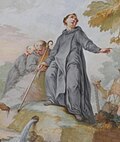 AltoVenerableFeb 9