Venerable
Apollonios of the Egyptian Thebaid
Hermit of the Egyptian Thebaid.
- Feast
- May 31old style June 13
- Reposed
- 3954th century
- Place
- Egyptian Thebaid
- Order
- Venerables
Life
Venerable Apollonios of the Egyptian Thebaid (Apollo) was the son of pious parents, Aisi and Amani. According to one version he had an elder brother, a monk, who died before his birth and appeared to him in a dream; according to other sources his parents were childless before his birth. He reposed around the year 395, at a very advanced age.
Retreat to the desert
At fifteen he retired to the inner desert of the Thebaid with his kinsman Abib. After fourteen years of solitary life he was granted a divine revelation. A voice said: "Apollonios, by your hands I will destroy the wisdom of the wise men of Egypt and remove their knowledge, which is not true knowledge. You will also overthrow those reputed to be the wise men of Babel (the Babylon of Egypt) and all their service to devils. Now go quickly to the desert, to the region near the habitations of men. There you shall beget for me a holy people, who will be exalted by their good works."
The monastery
Soon he became known for the multitude of miracles he performed. He was head of many monks and directed them profitably by his spiritual instructions. During the reign of Julian the Apostate, God commanded him to go to the near desert. In a spot close to Hermopolis he founded a monastery in which about five hundred monks would gather. The brethren partook of the Holy Mysteries in the morning and in the afternoon studied the Holy Scriptures. Only after sunset did they eat a little food, and then some went off into the desert alone, "in the darkness of the night, devoting themselves to the contemplation of God and His Holy Word," while others remained in the monastery. The monks ate once a day. Apollonios condemned those who adhered to harsher forms of austerity, who did not cut their hair and wore chains, regarding such things as a sign of vanity. He himself was a strict faster: he ate boiled food on Sundays and on other days only wild plants.
Once a monk was forcibly recruited for military service and locked in prison for refusing to serve. Apollonios and some other monks visited him in prison, comforted him and advised him to remain steadfast. Hearing of this, the centurion became very angry and locked Apollonios and his companions in prison, posting many guards. At midnight an angel of the Lord opened the doors, and the monks left unhindered.
The pagans nearby
Near the monastery were ten pagan settlements. Apollonios was once a witness to a pagan ritual: priests of the idols, accompanied by a crowd, carried an idol around the villages, "raging like bacchants." By the saint's prayers the idolaters were halted and could not continue. Learning the cause, many followed Apollonios, and the idol was destroyed. After this miracle many pagans became Christians, and some remained in the monastery. Soon there were almost no pagans left in the vicinity. When there was strife between two villages near the monastery, Apollonios managed to convert a robber, perhaps the instigator of the quarrel, to Christ, and peace was restored. On another occasion he prevented bloodshed between the Christian and pagan villages, punishing the leader of the pagans with a terrible death. When famine struck the Thebaid, Apollonios supplied the inhabitants with food.
Much of the information about Apollonios was recorded in chapter 9 of the History of the Monks of Egypt, whose author visited him shortly before his repose, with his companions, and lived in his monastery for about a week. Sozomen also gives details in Book VI, chapter 29 of his Church History, citing Timothy, the primate of the Church of Alexandria, as the source for the saint's personal discipline and his "divine and marvelous deeds." The Coptic Church has preserved an ancient testimony, and an Arabic Jacobite synaxarion calls Apollonios "an equal of the angels"; the Copts commemorate him on 22 October. Apollonios is commemorated on 31 May (new style; 13 June on the old calendar).
Commemorated the same day May 31
 PetronillaMartyrMay 31
- Eustathius of ConstantinopleSaint · Patriarch of ConstantinopleMay 31
 Cantius, Cantianus and CantianillaHoly Martyrs · Martyrs of RomeMay 31
 Hermias of ComanaMartyrMay 31
 Philosopher OrnatskyHieromartyr · Archpriest of PetrogradMay 31
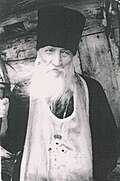 John of OlenevkaConfessor · Priest in the Penza regionMay 31
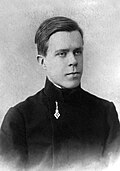 Nikolay OrnatskyNew Martyr · Military doctorMay 31
- CrescentianMartyrMay 31
- Boris OrnatskyMartyr · Artillery captainMay 31
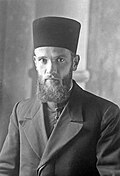 Damian of GrahovoHieromartyr · Parish priestMay 31
- CandianellaMartyrMay 31
- CandianusMartyrMay 31