Saint
Eustathius of Constantinople
Patriarch of Constantinople
Ecumenical Patriarch from 1019 to 1025, raised to the throne by Emperor Basil II.
Life
Saint Eustathius was Ecumenical Patriarch of Constantinople from July 1019 or 1020 to November or December 1025, raised to the throne by Emperor Basil II. He fell asleep around the time of the emperor's death. The Church remembers him on 31 May.
Before he was patriarch he was protopresbyter of the churches of the Great Imperial Palace, first among the priests of the palace church. Nothing is known of his origin and education, and some later chronicles present him as an elderly man. He succeeded Patriarch Sergius II. On 12 September 1019 he lifted, with the synod, the ban on serving imposed by his predecessor on the priest Nicholas Hagiomochites. Another decision, of 23 June 1023, concerned a marriage canonically forbidden because of affinity. In May 1024 he confirmed the obligations of the monastery of Saint Epiphanius at Kerasous toward the metropolitan of Alania, while protecting the monastery from additional demands. He is said to have introduced the custom of closing the sanctuary with a curtain, so that the Holy Mystery would be shielded from the irreverent gaze of those who came in by chance.
Negotiations with the papacy
In 1024 he took part in the Byzantines' efforts to find an accommodation with Rome over the widening gap between the Eastern and Western Churches, a gap that would lead to the Schism of 1054. The papacy then claimed dominion over the whole Christian world, not just primacy, which offended Constantinople, the spiritual guide of much of the East, with Russians, Bulgarians and Serbs. According to Rodulfus Glaber, a Burgundian monk and historian, the emperor and patriarch sent an embassy to Pope John XIX, proposing that the Church of Constantinople be "ecumenical in its own sphere" (in suo orbe), as the Roman Church is in the world (in universo). It is assumed this was Eustathius's effort to keep control over the churches of southern Italy. The offer was rejected, but the pope accepted the keeping of the Byzantine rite in southern Italy, in exchange for founding Latin-rite churches in Constantinople. The event is not confirmed by another Byzantine account, and its exact content is debated. The historian Jonathan Harris showed, in 2014, that real negotiations might lie behind it, linked to the emperor's policy in Sicily.
The end
Eustathius died at the end of 1025, a few days before Basil II. His successor was Alexius the Stoudite.
Commemorated the same day May 31
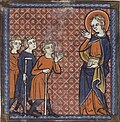 PetronillaMartyrMay 31
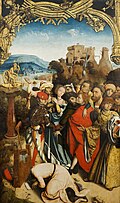 Cantius, Cantianus and CantianillaHoly Martyrs · Martyrs of RomeMay 31
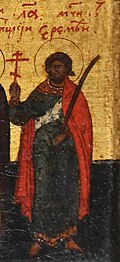 Hermias of ComanaMartyrMay 31
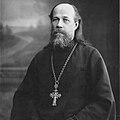 Philosopher OrnatskyHieromartyr · Archpriest of PetrogradMay 31
 John of OlenevkaConfessor · Priest in the Penza regionMay 31
 Nikolay OrnatskyNew Martyr · Military doctorMay 31
- CrescentianMartyrMay 31
- Boris OrnatskyMartyr · Artillery captainMay 31
 Damian of GrahovoHieromartyr · Parish priestMay 31
- Apollonios of the Egyptian ThebaidVenerableMay 31
- CandianellaMartyrMay 31
- CandianusMartyrMay 31