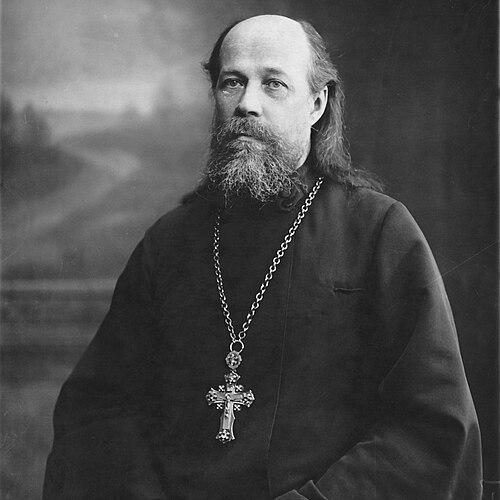
Hieromartyr
Philosopher Ornatsky
Archpriest of Petrograd
Archpriest of the Russian Church, born in 1860, who died a martyr in Petrograd in 1918; canonized in 2000.
Life
Saint Philosoph Ornatsky (1860-1918) the hieromartyr was an archpriest of the Russian Orthodox Church at Petrograd, rector of the Kazan Cathedral, preacher, organizer of schools, almshouses and churches. He was shot in October 1918 with his sons Nikolai and Boris in the wave of the Red Terror. He was numbered among the saints by the Jubilee Council in August 2000, together with the two sons. Our calendar gives his commemoration on 31 May.
Family and studies
He was born on 2 June 1860 in the churchyard hamlet of Novaya Yerga, Novgorod governorate, in the family of the priest Nikolai Platonovich Ornatsky. His brother John, a priest, married a niece of Archpriest John of Kronstadt, was sentenced to five years' imprisonment and died in a camp the next year. His brother-in-law was the hieromartyr Pyotr Skipetrov, and a relative the hieromartyr Bishop Pimen (Belolikov). The surname Ornatsky was "handed on" to his grandfather Platon Iosifovich by Bishop Ambrose of Penza and Saratov (in the world Andrei Ornatsky, 1778-1827), then retired at Kirillov, his great-great-uncle. He graduated from the Kirillov theological school, the Saint Petersburg theological seminary (1881) and the Saint Petersburg Theological Academy, with the degree of candidate of theology (1885). His wife, Elena Nikolaevna, née Zaozerskaya, was the daughter of the former subdeacon of Metropolitan Isidore.
Priest and organizer
From 28 July 1885 he was priest of the church at the orphanage of Prince Oldenburg in Saint Petersburg. From 1892 he was rector of the church of Saint Andrew of Crete at the Expedition for the Preparation of State Papers, at which, with his help, a technical school was opened, giving secondary and professional education; he was its head and at the same time teacher of religion. From 1893 to 1917 he was also a member of the Saint Petersburg City Duma for the clergy and a member of its commissions on popular education and charity. For twenty-six years he was chairman of the Saint Petersburg Society for the Spread of Religious and Moral Enlightenment. He took part in setting up in the city night shelters, orphanages and almshouses; through his efforts twelve churches were built in Petersburg and its surroundings, among them the church of the Resurrection of Christ at the Warsaw station (the largest of them, beside which, with Father Philosoph's participation, the Alexander Nevsky Temperance Society was founded), the churches of Saints Peter and Paul at Lesnoy, of Saint Sergius of Radonezh on Novosivkovskaya street, of Saint Seraphim of Sarov beyond the Narva Gate, the church of the Forerunner on the Vyborg side, the Gerasim church at Kupchino and the church of Saints Isidore and Yuri. As chairman of the church building committees he disposed of huge sums, but lived very modestly and gave private lessons to feed his family.
From 1895 he held talks for workers at a bleaching factory. On 8 June 1898, with his help, the Orthodox Estonian brotherhood in the name of the hieromartyr Isidore of Yuriev was founded. He also organized a Christian fellowship of students. He was editor and censor of several Petersburg spiritual journals. A remarkable preacher, during the revolution of 1905 he called the workers of the Narva district, a place of special activity of revolutionary propagandists, to loyalty to Emperor Nicholas II. From 10 October 1913 he was rector of the Kazan Cathedral in Petersburg. In the First World War he gave his apartment as a hospital for wounded soldiers and moved with his family into a small room; he several times went to the war zones accompanying transports of things and food. He received the rank of archpriest (1898), the mitre (1908), the Order of Saint Vladimir fourth class (1906) and third (1914). In 1917, with Bishop Benjamin (Kazansky), he was one of the founders of the "Union of Church Unity" and spoke against the abolition of the teaching of religion in schools.
Arrest and martyrdom
In January 1918 he organized the defence of the Alexander Nevsky Lavra, which the Bolsheviks intended to "requisition", with the initiative of processions to it from all the churches of the capital, which took place on Sunday 21 January: from the Lavra a united procession with Metropolitan Benjamin at its head went to the Kazan Cathedral, from where the processions dispersed to their churches. In the Lavra, Archpriest Pyotr Skipetrov was killed by the Bolsheviks. At the funeral of his relative he could not take part, because the day before he had left with the Petrograd delegation for Moscow to report to Patriarch Tikhon on the January events. Metropolitan Benjamin forbade speeches over the coffin, calling to weep and pray.
He was arrested in August 1918, together with his sons Nikolai (1886-1918, a military doctor) and Boris (1887-1918, a staff captain of artillery). The parishioners demanded the priest's release; in answer the authorities took him with his sons from Petrograd to Kronstadt. Archpriest Philosoph Ornatsky and his sons were shot in the Red Terror, supposedly around 30 October 1918. On the way he read aloud the service of absolution over the condemned. According to some data the shooting took place at Kronstadt, according to others not far from the Gulf of Finland between Ligovo and Oranienbaum. The bodies were, it seems, thrown into the gulf. In August 2000 the archpriest and his sons Nikolai and Boris were numbered among the saints venerated in the whole Church. On 27 October 2018, in Saint Petersburg, the international conference "Life as a Feat. The Hieromartyr Philosoph Ornatsky and His Age" was held, and on 20 May 2021 a travelling multimedia exhibition of the same name opened. Among his writings are "On Holiday Rest for Trading People" (1889), "The Russian Orthodox Mission and the Orthodox Church in Japan" (1889), "On the Upbringing of Children" (1890), "On Labour and Holiday Rest in the Life of Working People", "Sarov Teachings" (1903) and the volume "Works and Days: Sermons, Speeches, Articles" (2018).
Commemorated the same day May 31
 PetronillaMartyrMay 31
- Eustathius of ConstantinopleSaint · Patriarch of ConstantinopleMay 31
 Cantius, Cantianus and CantianillaHoly Martyrs · Martyrs of RomeMay 31
 Hermias of ComanaMartyrMay 31
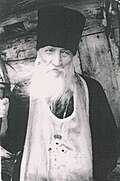 John of OlenevkaConfessor · Priest in the Penza regionMay 31
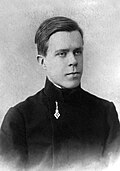 Nikolay OrnatskyNew Martyr · Military doctorMay 31
- CrescentianMartyrMay 31
- Boris OrnatskyMartyr · Artillery captainMay 31
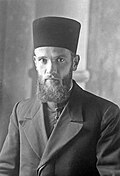 Damian of GrahovoHieromartyr · Parish priestMay 31
- Apollonios of the Egyptian ThebaidVenerableMay 31
- CandianellaMartyrMay 31
- CandianusMartyrMay 31