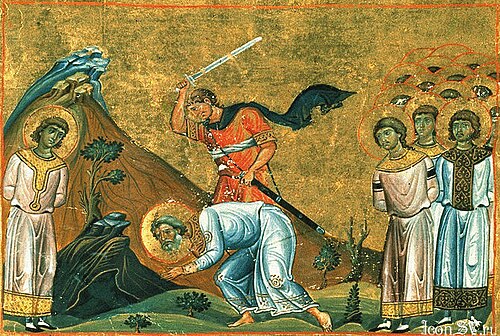
Martyr
Arethas of Najran
Leader of the Christians of Najran
Leader of the Christian community of Najran in Arabia, killed in the persecution there around 523.
- Feast
- October 24old style November 6
- Reposed
- 5236th century
- Place
- Najran
- Order
- Martyrs
Life
The Holy Martyr Arethas (Aretas, al-Harith ibn Kaab) was the leader of the Christian community of Najran, in southern Arabia, at the beginning of the sixth century, killed in the persecution begun by King Dhu Nuwas, in 523. His feast is on 24 October (in the Ethiopian Church, 26 Hedar).
Najran and the persecution
He was the secular ruler of the city and its surroundings, inheriting the office from his father, and came to head the Christian community after the death of Bishop Paul, without himself being a cleric. At that time Dhu Nuwas (Yusuf As'ar Yath'ar), who had become a Jew, became king of Himyar (around 518) and went to war with Axum, the Christian kingdom in present-day Ethiopia. According to the medieval sources that refer to John of Ephesus's account, he said he would persecute the Christians in his kingdom, because those in other kingdoms persecuted his brethren in faith. The letter of Bishop Simeon of Beth Arsham, of 524, speaks of the persecution of Dhu Nuwas (there called Dimnon) at Najran (now al-Ukhdud, in Saudi Arabia); the Quran also mentions it (sura 85:4-8). Dhu Nuwas attacked the Axumite garrison at Zafar, took the city and burned its churches, then moved to Najran. When he demanded the city's militia, the soldiers turned back on the way, learning that all the Christians in Himyar were being killed. The king took this for rebellion and besieged the city.
According to the Serbian account, the citizens shut the gates and resisted long; Dhu Nuwas promised to do them no harm if they opened the gates, let him take the tribute and leave. The Christians believed and opened; then a terrible massacre took place. After the siege and fall of the city, in the autumn of 523, Arethas stood before the king. He refused to renounce the faith and boldly rebuked the Jewish ruler, strengthening the courage of his fellow citizens. By the king's order Arethas and the other citizens of Najran were burned (in another version, beheaded), in a dried-up riverbed or in a ditch dug for the purpose. Some speak of 4,299 martyrs (in other sources, over 4,000; according to some, nearly 20,000, which may be an exaggeration). Priests were among them. Hearing of it, the emperor Justin I asked the king of Axum, Elesbaas, to march against Dhu Nuwas; he defeated and killed him (siege of Najran, 523-525). Arethas is believed to be the ancestor of the tribe of Banu al-Harith.
Sources and veneration
He is known from the Martyrdom of Arethas, preserved in two recensions: the earlier and more authentic, found by Michel Le Quien, no later than the seventh century, and that revised by Symeon Metaphrastes, of the tenth century; the Ge'ez and Arabic versions were translated into French in 2006, the Greek in 2007. Among the Russians his veneration is attested early: he is in the calendar of the Ostromir Gospel (1056-1057), and the service with the canon of Theophanes is in a Menaion of 1096; in 1073 part of his relics was brought from Constantinople to the Kyiv Caves Lavra.
Commemorated the same day October 24
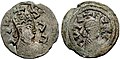 Elesbaan of AksumRight-Believing · King of AksumOct 24
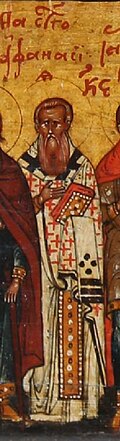 Athanasius I of ConstantinopleSaint · Patriarch of ConstantinopleOct 24
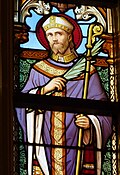 Eberigisil of CologneSaint · Bishop of CologneOct 24
 Zosima VerkhovskyVenerable · Schemamonk and spiritual writerOct 24
 Alexei PorfiryevHieromartyr · ArchpriestOct 24
 Laurentius KnyazevHieromartyr · Bishop of BalakhnaOct 24
 Alexis NeidgardtMartyr · Member of the State CouncilOct 24
- Syncletica of NajranMartyrOct 24
- AcaciusHieromartyr · the PresbyterOct 24
- Arefa MitreninConfessorOct 24
- CadfarchVenerableOct 24
- CaetiSaintOct 24