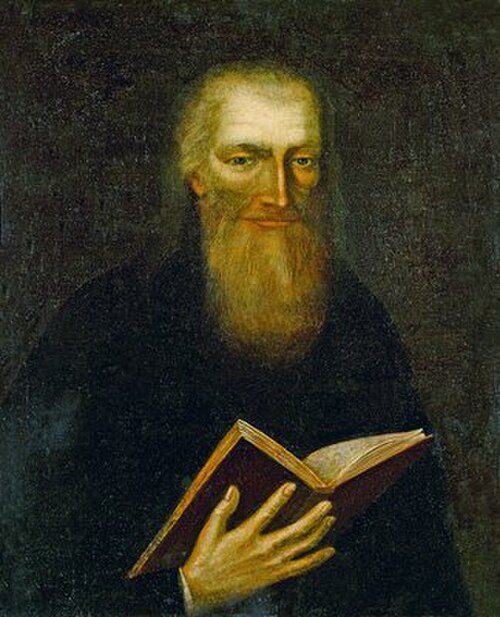
Venerable
Zosima Verkhovsky
Schemamonk and spiritual writer
Schemamonk and spiritual writer, founder of two convents, born in 1768 and died in 1833.
- Feast
- October 24old style November 6
- Reposed
- 183319th century
- Place
- Moscow
- Order
- Venerables
Life
Saint Zosima Verkhovsky, the Venerable (also called Zosima of Tobolsk) was a schemamonk and spiritual writer, founder of two convents: the Saint Nicholas convent at Turinsk and the Holy Trinity-Hodegetria hermitage near Moscow. Born on 24 March 1768 into a noble family in the Smolensk governorate, he fell asleep on 24 October 1833 at Zosimova Hermitage. He was numbered among the saints venerated throughout the Russian Church at the Council of Bishops on 8 October 2004.
Youth and calling
Born Zacharias Vasilyevich (Bogdanovich) Verkhovsky in the village of Bulovitsy in the Smolensk governorate, the son of a colonel, Bogdan Verkhovsky, and Anna Ivanovna, of the Manevsky family, he was educated at home and, like all his brothers, entered the army; on 1 January 1784 he was posted to the Preobrazhensky regiment. His father died on 3 April 1784, and he inherited two villages. After two years his mother died too. At that time he met the hermits of the forests of Roslavl, under the guidance of Elder Adrian Blinsky of the Ploshchansk monastery. In 1788 he retired as a sub-lieutenant, sold the estate to his brother-in-law and resolved to devote himself to the monastic life.
He went first to the forests of Roslavl, to Adrian's community, but Adrian had left it and moved to the Konevets monastery, so on the advice of the monk Basiliscus Zacharias went there. The elder received him as a novice (he baked prosphora and was sacristan), and after testing tonsured him a monk with the name Zosima, in honour of Venerable Zosima of Solovki. Around 1792 Venerable Basiliscus came to Konevets at Adrian's invitation and became Zacharias's friend. Adrian built for his disciples two cells three versts from the monastery, where Zosima and Basiliscus spent five days, and on Saturday they came to the all-night vigil and on Sunday after the liturgy returned to their cells.
The journey to Siberia
In 1799 Adrian decided to receive the great schema and went to the Simonov monastery in Moscow. At parting he blessed Zosima and Basiliscus to live in the wilderness of Siberia, but they were drawn more to Athos; three times they tried to go to the Holy Mountain, and each time failed. They went to Kyiv, where with the metropolitan's leave they lived two months in the Caves Lavra, then to Crimea and later to Mozdok. Because of raids by mountain tribes they were taken under escort to Taganrog, from where they moved to Astrakhan, and there they decided to fulfil Adrian's blessing: they bought a horse and set off for Siberia. In autumn 1800 they reached Tobolsk, where Archbishop Barlaam Petrov allowed them to settle in his diocese. After a year of wandering through the Siberian districts, in 1802 they settled in the forests of the Kuznetsk district. In the taiga, forty versts from the nearest village, they dug a dugout; a peasant from the village brought them food. The next spring they wished to leave the taiga but lost their way and spent about two weeks in the forest.
Having left the taiga, they settled in the Kuznetsk district, by the river Srednyaya Ters, fifty versts from the town, where peasants built them two cells. The monks made a garden and did handwork. Once a year a priest visited them with the Holy Gifts. A small community of ascetics gathered around them, among them the disciple of Saint Basiliscus, the righteous Peter of Tomsk, whose life Venerable Zosima wrote.
Founder of monasteries
In 1822, through the labour of Zosima and Basiliscus, the Saint Nicholas convent at Turinsk was founded in the Tobolsk governorate; with the blessing of the bishop of Tobolsk, Zosima went to Petersburg to Metropolitan Philaret for permission. For the community he wrote a special rule, based on the communal rules of Saint Basil the Great, and at the beginning of 1823 went again to Petersburg to present it to the Synod for approval. After misunderstandings (some of the nuns accused him of schism, squandering and oppressing the sisters), by decision of the Synod of 24 January 1825 he was dismissed from the office of trustee and from all influence on the convent and moved to Moscow. With the blessing of Metropolitan Philaret he became a monk of the Chudov monastery.
In 1826, near Moscow, in the Vereya district, on the estate of the councillor Maria Bakhmeteva, with Philaret's blessing, Zosima founded a community of nuns in honour of the Smolensk icon of the Mother of God, the Hodegetria. The first residents were nuns of the Saint Nicholas convent at Turinsk, who in the conflict had remained faithful to their spiritual father and followed him to Moscow. He lived in this hermitage until death, caring for the convent and seeking benefactors for its upkeep. Desiring solitude, he made himself in a forest, three versts from the hermitage, a small cell, in which he lived five days a week, as at Konevets under Fr Adrian; on Saturday he came to matins in the hermitage, and after the Sunday liturgy returned to his forest cell. There he received the great schema from two elders of the Oryol governorate. He fell asleep on 24 October (5 November) 1833, on the feast of the icon of the Mother of God "Joy of All Who Sorrow", and was buried beside the convent chapel.
Writings and veneration
His writings are few and, apart from the "Testamentary Letters", survive in nineteenth-century copies. All are written only in Church Slavonic: the "Testamentary Letters" (a work of a moral character, the only surviving autograph, once at Zosimova Hermitage, now divided between state archives), a letter to Fr Dositheus, the lives of Venerable Basiliscus and of the righteous Peter of Tomsk, the "Instruction on Obedience" and an exposition of the seventy-five "actions" of the Jesus Prayer after Elder Basiliscus.
His veneration began soon after his death: with the blessing of Metropolitan Philaret the Holy Trinity church was built over his grave. In the early 1880s his relics were found; Ambrose of Optina wrote in 1886 that the coffin of the founder of the monastery was in water, since the place was damp, that they cut a coffin from a single stone and a new wooden one, and that at the transfer the elder's body was seen whole, except the feet, which had decayed. In the 1930s the church was closed. After its return, on 25 December 1999, the tomb was examined, but no relics were found in the white-stone sarcophagus; their place is unknown. With the blessing of Patriarch Alexy II he was glorified as a locally venerated saint of the Moscow diocese on 11 October 1999, and the glorification service, postponed, took place on 23 July 2000, with two icons and his life printed. On 8 October 2004 the Council of Bishops numbered him among the saints venerated throughout the Church. For the local glorification a troparion and kontakion were composed, and on 24 March 2005 the diocesan liturgical commission approved a polyeleos service written by Schemanun Ignatia. On 28 December 2018 the Holy Synod approved the text of an akathist, published separately in 2021. Venerable Zosima is commemorated on 24 October, on 20 September in the Synaxis of the Saints of Bryansk, on the Sunday before 26 August in the Synaxis of the Saints of Moscow, and on the last Sunday of August in the Synaxis of the Saints of Kemerovo.
Commemorated the same day October 24
 Elesbaan of AksumRight-Believing · King of AksumOct 24
 Athanasius I of ConstantinopleSaint · Patriarch of ConstantinopleOct 24
 Arethas of NajranMartyr · Leader of the Christians of NajranOct 24
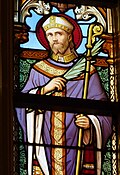 Eberigisil of CologneSaint · Bishop of CologneOct 24
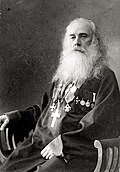 Alexei PorfiryevHieromartyr · ArchpriestOct 24
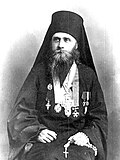 Laurentius KnyazevHieromartyr · Bishop of BalakhnaOct 24
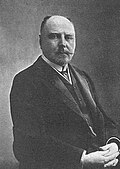 Alexis NeidgardtMartyr · Member of the State CouncilOct 24
- Syncletica of NajranMartyrOct 24
- AcaciusHieromartyr · the PresbyterOct 24
- Arefa MitreninConfessorOct 24
- CadfarchVenerableOct 24
- CaetiSaintOct 24