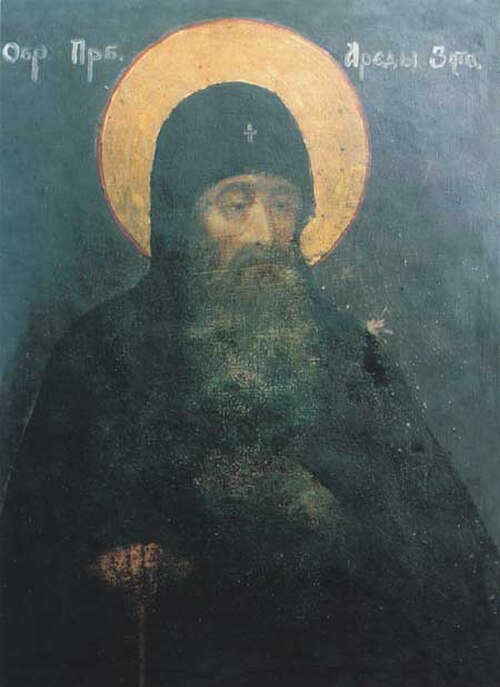
Venerable
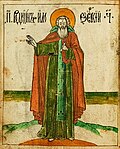
Arethas the Recluse
Recluse of the Kiev Caves
Monk and recluse of the Kiev Caves Monastery in the later 12th century.
- Feast
- September 28old style October 11
- Reposed
- 119512th century
- Place
- Kyiv
- Order
- Venerables
Life
Venerable Arethas (Arefa) the Recluse was a monk of the Kiev Caves Monastery in the second half of the twelfth century. His story, preserved in the Paterikon, shows how a monk who loved money turned back to God through repentance and ended in seclusion. He is commemorated on 24 October and, in the synaxis of the venerable fathers of the Near Caves, on 28 September, by the old calendar.
Life
The Kiev Caves Paterikon devotes a separate narrative to him, attributed to Saint Simon, Bishop of Vladimir. According to it, Arethas was from Polotsk and, although he had been tonsured a monk, he was very rich and miserly and gave nothing to the poor. One night thieves stole all his wealth, and in his grief he nearly took his own life. He began searching for the culprits, laid heavy accusations on the innocent and tormented many without cause. The brethren begged him to stop the search and urged him to prayer, but he heeded neither them nor their counsel. After a few days he fell gravely ill and, even on the threshold of death, did not cease to murmur.
But the Lord, who wishes all people to be saved, gave him a vision. The sick man, lying as if dead, suddenly cried out aloud before them all: Lord, have mercy, Lord, forgive, Lord, I have sinned, it is all Yours, and I do not complain. Then he told what he had seen: angels and a host of devils were disputing over the stolen wealth. The devils said that, since he had not glorified God but had murmured, he belonged to them. The angels told him: O wretched man, if you had thanked God for the loss of your property, it would have been counted to you as alms, as to Job. He who gives alms does a great thing before God, but he does it of his own will. He who bears with thanks what is taken from him by force turns the devil's temptation into good, for the devil wants to draw man into blasphemy, while the thankful man gives everything to God, and this is more than almsgiving. At these words he cried out what the brethren had heard, and the devils vanished, and the angels rejoiced and counted the lost silver as alms.
The change and the end
Arethas recovered, and from then on he changed in mind and character, so that all marvelled. He whom no one could restrain from blasphemy never ceased from then on to praise God. He wept fervently over his other sins too, lived in poverty and obedience, laboured in prayer and in ceaseless fasting and withdrew into seclusion. The akathist to all the venerable fathers of the Caves mentions him. He fell asleep in the second half of the twelfth century, according to some sources around 1190 or 1195, and was buried in the Near (Anthony's) Caves of the Lavra, where his relics, according to the Paterikon, bear witness by incorruption to his forgiveness and blessedness. He is said to lie near the relics of Onuphrius. A separate day of commemoration for him is first recorded in the Paterikon printed in 1661, with the blessing of Archimandrite Innocent Gisel.
Commemorated the same day September 28
 Wenceslaus of BohemiaPassion-Bearer · Duke of BohemiaSep 28
 Hilarion of KievSaint · Metropolitan of KievSep 28
 Faustus of RiezSaint · Bishop of RiezSep 28
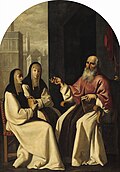 EustochiumVenerable · Consecrated virginSep 28
 Chariton the ConfessorVenerable · Monk in the Judean desertSep 28
 Salonius of GenevaSaint · Bishop of GenevaSep 28
 Nicholas SvyatoshaVenerable · Prince and monk of the Caves LavraSep 28
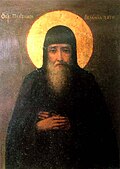 Abraham the Recluse of the Kiev CavesVenerable · Recluse of the Kiev Caves LavraSep 28
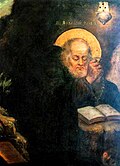 Athanasius the RecluseVenerable · Recluse of the Kiev CavesSep 28
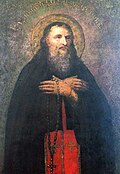 Damian the HealerVenerable · Priest and healer of the CavesSep 28
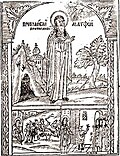 Matthew the ClairvoyantVenerable · Monk of the Kiev CavesSep 28
 Herodion of Ilo-OzeroVenerableSep 28