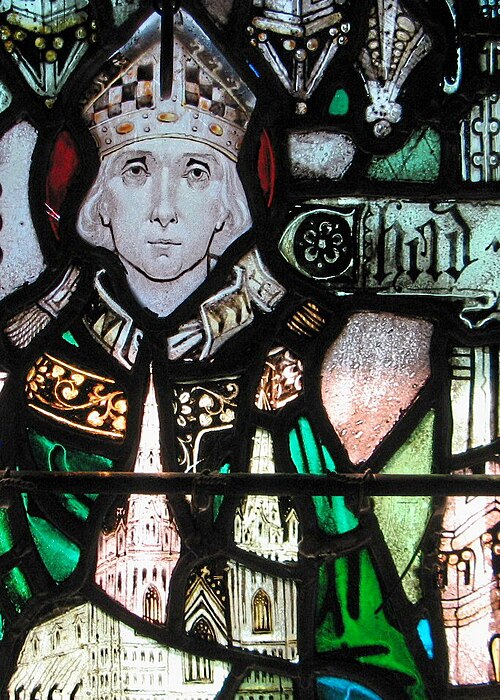
Saint
Chad of Lichfield
Bishop of Lichfield
Anglo-Saxon monk and abbot, bishop of the Northumbrians and then of the Mercians, who died in 672.
Life
Saint Chad (Ceadda) of Lichfield was an Anglo-Saxon monk and abbot of the seventh century, bishop of the Northumbrians and then of the Mercians and the people of Lindsey. He died on 2 March 672. Most of what is known about him is kept in the Ecclesiastical History of the English People by Bede. Together with his brother, Saint Cedd, and with Saint Wilfrid, he is counted among those who brought Christianity to Mercia.
Family and formation
Chad was one of four brothers, all servants of the Church: Cedd, Cynibil, Chad and Caelin. He probably came from the Northumbrian nobility, although the name Chad is Celtic British and means battle. Bede says that he was a pupil of Saint Aidan at the monastery of Lindisfarne, founded by Aidan, a monk of Iona, at the invitation of King Oswald. He is believed to have completed his formation in Ireland, at Rath Melsigi, together with Egbert of Ripon, in a strict monasticism of much fasting and prayer and diligent reading of Scripture. Egbert later recalled that they lived together strictly, in prayer, in continence and in meditation on Holy Scripture.
Abbot of Lastingham
King Oswiu appointed his nephew Ethelwald to govern the land of Deira, and Chad's brother Caelin was his chaplain. At Caelin's initiative Ethelwald gave land for a monastery at Lastingham in Yorkshire. Cedd, missionary bishop to the East Saxons, used it as a base. In 664, when Cedd died of the plague, Chad succeeded him as abbot.
Episcopate
In 663 or 664 King Oswiu proposed to Chad the see of York, because Wilfrid, the bishop-elect, had gone to France and was slow to return. When Wilfrid returned, in 666, he found his see occupied. In 669 Archbishop Theodore of Canterbury persuaded Chad to withdraw, and Chad left the see with humility. In the same year King Wulfhere of Mercia asked for a bishop. Theodore, moved by Chad's humility, since he would travel only on foot, after the example of the Saviour, sent him to the king. The diocese of Lichfield was then founded. Chad preached and worked as a missionary throughout the kingdom.
Death and veneration
He died on 2 March 672 and was buried in the church of St Mary, which was later to form part of Lichfield cathedral. Bede writes that he was at once honoured as a saint, and his relics were moved to a new shrine. The Anglican cathedral at Lichfield bears his name, together with that of Saint Mary, and a chapel preserves his skull, which was not lost at the Reformation. Part of his relics, about eight bones, are in the Catholic cathedral at Birmingham. At Lichfield there is also Chad's Well, where, according to tradition, the saint baptized converts. He is commemorated on 2 March.
Commemorated the same day March 2
 Pelagius I of RomeSaint · Bishop of RomeMar 2
 Agathon of EgyptVenerable · Desert FatherMar 2
 Non of WalesSaint · Mother of Saint DavidMar 2
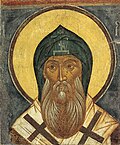 Arsenius of TverSaint · Bishop of TverMar 2
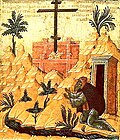 Sabbatius of TverVenerable · Founder of Sabbatius HermitageMar 2
- Theodotus of CyreniaSaint · Bishop of CyreniaMar 2
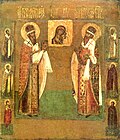 Savva of TverVenerable · Abbot of the Presentation MonasteryMar 2
- Barsanuphius of TverVenerable · Abbot near TverMar 2
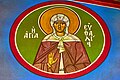 EuthaliaMartyrMar 2
- Joachim of IthacaVenerable · Monk of VatopediMar 2
- Nicholas PlanasRighteous · Priest of AthensMar 2
- Quintus of PhrygiaConfessor · The Wonderworker of PhrygiaMar 2