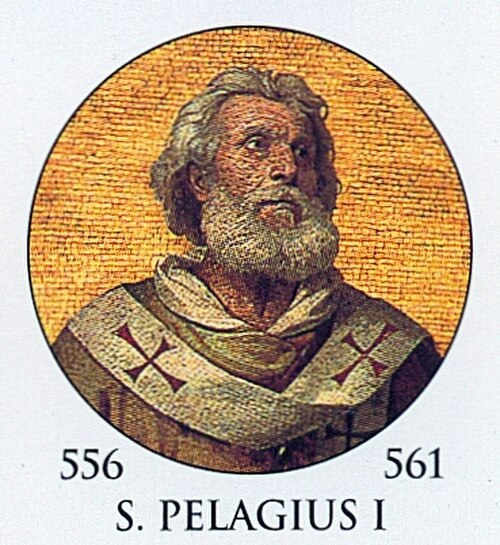
Saint
Pelagius I of Rome
Bishop of Rome
Bishop of Rome from 556 to 561, a former envoy to Constantinople, chosen with Justinian's support.
Life
Pelagius I of Rome was bishop of Rome from 16 April 556 until his death in March 561. He shepherded the Church in a Rome impoverished by the war between the Byzantines and the Goths, and he worked much to help the needy and to set Church life in order. I did not find a commemoration of him in the Orthodox calendars examined.
He came from a noble Roman family; his father, John, was vicar of one of the two civil districts of Italy. He accompanied Pope Agapetus I to Constantinople and stayed there as envoy of the Church of Rome to Emperor Justinian, gaining great influence with him. He returned to Rome in 543.
When Pope Vigilius was summoned to Constantinople in 545, Pelagius stayed in Rome as his representative. The Gothic king Totila then began blockading the city; Pelagius spent his own fortune for the famine-stricken and tried to bring the king to a truce. He failed, but after the capture of Rome in December 546 he obtained that the lives of the people be spared. Totila sent him to Constantinople to speak of peace with Justinian, but the emperor sent him back.
Vigilius died in 555, and Pelagius was elected as the emperor's candidate, which the Western clergy and people received with distrust. In the dispute over the Three Chapters he had opposed their condemnation before his election, but afterward adopted the position of Justinian. His ministry was clouded by rumours that he had had a hand in the death of Vigilius and by suspicion of leaning to Monophysitism. To dispel them he worked to maintain public order in Rome, to correct abuses among the clergy, and to support the poor and the victims of famine and war. At the request of the garrison commander at Civitavecchia he sent chaplains to the army.
He is credited with building the church of the Holy Apostles in Rome, raised to celebrate the victory of Narses over the Ostrogoths. He died on 3 March 561 (some sources say 4 March) and was buried in Old Saint Peter's.
Commemorated the same day March 2
 Chad of LichfieldSaint · Bishop of LichfieldMar 2
 Agathon of EgyptVenerable · Desert FatherMar 2
 Non of WalesSaint · Mother of Saint DavidMar 2
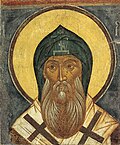 Arsenius of TverSaint · Bishop of TverMar 2
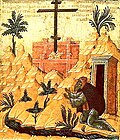 Sabbatius of TverVenerable · Founder of Sabbatius HermitageMar 2
- Theodotus of CyreniaSaint · Bishop of CyreniaMar 2
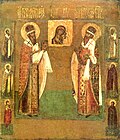 Savva of TverVenerable · Abbot of the Presentation MonasteryMar 2
- Barsanuphius of TverVenerable · Abbot near TverMar 2
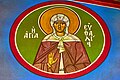 EuthaliaMartyrMar 2
- Joachim of IthacaVenerable · Monk of VatopediMar 2
- Nicholas PlanasRighteous · Priest of AthensMar 2
- Quintus of PhrygiaConfessor · The Wonderworker of PhrygiaMar 2