Venerable
Joachim of Ithaca
Monk of Vatopedi
Greek monk born in 1786 on the island of Ithaca, who lived as an ascetic at Vatopedi and died in 1868.
- Feast
- March 2old style March 15
- Reposed
- 186819th century
- Place
- Ithaca
- Order
- Venerables
Life
Saint Joachim of Ithaca (Joachim of Vatopedi, Papoulakis, "little father") the venerable was born in 1786 on the island of Ithaca, in Greece, with the name John, and reposed on 2 March 1868 (according to one source, in 1867). He was a monk at Vatopedi, a preacher in the Peloponnese, a defender of the persecuted in the war of independence and, in the end, spiritual father of Ithaca, patron of the island together with Saint Raphael of Therme. He was formally canonized in March 1998, though he had long been venerated as a saint. He is commemorated on 2 March, and the translation of his relics on 23 May.
Youth
He was born in the village of Polyktoria (according to the Greek source, in the village of Kalyvia, opposite Stavros) on Ithaca, where his father, Angelos Patrikios, was a captain. His mother, Agni, was a devout Christian, who taught him the daily prayers and the importance of regular church attendance, but she died while he was still a child. His father married again a woman who detested Joachim and was irritated by the hours he spent every day in church and by his vigils. She made his life bitter and finally persuaded Angelos to send him away to learn a trade. From then on Joachim made his living helping sailors on ships. He travelled across the Mediterranean but was interested only in the churches and shrines of the ports he visited, and read religious books with great zeal, above all the Holy Gospel.
Vatopedi and the Peloponnese
At seventeen he found himself on a ship bound for Athos. On arriving, he visited and spoke with the abbot of the Vatopedi monastery. The abbot was impressed by the young sailor and, after long talks, agreed that he might stay as a novice. The captain of the ship, Giorgis, did not want to lose a crew member, but Joachim assured him that this was what he had always wanted, and the captain agreed to speak to Joachim's father. The hard-working and ascetic young novice adapted easily to monastic life and was soon made steward of the monastery. From John he was named Joachim. He stayed in the monastery about twenty years and became a model of virtue and spiritual progress among the monks. Later he was sent to preach around Greece and was regarded as one of the most notable elders of Vatopedi. His mission, particularly in the Peloponnese, is compared to the work of Saint Cosmas of Aetolia in northern Greece. Known as "Papoulakis", that is, "little father", he restored monasteries, helped organize schools and distributed Bibles.
In the war of independence
During the Greek War of Independence he devoted himself to raising funds for the refugees and travelled around the liberated areas to preach and lift the spirits of the beleaguered Greeks. He had earlier founded a monastery at Tripotamos in Elis, which at the outbreak of fighting became a supply centre for the free lands and so a target of Turkish raids. Joachim repeatedly led the defence of the monastery, but in 1825 it was sacked by Ibrahim Pasha, the leader of the Egyptian troops. Those who resisted were massacred or sent as slaves to Egypt, and Joachim and a well-known eldress were taken prisoner. Ibrahim publicly invited both to become Muslims, thinking that they had led the resistance and that their apostasy would dishearten the Greek fighters. Because they refused, they were beaten and subjected to various tortures. The elderly nun died under torture, but Joachim exhausted the guards, bearing the most ingenious torments they could devise. The news reached Ibrahim, who decided that the monk was a holy man and should be freed.
Undaunted, Joachim gave himself no rest from the sufferings of the Ottoman prisons. He returned to the mountain strongholds and hiding places where countless women, children and old people were hidden. He urged them to keep the faith and prophesied better times. He helped many families escape to the Ionian Islands and found shelter for them with Christian families there. He worked as a captain, ferrying refugees from Greece to the islands and supplies back to the fighters. One night he managed to rescue a group of women and children the very moment the Turks had surrounded them, and all escaped unharmed, miraculously. With Father John Makris of Pylaros, Kephalonia, he brought many old people and children to the Ionian Islands.
Hermit and father of Ithaca
The Ionian Islands were then held by the British. Sensing the danger of the alteration of Orthodoxy, he did not return to his monastery but came to his homeland, Ithaca. After the Greeks had secured the Peloponnese, Joachim retired to Ithaca, unwell and sick of the horrors of war. For five years he lived as a hermit in the forest of Afentikos Loggos. Then he began to receive visitors, give advice and organize relief for the poor. Once he was summoned to the British governor of the island and accused of sedition. The authorities first threatened to expel him, but the governor was impressed and gave him permission to preach wherever he pleased. Joachim then moved to the monastery of Saint Nicholas Mavronas, from where he toured the island and spoke to the crowds that gathered around him. For about forty years, according to the Greek source, he went untiringly to every village and every house, teaching the word of God, helping the needy, building churches and guiding the inhabitants in matters of faith. He founded many churches and a monastery dedicated to Saint Barbara at Stavros.
Many miracles are attributed to him. He is believed to have healed the sick and accurately foretold future events. In his Life it is recorded that his prayers ended epidemics and kept away locusts, that he predicted storms at sea and warned the seafarers when to stay in the port of Vathy. On one occasion he took the place of a poor farmer reduced to servitude for a debt to a doctor who had treated him; though he had to return to Vatopedi, Joachim served the doctor's family until they relented and escorted him back to Mount Athos. He died peacefully while staying at Vathy. No money was found in his possession, only an old cassock and a note requesting that he be buried at Saint Barbara Monastery. Great crowds followed his relics around the island and then to the monastery, and the abbot of Saint Barbara postponed the funeral in an attempt to disperse them. It is claimed that many miracles took place then and at the saint's tomb ever since.
Commemorated the same day March 2
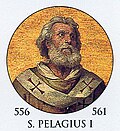 Pelagius I of RomeSaint · Bishop of RomeMar 2
 Chad of LichfieldSaint · Bishop of LichfieldMar 2
 Agathon of EgyptVenerable · Desert FatherMar 2
 Non of WalesSaint · Mother of Saint DavidMar 2
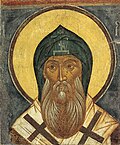 Arsenius of TverSaint · Bishop of TverMar 2
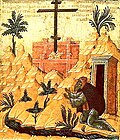 Sabbatius of TverVenerable · Founder of Sabbatius HermitageMar 2
- Theodotus of CyreniaSaint · Bishop of CyreniaMar 2
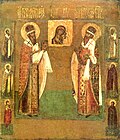 Savva of TverVenerable · Abbot of the Presentation MonasteryMar 2
- Barsanuphius of TverVenerable · Abbot near TverMar 2
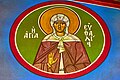 EuthaliaMartyrMar 2
- Nicholas PlanasRighteous · Priest of AthensMar 2
- Quintus of PhrygiaConfessor · The Wonderworker of PhrygiaMar 2