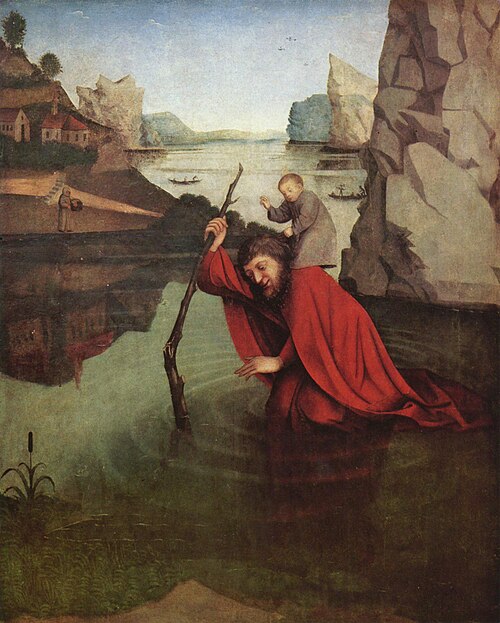
Martyr
Christopher
of Lycia
Martyr of Anatolia, honored in East and West, killed for his faith in Christ in the third century.
Life
The Holy Martyr Christopher, also called Christopher of Lycia, is a martyr honoured in both East and West. His name, from the Greek Christophoros, means "Christ-bearer". The accounts of him do not agree on time or place: they place his martyrdom in the third century, under Decius, Diocletian or Maximinus Daia. The oldest proof of his veneration is a martyr's shrine consecrated in the year 452 near Chalcedon. The Orthodox Church commemorates him on 9 May, new style (Churches keeping the old calendar observe it on 22 May).
The earliest veneration
Scholars find no sure evidence for his historical life. The cult appears, by all signs, in Asia Minor in the fifth century. An inscription found in the ruins of a church near Chalcedon says that a martyr's shrine of "the blessed Christopher" was built between 450 and 452 and consecrated in September 452. From there the veneration spread quickly in Egypt, Syria and Palestine, and it reached the West by the ninth century.
Two lines of tradition survive. One, older and eastern, tells of his martyrdom in Lycia and makes of Christopher a wild man with a good heart. The other, newer and western, created the well known legend of the giant who carried travellers across a river.
The martyrdom, in the eastern tradition
According to tradition, Christopher lived in the time of Emperor Decius (249 to 251). His origin is told in several ways: some count him of the Canaanites, others among the "cynocephali", that is, the "dog-headed" people at the edge of the world. For this reason some icons paint him with the head of a dog. He is said to have been taken prisoner in a war in Marmarica, west of Egypt, and forced to serve in the Roman army. He was tall and of enormous strength.
According to the tradition given by the Orthodox Church in America, he first had a handsome face, but, to escape temptations for himself and others, he asked the Lord for an unattractive one, and his prayer was heard. Before Baptism he was called Reprebus, "the reprobate", because of his appearance. Even before he was baptized, Reprebus confessed Christ and rebuked the persecutors of Christians. For this a certain Bacchus struck him, and he bore it humbly and did not take revenge. The word reached the emperor, who sent two hundred soldiers to bring him.
Miracles happened on the way: a dry staff blossomed in his hand, and by his prayer the loaves were multiplied, when the travellers had too little. The astonished soldiers believed in Christ and were baptized, together with Reprebus, by Saint Babylas, bishop of Antioch, who gave him the name Christopher.
Brought before Decius, who was frightened by his appearance, Christopher confessed the faith without fear. The emperor then tried to defeat him by cunning: he sent to him two women of loose life, Callinica and Aquilina, to make him deny Christ. But Christopher prayed all night and spoke to them about the Lord and the life to come, and they believed. When they returned to the emperor, they said they were Christians, and they received the crown of martyrdom through cruel torments. Decius also condemned to death the soldiers who had believed.
Christopher was put into a heated bronze box, but he suffered nothing. Other accounts say that he was cast into fire without being burned, and that he was thrown into a well with a heavy stone about his neck, but angels lifted him out. After many torments his head was struck off with the sword, in Lycia, around the year 250. It is said that by his miracles he brought tens of thousands of idol worshippers to Christ, as Saint Ambrose of Milan attests.
An old Greek text says that, before his death, Christopher prayed that his relics would have power over evil spirits and over calamities of the fields such as hail, and that the Lord answered him from heaven: whoever is in need and calls on his name will be helped. The accounts add that Decius fell gravely ill and died, knowing it to be a punishment for killing Christopher.
The western tradition of the bearer
The best known story today appears only in the thirteenth century, in the "Golden Legend". According to it, a giant named Reprobus sought to serve the greatest king in the world. A hermit advised him to serve God by helping those who cross a river. On a stormy night he carried on his shoulders a child who grew heavier and heavier, until the child revealed himself as Christ and told him that he had carried the weight of the whole world. The staff he planted in the ground turned green. This is the origin of the image in which he is painted in the West, with the Child on his shoulder.
The story of the ferryman also reached the East: the Orthodox Church in America includes it in the saint's life, and the Greeks love it, though it is not part of his officially compiled life. The name "Christ-bearer" may also mean that Christopher bore Christ within himself, in the words of Saint Paul (Galatians 2:20).
Veneration
In many Greek churches the icon of Saint Christopher is placed at the entrance, so that people see it as they come and go. A Greek saying runs: "When you see Christopher, you walk in safety", whence the belief that whoever looks at the icon will not meet a sudden death that day. He is invoked by travellers, drivers and sailors and against contagious diseases.
The skull of Saint Christopher is at the Monastery of Karakalou on Mount Athos. Parts of his relics are kept at the monasteries of Prousos in Evritania, of the Nativity of the Theotokos on Aegina, of the Holy Unmercenary Physicians in Kastoria and of Kykkos in Cyprus. According to western tradition the relics were taken to Toledo and then to the abbey of Saint-Denis in France. In the Roman Catholic Church he is commemorated on 25 July and counted among the Fourteen Holy Helpers.
Commemorated the same day May 9
 IsaiahProphet · The ProphetMay 9
 Gerontius of CerviaSaint · Bishop of CerviaMay 9
 GordianusMartyr · Martyr of RomeMay 9
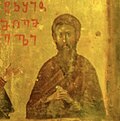 Shio of MgvimeVenerable · One of the Assyrian FathersMay 9
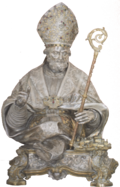 Priscus of NoceraSaint · First bishop of NoceraMay 9
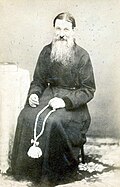 Joseph of OptinaVenerable · Elder of OptinaMay 9
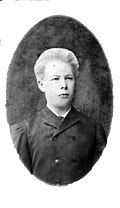 Demetrius VoskresenskyHieromartyr · PriestMay 9
- Hieronymos of SimonopetraVenerable · Monk of SimonopetraMay 9
- AdalgarSaint · Archbishop of Hamburg-BremenMay 9
- AquilinaMartyrMay 9
- BanbanVenerableMay 9
- Basil KolosovHieromartyrMay 9