Saint
Cosmas I of Constantinople
Patriarch of Constantinople
Ecumenical Patriarch of Constantinople from August 1075 to May 1081, also called the Jerusalemite.
Life
Saint Cosmas I the Jerusalemite was Ecumenical Patriarch of Constantinople from 2 August 1075 to 8 May 1081, called the Jerusalemite because he lived long at Jerusalem. The Orthodox Church remembers him on 2 January and counts him a saint.
Origins
He was from Antioch, but studied and lived most of his life at Jerusalem, whence his epithet. It seems he was called to the patriarchal throne from a monastery near Jerusalem. According to the Greek source he was not highly educated, but was pious and virtuous, simple and loved, and, though advanced in age, was elected patriarch at the wish of the emperor Michael VII Doukas, after the death of John VIII Xiphilinos, on 1 or 2 August 1075.
In the time of troubles
The empire was suffering the consequences of the defeat at Manzikert, losses in Asia Minor and military revolts. On 1 January 1078 Patriarch Cosmas assembled in the church of Saint Sophia many hierarchs and officials discontented with the emperor Michael VII; together they demanded that he leave the throne. On 3 April 1078, on Holy Tuesday, he solemnly crowned the Byzantine emperor Nikephoros III Botaneiates. He opposed Nikephoros' marriage to Maria of Alania, the still-living wife of Michael VII, but took no further action than deposing the priest who performed the wedding. Later he used his influence to persuade Nikephoros to resign, when his popularity declined and the empire entered a time of instability. On 1 April 1081 Alexios Komnenos bribed the commander of a band of German mercenaries, who opened the city gates to the rebels. Cosmas did much to decide the outcome: to avoid bloodshed he urged Nikephoros to leave power of his own will. On 4 April 1081 he crowned Alexios I Komnenos. When Alexios, at his mother's urging, wished to repudiate his wife Irene Doukaina to marry the ex-empress Maria of Alania, Cosmas, with the monks on his side, refused and blocked the plan, because Maria had already been married twice.
The most important synodal act of Cosmas was the condemnation, in 1076-1077, of certain heretical views of John Italos, a philosopher connected with the Doukas family. Two writings of his also survive: a synodal letter to the metropolitan of Larissa about the persecution of the Bogomils, and an order to Bishop Paul of Kallipolis on the order of the proskomide.
Retirement
The responsibilities of a patriarch did not suit Cosmas' character. Besides that, Anna Dalassene, Alexios' mother, pressed for his removal, partly because she disliked Irene's link with the Doukas family, partly to place her favourite, Eustratios Garidas, on the throne. According to Anna Komnene, Cosmas agreed to go only after crowning Irene; she was crowned, according to the Alexiad, seven days after Alexios. On 8 May 1081 he left the throne. It is said that he told his servant: “Take the Psalter and follow me,” and withdrew to the monastery of Kallias (according to the synaxarion, of Chora), where he stayed, refusing all the emperor's requests to return. His retirement is held to mark the beginning of a period in which the Church loses much of the independence it had had in the eleventh century and becomes subject to the state. The historian John Skylitzes (Continuatus) speaks coldly of him. The year of his death is not certain (1082 is given).
Commemorated the same day January 2
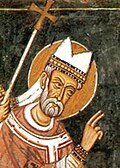 Sylvester of RomeSaint · Bishop of RomeJan 2
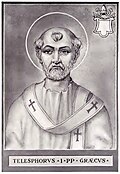 TelesphorusHieromartyr · Bishop of RomeJan 2
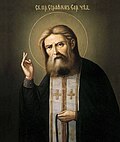 Seraphim of SarovVenerable · Hieromonk of SarovJan 2
 Bruno of SaxonyRight-Believing · Duke of SaxonyJan 2
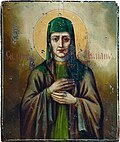 Juliana of LazarevoRighteous · Righteous woman of MuromJan 2
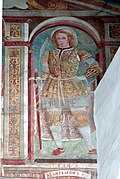 DefendensMartyr · Soldier of the Theban LegionJan 2
 Sylvester of KyivVenerableJan 2
 SeiriolSaintJan 2
- Giorgi the GeorgianSaintJan 2
 Adalard of CorbieVenerable · Abbot of CorbieJan 2
- AinbhthenVenerableJan 2
- Argeus of TomisMartyrJan 2