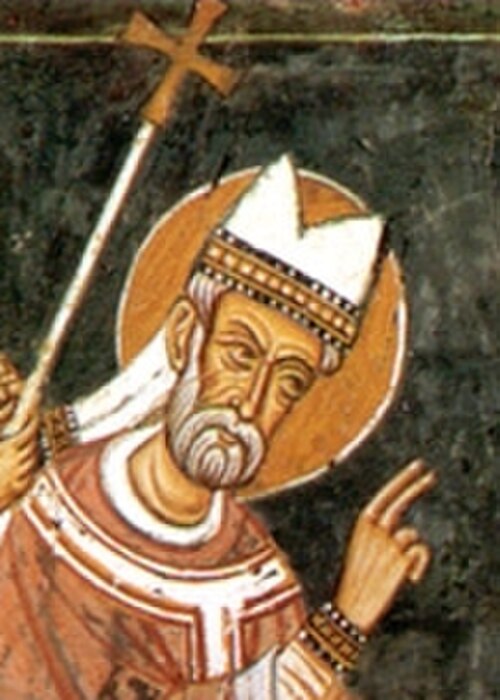
Saint
Sylvester of Rome
Bishop of Rome
Bishop of Rome from 314 to 335, in the time of Emperor Constantine and the Council of Nicaea.
Life
Saint Sylvester of Rome was bishop of Rome from 314 to 335, in the time of the Emperor Constantine the Great, when the persecutions had ended and the Church began to order its life in freedom. History preserves few certain facts about him, but the synaxarion and tradition made of him a beloved pastor, honoured as a saint of the undivided Church.
Youth and confession
According to the Orthodox synaxarion, he was born at Rome of Christian parents, Rufinus and Justa. His father died soon, and his mother raised him. The presbyter Quirinus gave him a fine education. As a grown man, Sylvester received strangers and travellers and served them himself. In time of persecution he sheltered for more than a year the confessor Bishop Timothy of Antioch, who brought many to Christ. When Timothy was seized and killed on the order of the prefect Tarquinius, Sylvester secretly took the body and buried it. For this he was brought to trial and, remaining steadfast, was thrown into prison. The prefect died suddenly after the trial, and Sylvester was freed and went on preaching to the pagans.
Pastor of Rome
At thirty he was ordained deacon, then presbyter, by Bishop Marcellinus (296 to 304). After the death of Bishop Miltiades in 314 he was chosen bishop of Rome. The synaxarion says he urged his flock to live righteously and told priests not to meddle in worldly business. He was known as an expert in Scripture and a defender of the faith.
His pontificate ran alongside the reign of Constantine the Great. The Council of Arles in 314, called by the emperor, condemned the Donatist schism. At the First Ecumenical Council at Nicaea in 325 Sylvester could not attend because of his age and sent as his representatives Bishop Hosius of Cordoba and two presbyters, Vitus and Vincentius. In his time great churches were raised at Rome, among them the Lateran Basilica and Old Saint Peter's, and Constantine gave him the Lateran Palace, for a long time the residence of the popes.
The debate with the Jews
The synaxarion also records a public debate, said to have been held before Constantine and his mother Helen. Sylvester spoke for the Christians, and the Jews put forward Zambres at the head of one hundred and twenty learned men. From the Old Testament Scriptures Sylvester showed that the prophets foretold Christ's birth of the Virgin, His Passion and Resurrection. Zambres tried sorcery, but the saint stopped it by calling on the name of the Lord, and many Jews asked for Baptism. This is a story of the hagiographic tradition, tied to the legendary Acts of Sylvester, and historians cannot verify it.
Legends about Constantine's baptism
A later tradition says that Sylvester cured Constantine of leprosy and baptized him. Scholars reject this legend, which is bound up with the forged Donation of Constantine, composed in the second half of the eighth century. According to the sources, the emperor was in fact baptized only near the end of his life.
Repose
Saint Sylvester departed to the Lord on 31 December 335, in old age. The list called Deposito episcoporum, of 354, records that he was buried in the catacomb of Priscilla on the Via Salaria. The Orthodox Church celebrates him on 2 January, while in the West his day is 31 December. Doxologia adds that he is credited with the ruling that the first day of the week be called the Lord's Day rather than the Day of the Sun.
Commemorated the same day January 2
 TelesphorusHieromartyr · Bishop of RomeJan 2
 Seraphim of SarovVenerable · Hieromonk of SarovJan 2
 Bruno of SaxonyRight-Believing · Duke of SaxonyJan 2
- Cosmas I of ConstantinopleSaint · Patriarch of ConstantinopleJan 2
 Juliana of LazarevoRighteous · Righteous woman of MuromJan 2
 DefendensMartyr · Soldier of the Theban LegionJan 2
 Sylvester of KyivVenerableJan 2
 SeiriolSaintJan 2
- Giorgi the GeorgianSaintJan 2
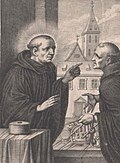 Adalard of CorbieVenerable · Abbot of CorbieJan 2
- AinbhthenVenerableJan 2
- Argeus of TomisMartyrJan 2