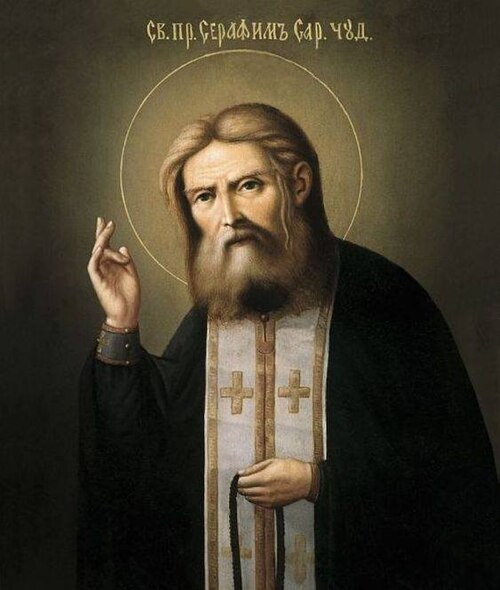
Venerable
Seraphim of Sarov
Hieromonk of Sarov
Great Russian ascetic, hieromonk and hermit in the forest near Sarov, known for his gift of healing.
- Feast
- January 2old style January 15
- Reposed
- 183319th century
- Place
- Sarov
- Order
- Venerables
Life
Venerable Seraphim of Sarov was a hieromonk, hermit and elder, the best loved of the Russian saints of the nineteenth century and, in the words of many, the greatest of the startsy of the eighteenth. He taught that the aim of the Christian life is the acquiring of the Holy Spirit, and that prayer, fasting, almsgiving and other good works are means to it. His best known saying is: "Acquire the spirit of peace and a thousand souls around you will be saved." His memory is kept on 2 January (14 January on the new style), the day of his repose, and on 19 July, the day of the uncovering of his relics.
Childhood at Kursk
He was born on 19 July 1754 (other sources give 1759) at Kursk, in a pious merchant family, the son of Isidore and Agathia Moshnin, and was baptized Prochorus. His father began building a cathedral in the city but died before it was finished, and his mother carried on the work. At the age of seven Prochorus fell from the scaffolding of the bell tower and was left unharmed.
Later he fell gravely ill and saw the Mother of God in a dream, promising to visit him. Soon a procession with the Kursk icon passed by their house, he kissed the icon and quickly recovered. From his youth he wished to become a monk, and his mother blessed him with a copper cross, which he wore on his chest all his life.
At Sarov
Prochorus set out on foot with pilgrims to Kiev, to venerate the saints of the Caves. There the elder Dositheus (in fact a woman, Daria Tyapkina) sent him on to Sarov, which he reached on 20 November 1778, in the time of Abbot Pachomius. He was placed under the elder Joseph. He served as cell attendant, baker and carpenter, doing everything with zeal as though serving the Lord.
After two years as a novice he fell ill with dropsy and suffered for nearly three years without complaint. He refused doctors and entrusted himself to "the true physician of soul and body". One day, while the brethren were praying for him at a molieben, the Mother of God appeared to him with the apostles Peter and John, and said: "He is one of our kind." She touched his side with her staff and the fluid ran out through the wound, so that by the next day only a scar remained.
After eight years as a novice he was tonsured with the name Seraphim, which speaks of the flame of love for the Lord. A year later he was ordained hierodeacon and saw angels serving with the priests. On Great Thursday, at the Liturgy, he beheld the Lord Jesus Christ entering by the western doors, surrounded by the heavenly powers, and stood speechless for three hours. In 1793 he was ordained priest and served the Liturgy every day.
In the forest
With the abbot's blessing he withdrew to a cell in the forest near Sarov, which he called "Mount Athos", and came to the monastery only on Saturday and Sunday. He read the New Testament through every week, kept a garden and a beehive, fasted strictly and ate once a day, and not at all on Wednesdays and Fridays. Later came the labour of standing a thousand days and nights in prayer on a rock, with raised hands, saying: "God, be merciful to me, a sinner."
Once, while he was working in his garden, three robbers came upon him, looking for money. Though he had an axe in his hand he did not defend himself, so as not to break the word of the Lord about the sword, and said: "Do what you intend." They beat him and left him for dead. The Mother of God appeared to him again and healed him, but Seraphim remained bent for life and walked with a staff. After five months he went back to the forest, forgave those who had struck him and asked that they not be punished. It is told that he fed bears and other wild beasts from his hand.
In 1807 Abbot Isaiah died and Seraphim refused to take his place. He lived three years in complete silence, and in 1810 he moved to the monastery, where he shut himself in his cell for five years before opening the door to the brethren.
The elder of Sarov
On 25 November 1825 the Mother of God appeared to him with two holy hierarchs and told him to end his enclosure and give himself to people. Seraphim moved to a cell nearer the monastery, called the Near Hermitage, and began to receive pilgrims. He saw into the hearts of men, healed the sicknesses of soul and body by prayer and by word, and greeted all with a prostration, a kiss and the words "Christ is risen, my joy." He loved children dearly.
In his last years he gave himself in a special way to the women's community at Diveyevo, which Father Pachomius had long before entrusted to his care. Seraphim said he gave the sisters no instructions of his own, but that the Queen of Heaven guided them.
The conversation with Motovilov
At the end of November 1831, in a forest clearing, Seraphim spoke with Nikolai Motovilov, whom he had healed earlier, about the aim of the Christian life. Motovilov wanted to know how one can tell that the Holy Spirit is with him. Seraphim took him by the shoulders and told him that both of them were now in the Spirit of God, and bade him look at him. Motovilov answered that he could not, for the elder's eyes were flashing like lightning and his face was brighter than the sun. Seraphim calmed him and said that he too had become as bright, and promised that he would keep this experience in his memory all his life, not for himself alone but through him for the world. The manuscript lay hidden for almost seventy years and was printed in 1903.
Repose
At the Annunciation, a year and ten months before his end, the Mother of God appeared to him again and entrusted the Diveyevo sisters to him, telling him he would soon be with them. He had prepared his own coffin and chosen his burial place near the altar of the Dormition cathedral.
On 1 January 1833 he served at the Liturgy for the last time, and after receiving the Mysteries he told the brethren to save their souls, not to be despondent but watchful, for that day crowns were being prepared. The next morning his cell smelled of smoke, and his cell attendant, Father Paul, found him kneeling before an icon of the Mother of God, his arms crossed on his chest. His holy soul had been taken in prayer.
Glorification and relics
A commission found in January 1903 that the relics were not incorrupt, but the glorification went ahead, urged by Archimandrite Seraphim Chichagov and by the devotion of the people. At the end of January 1903 the Holy Synod, with the approval of Tsar Nicholas II, announced the glorification. In early July the relics were moved to the church of Saints Zosimas and Sabbatius, into a new cypress coffin given by the tsar. On 19 July (1 August on the new style) 1903 the solemn glorification took place at Sarov, in the presence of the tsar, the tsarina and other members of the imperial family, and the first two churches in the saint's name were consecrated.
Under the Soviet regime the relics were taken away and the monastery was closed. In 1991, after almost seventy years hidden in an atheist museum, the relics were found and carried in procession to the Diveyevo convent, where they rest today.
Commemorated the same day January 2
 Sylvester of RomeSaint · Bishop of RomeJan 2
 TelesphorusHieromartyr · Bishop of RomeJan 2
 Bruno of SaxonyRight-Believing · Duke of SaxonyJan 2
- Cosmas I of ConstantinopleSaint · Patriarch of ConstantinopleJan 2
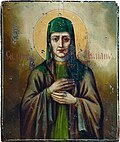 Juliana of LazarevoRighteous · Righteous woman of MuromJan 2
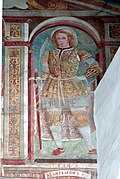 DefendensMartyr · Soldier of the Theban LegionJan 2
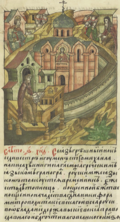 Sylvester of KyivVenerableJan 2
 SeiriolSaintJan 2
- Giorgi the GeorgianSaintJan 2
 Adalard of CorbieVenerable · Abbot of CorbieJan 2
- AinbhthenVenerableJan 2
- Argeus of TomisMartyrJan 2