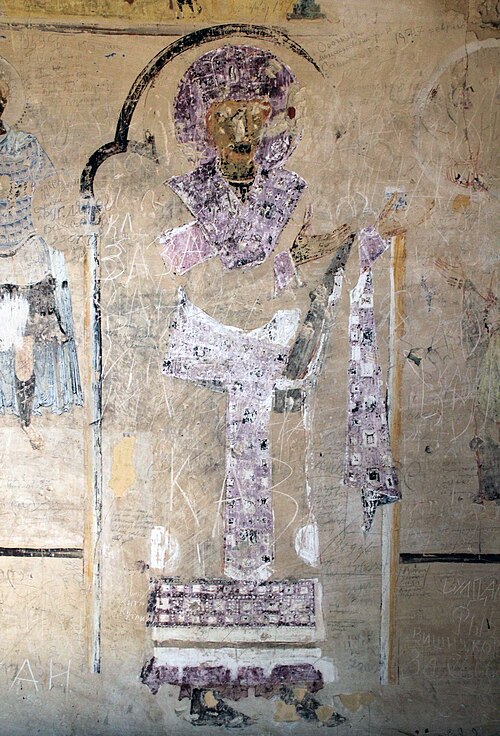
Right-Believing
Demetrius II the Self-Sacrificer
King of Eastern Georgia
King of Eastern Georgia from 1270 until his execution by the Mongol Ilkhan in 1289, called the Self-Sacrificer.
- Feast
- March 12old style March 25
- Reposed
- 128913th century
Life
Demetrius II, called the Self-Sacrificer or the Devoted, was King of Eastern Georgia from 1270 until his martyrdom on 12 March 1289, of the Bagrationi dynasty. The Georgian Orthodox Church has canonized him and remembers him as the king who gave his life for his people.
Childhood and reign
He was born in 1259, the second son and third child of King David VII, by David's third wife Gvantsa. He was only two years old when his mother was put to death by the Mongols in 1261, in answer to David's failed rebellion against the rule of the Ilkhans. His father died in 1270, and Demetrius came to the throne at the age of eleven. For a time he reigned under the regency of Sadun Mankaberdeli, the atabeg appointed by the Mongols.
Though he still bore the title of king of the Georgians and Abkhazians, his rule reached only the eastern part of the land. Western Georgia was held by a branch of the Bagrationi, and Samtskhe was governed by Prince Beka I Jaqeli, who was directly subject to the Mongols. Between 1277 and 1281 Demetrius took part with the Mongols in their campaigns against the Mamluks of Egypt, and he distinguished himself above all in the Second Battle of Homs on 29 October 1281, at the head of a Georgian army of fifteen thousand men. Although the Mongols were beaten, the Georgians brought home rich spoils.
Under the Ilkhans
Demetrius behaved as a loyal subject of the Ilkhan. He supported first Tekuder and then Arghun, and kept friendly relations with the Mongol nobility. He was married three times: to a princess of Trebizond, to the Mongol Solghar, and to Natela, daughter of Beka I Jaqeli. Tradition remembers him as a man devoted to the Christian faith, though he was criticized for these several marriages.
His first marriage gave him four sons, among them the future kings David VIII and Vakhtang III, and a daughter, Rusudan. The second gave two sons and a daughter, and the third gave George V, called the Brilliant, who would also become king of Georgia. When Sadun died in 1282, Demetrius refused the office of atabeg to Sadun's son Khutlubuga, and so made himself an implacable enemy.
Martyrdom
In 1288, on the order of Arghun, Demetrius subdued the rebel province of Derbent near the Caspian Sea. In the same year Arghun uncovered a plot by his powerful minister Buqa, whose son was married to Demetrius's daughter. Buqa and his family were put to death, and the Georgian king, suspected of knowing of the plot, was summoned to the Khan's court under threat of an invasion of Georgia. Though his nobles advised him not to go, Demetrius set out, knowing he went to meet his end, and was imprisoned there. He was beheaded at Movakan on 12 March 1289.
His remains were buried at Mtskheta, the ancient holy city of Georgia. His cousin Vakhtang II succeeded him on the throne. Saint Demetrius is commemorated on 12 March, the day of his sacrifice.
Commemorated the same day March 12
 Gregory the DialogistSaint · Pope of RomeMar 12
 Innocent I of RomeSaint · Bishop of RomeMar 12
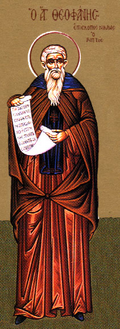 Theophanes the ConfessorVenerable · Chronicler and AbbotMar 12
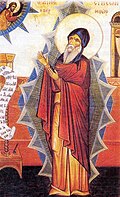 Symeon the New TheologianVenerable · Abbot of Saint Mamas MonasteryMar 12
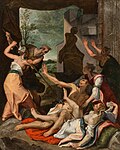 PhinehasProphet · Priest, grandson of AaronMar 12
- Maximilian of TebessaMartyr · Martyr of NumidiaMar 12
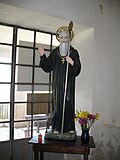 Nicodemus of MammolaVenerable · Italo-Greek monk of CalabriaMar 12
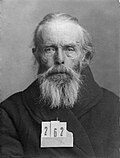 Alexander DerzhavinConfessor · PriestMar 12
- John PlekhanovHieromartyr · PriestMar 12
- Symeon the PiousVenerable · Monk of StoudiosMar 12
- Almut of WetterSaintMar 12
- Alphege of WinchesterSaint · Bishop of WinchesterMar 12