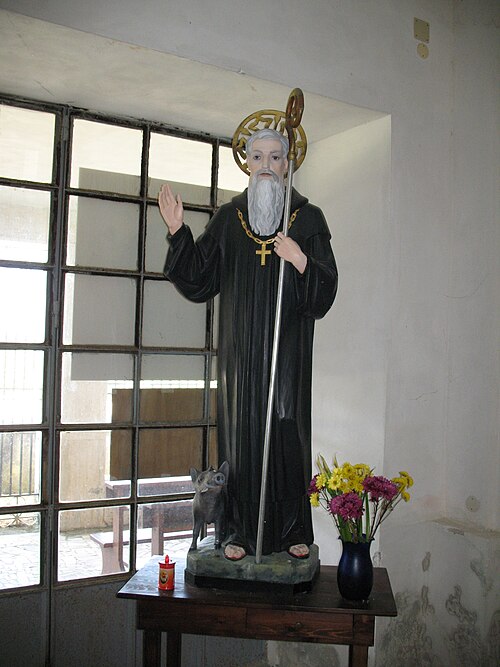
Venerable
Nicodemus of Mammola
Italo-Greek monk of Calabria
Monk of Calabria, probably born at Cirò, died on March 25, 990 and venerated as a saint there.
- Feast
- March 12old style March 25
- Reposed
- 99010th century
- Place
- Mammola
- Order
- Venerables
Life
Venerable Nicodemus of Mammola (or of Cirò) was an Italo-Greek monk of Calabria, born around the year 900 and died on 25 March 990, at the age of almost 90. He is commemorated on 12 March and venerated as a saint in Calabria; our sources show no wider glorification.
His birthplace is not known with certainty: some place it at Ypsicron (today Cirò), others at Sikron, perhaps destroyed by the Saracens of Emir Hasan in the years 950 to 952. His parents were named Theophanus and Pandia and entrusted their son's spiritual education to a priest, Galaton. Early on he felt the call to monastic life and wished to join the ascetics established in the zone called the Mercurion, on the cliffs of the Pollino in Calabria. The austere abbot, Saint Fantinus, did not accept him at first, thinking him too frail for the hardships, but in the end relented, seeing his steady prayer and bodily sufferings. By their holiness and austerity the Calabrian monks, among them Saint Nilus of Rossano, were praised by Orestes, patriarch of Jerusalem. Fantinus came to see them before leaving for Greece and found a life full of asceticism.
At first Nicodemus withdrew to Mount Cellerano (today San Nicodemo), in the area of Locride, where his fame gathered a new community of monks. The community was threatened by Saracen raids, and Nicodemus moved to Gerace, then to Mammola, where a monastery was later established.
Miracles were reported at his tomb and he was regarded as a saint. In 1080, under the Normans, the small chapel on the site was made into a larger church, and the monastery at Mammola was restored and granted privileges and property. His relics were moved to a new church at Mammola in 1580 (the Russian source says 1501, from the Cellerano monastery, and keeps this translation on the first Sunday of September). In 1630 he was proclaimed patron of the town, and his feast day was fixed on 12 March. The Russian source also notes 12 May as the day of his birth.
Commemorated the same day March 12
 Gregory the DialogistSaint · Pope of RomeMar 12
 Innocent I of RomeSaint · Bishop of RomeMar 12
 Theophanes the ConfessorVenerable · Chronicler and AbbotMar 12
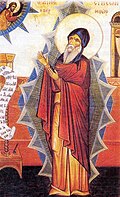 Symeon the New TheologianVenerable · Abbot of Saint Mamas MonasteryMar 12
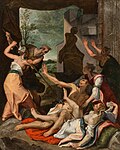 PhinehasProphet · Priest, grandson of AaronMar 12
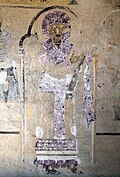 Demetrius II the Self-SacrificerRight-Believing · King of Eastern GeorgiaMar 12
- Maximilian of TebessaMartyr · Martyr of NumidiaMar 12
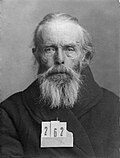 Alexander DerzhavinConfessor · PriestMar 12
- John PlekhanovHieromartyr · PriestMar 12
- Symeon the PiousVenerable · Monk of StoudiosMar 12
- Almut of WetterSaintMar 12
- Alphege of WinchesterSaint · Bishop of WinchesterMar 12