Martyr
Dymphna
Irish virgin of the seventh century, put to death by her own father and venerated at Geel.
Life
Saint Dymphna, martyr, was an Irish virgin of the seventh century, killed by her father and venerated above all at Geel, in Belgium. She is commemorated on 15 May, and in some calendars on 30 May.
Beginnings
According to Catholic and Orthodox tradition, Dymphna was born in Ireland, in the seventh century. Her father, Damon, was a petty king of Oriel, a zealous pagan, and her mother was a devout Christian. Her name comes from Irish, from a word meaning “poet”, with an ending showing smallness or the feminine. Her story was first written in the thirteenth century by a canon of the church of Saint Aubert at Cambrai, at the request of Bishop Guiard of Laon, who says he relied on oral accounts and legends of wonderful healings of those suffering from illnesses of the mind. Scholars regard the story as a variant of a known folk motif, that of the father who wishes to marry his daughter.
The flight
At fourteen Dymphna dedicated herself to Christ and made a vow of chastity, taught by her confessor, Father Gerebernus. Soon after, her mother died. Damon had loved his wife deeply, and after her death his mind was disturbed. His counsellors urged him to remarry, and he agreed, but only to a wife as beautiful as the dead one. After searching in vain, he began to desire his daughter, who looked much like her mother. Learning her father’s intention, Dymphna swore to keep her vow and fled his court, with her confessor, Gerebernus, two trusted servants and the king’s fool. They sailed towards the Continent and reached what is now Belgium, where they took shelter in the town of Geel.
Martyrdom
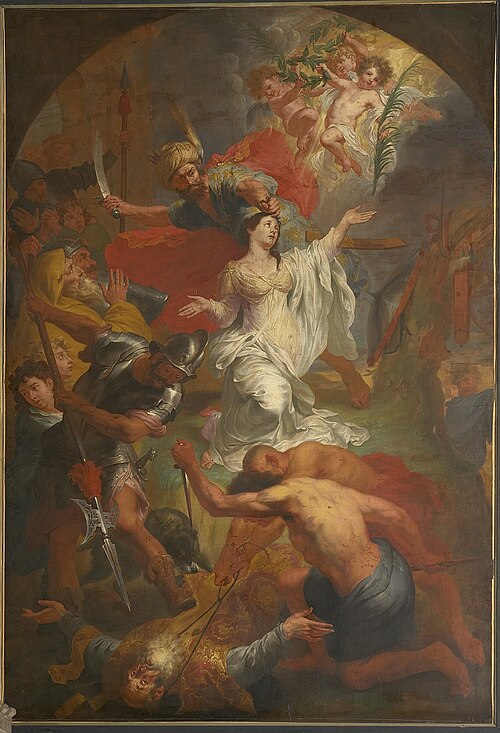
According to one tradition, at Geel Dymphna built a shelter for the poor and sick of the region. Through the money she used her father learned where she was, for some coins led to their trail in Belgium. Damon sent his men after them, then came himself to Geel. He ordered his soldiers to kill Gerebernus and tried to force his daughter to return to Ireland, but she resisted. Enraged, Damon drew his sword and struck off her head. She is said to have been fifteen. The people of Geel buried Dymphna and Gerebernus in a nearby cave, and after years decided to move the remains to a suitable place.
Veneration
Her body was placed in a silver reliquary in the church at Geel that bears her name; in 1349 a church was built there in her honour. The relics of Gerebernus were taken to Xanten, in Germany. By 1480 so many pilgrims were coming from all over Europe, seeking healing for illnesses of the mind, that the lodgings beside the church were enlarged, and when those too were full, the townspeople began to take them into their own homes. Thus began a custom of care for the mentally ill that has lasted over five hundred years: they are not called patients but guests, are received into families and work in the community; in the 1930s there were over four thousand. Dymphna is the patroness of those with illnesses of the mind and of those who have suffered in the family. She is called the Lily of Éire, for her purity. She is shown with a crown and a sword, sometimes with a chained devil at her feet.
Commemorated the same day May 15
 Pachomius the GreatVenerable · Father of Cenobitic MonasticismMay 15
 Achillius of LarissaSaint · Bishop of LarissaMay 15
 Euphrosynus of PskovVenerable · Founder of a monastery at PskovMay 15
 Severinus of SanseverinoSaint · Bishop of SeptempedaMay 15
 Adiutor of BeneventoSaint · Bishop of BeneventoMay 15
 Euphrasius of ClermontSaint · Bishop of ClermontMay 15
 Hilary of GaleataVenerableMay 15
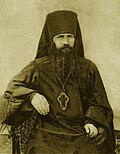 Arephas of VerkhoturyeVenerable · Archimandrite of Saint Nicholas MonasteryMay 15
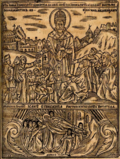 Isaiah of RostovSaint · Bishop of RostovMay 15
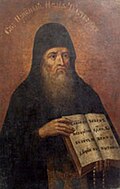 Isaiah of the Kiev CavesVenerable · Monk of the Kiev Caves LavraMay 15
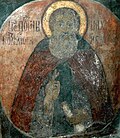 Pachomius of NerekhtaVenerable · Abbot and founder at NerekhtaMay 15
 Serapion of PskovVenerable · Wonderworker of PskovMay 15