Hieromartyr
Elisha Shtolder
A Russian priest put to death for his faith in Christ in 1937, during the communist persecution.
Life
Holy Hieromartyr Elisha Shtolder, a deacon, was born on 14 June 1883 in Smolensk, in a devout family, and received martyrdom by shooting on 20 August 1937, at the Butovo firing range near Moscow. The Russian Church honours him among the New Martyrs and Confessors of the twentieth century.
His father, Feodor Shtolder, was an assistant auditor at the Control Chamber. Because of the father's service the family moved from Smolensk to Tashkent, then to Moscow. Elisha Feodorovich graduated from the Tashkent school in 1902, and in Moscow worked as an accountant in the Alexandrovsky Railway administration. In the time of persecution of the Church he decided to devote his life to its service.
On 20 October 1920 he was appointed reader at the Nativity of Christ church in the settlement of Nemchinovka, and a few days later, on 25 October, Metropolitan Eusebius of Krutitsy ordained him deacon for the same church. He went on combining the service with secular work, but in 1924 his superiors learned that he was a cleric and dismissed him. In 1934 the authorities closed the church in Nemchinovka, and the parish priest, Alexis Sokolov, with the deacon Elisha, moved to serve at the church of Saint Nicholas in the village of Romashkovo, where Father Elisha served until his arrest in 1937.
At that time the authorities began to gather information on all the clergy in order to arrest them. Informers said, at the request of the NKVD, that Elisha Shtolder served as deacon at the Romashkovo church, carried on educational work and conducted anti-Soviet agitation among believers, recruiting them from the surrounding villages. In July 1937 false witnesses were called to the interrogation. One said that when it was decided in 1933 to close the church in Nemchinovka, Shtolder agitated among the residents to hinder the closing; another, that the deacon Elisha advised them, before the May Day holiday of 1936, not to celebrate it but rather to go to church.
On 8 August 1937 Father Elisha was arrested and imprisoned at Taganka. Asked by the investigator what had made him a cleric, he answered: first his own wish, and then that since childhood he had felt a calling and loved the services. He said that at the opening of the church at Nemchinovka he became a cleric at the request of the parishioners, being religious before as well, and that, though he worked then in Soviet service, he agreed to serve in church because it was his wish.
To the charge of counter-revolutionary agitation he said that he was not fully loyal to Soviet power, but did not conduct anti-Soviet agitation; about the closing of the church in 1933, that he did not agitate, but they acted in an organized way, with meetings of believers, keeping the church open for two weeks by petitions to the Mossovet. He denied the words attributed to him by the witnesses and answered at the end that he did not admit guilt of any counter-revolutionary crime.
On 19 August 1937 the NKVD troika sentenced him to death. The deacon Elisha Shtolder was shot on 20 August 1937 and buried in an unknown common grave at the Butovo range.
He is commemorated on 20 August, on 29 May in the Synaxis of the New Martyrs of Butovo, and on 5 September in the Synaxis of the Saints of Moscow.
Commemorated the same day August 7
 Narcissus of JerusalemSaint · Bishop of JerusalemAug 7
 Donatus of ArezzoSaint · Bishop of ArezzoAug 7
 Dometius the PersianMartyr · Martyr of PersiaAug 7
 Alexander HotovitzkyHieromartyr · Priest and missionaryAug 7
- Donatus of BesançonSaint · Archbishop of BesançonAug 7
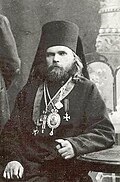 Pimen BelolikovHieromartyr · Bishop of Semirechye and VernyAug 7
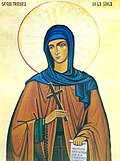 Theodora of SihlaVenerable · Hermit in the Neamț MountainsAug 7
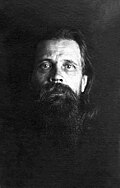 Alexei VorobyovHieromartyr · ArchpriestAug 7
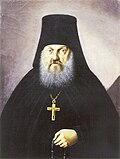 Anthony of OptinaVenerable · Elder of OptinaAug 7
 Marinus and AsteriusHoly MartyrsAug 7
 Pârvu MutuVenerableAug 7
 Donatus of ImolaSaint · Archdeacon of ImolaAug 7