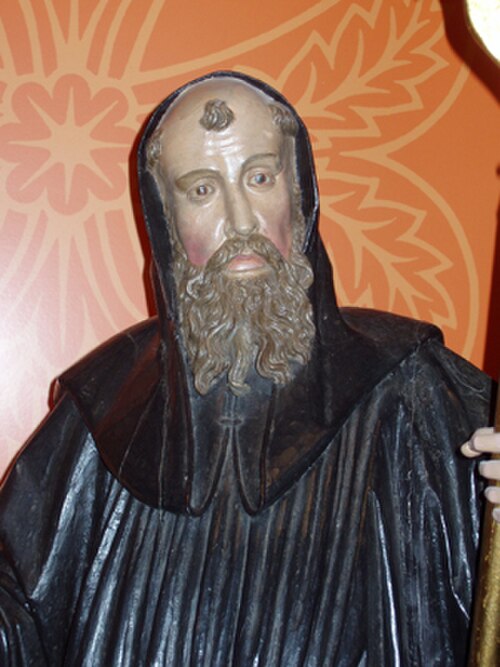
Venerable
Emilian of Cogolla
Hermit of Spain
A Spanish hermit of Cogolla, who died around 574, venerated throughout Spain.
- Feast
- November 12old style November 25
- Reposed
- 5746th century
- Place
- San Millán de la Cogolla
- Order
- Venerables
Life
Saint Emilian of Cogolla, also called Millán or Aemilianus, is a saint of Spain, widely venerated throughout the country, who lived in the time of Visigothic rule. The sources place him between the years 472 or 474 and 573 or 574, with a life of nearly a hundred years. The Church commemorates him on 12 November.
According to his life written by Braulio of Zaragoza about a hundred years after his death, Emilian was born in the village of Vergegio, thought to lie near present-day Berceo in La Rioja, to a family of shepherds. Until about the age of twenty, like his father, he tended flocks, and then he turned suddenly to God and became a hermit. Near Bilibio he found the monk Felix, well known at the time, who became his teacher.
After three years of study under Felix, Emilian returned home, but soon went off again to wander in the mountains of Burgos, where he spent forty years, until Bishop Didymus of Tarazona persuaded him to accept ordination and serve as priest in his native Vergegio. Soon after he received the parish, the local clergy accused him of squandering church property, because he was giving its money to the poor. The saint went away again into the mountains with a group of followers, and there he fell asleep, at the age of a hundred.
On the site of the hermitage where he died and was buried a monastery was built in the Mozarabic style, San Millán de Suso (Suso meaning upper). It existed for a time alongside another, San Millán de Yuso (lower), until the abbacy of one of them was suppressed. Today both are known together as San Millán de la Cogolla, and the relics of Emilian and of his teacher are kept at Yuso. His epithet Cogolla comes from the hood (cogulla) which, according to tradition, he wore. He is regarded as patron of Castile, because according to tradition he appeared at the battle of Simancas and fought with the Christian soldiers against the Moors.
Commemorated the same day November 12
 Ahijah the ShiloniteProphet · Prophet of ShilohNov 12
 John the AlmsgiverSaint · Patriarch of AlexandriaNov 12
 Nilus of SinaiVenerable · Hermit on Mount SinaiNov 12
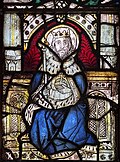 Cadwaladr of GwyneddRight-Believing · King of GwyneddNov 12
- Leo StyppesSaint · Patriarch of ConstantinopleNov 12
- Nilus the Myrrh-streamerVenerable · Hermit of Mount AthosNov 12
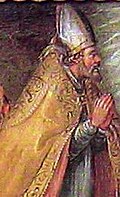 Evasius of AstiSaint · Bishop of AstiNov 12
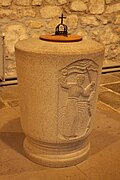 Machar of AberdeenSaint · Missionary among the PictsNov 12
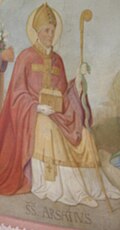 Arsatius of MilanSaint · Bishop of MilanNov 12
- Alexander ArkhangelskyHieromartyr · ArchpriestNov 12
- Alexander AdrianovHieromartyrNov 12
- Anghas of Cruach AnghaisVenerableNov 12