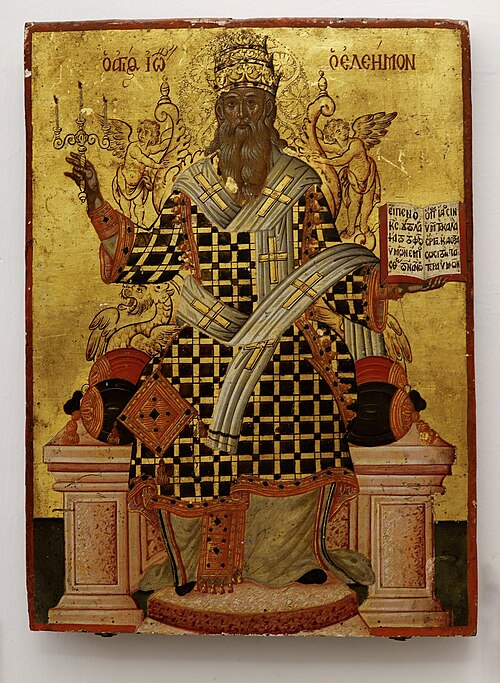
Saint
John the Almsgiver
Patriarch of Alexandria
Patriarch of Alexandria from 606 to 616, known for his almsgiving to the poor.
- Feast
- November 12old style November 25
- Reposed
- 6197th century
- Place
- Amathus
- Order
- Hierarchs
Life
Saint John the Almsgiver, hierarch, was patriarch of Alexandria and is known above all for his almsgiving to the poor. He fell asleep in Cyprus, around 616-620. He is commemorated on 12 November, by the old calendar.
Beginnings
He was born at Amathus, in Cyprus, into the family of Epiphanius, governor of the island, a noble family. In youth he married and had children, but after the death of his wife and children he devoted himself to the spiritual life. His Life, written by Leontius, bishop of Neapolis in Cyprus, a contemporary who seems to have known him personally, says that in youth he had a vision: a beautiful maiden with a garland of olive on her head told him that she was Compassion, the eldest daughter of the Great King. The vision remained deep in his mind.
Patriarch of Alexandria
After the death of Patriarch Theodore, the people of Alexandria asked the emperor to place John on the throne, though he was neither monk nor cleric, and the emperor agreed. One of his first acts was to draw up a list of thousands of needy people, whom he took under his care. He called the poor “my lords and masters”. He visited the hospitals three times a week, ransomed many slaves and gave the revenues of the see to the poor. He fought simony, helped education as a means against heresy, reorganized weights and measures for the benefit of the poor and sought to root out the greed of officials. In his time the churches of Alexandria grew from seven to seventy. He stood against the monophysite heresy.
Some episodes
A merchant ruined by shipwrecks was helped three times; the first two times without much good, the third time John gave him a ship loaded with wheat, and the winds carried him as far as Britain, where, there being a shortage of wheat, he sold his cargo at his own price. When a man who was not really in need asked for alms and the servants exposed him, John said only, “Give to him; he may be our Lord in disguise.” A rich man gave him an expensive bed covering; John kept it for one night, then sold it and gave the money to the poor. The rich man bought it back and presented it again, and so several times, until John said, “We shall see who tires first.” It is said that he had his tomb dug, but left unfinished, and appointed a servant to tell him, at every great service, that his tomb was incomplete. Concerning the monk Vitalis of Gaza, who laboured to reclaim the fallen women of the city, John had the wisdom not to punish him, and the matter proved him right.
His end and relics
When the Persians entered Egypt and threatened Alexandria, John set out for Constantinople to ask for troops, but stopped in Cyprus, at Amathus, where he died. His relics were brought first to Constantinople, in 1249 to Venice, and in 1489 a part was given to King Matthias Corvinus of Hungary and now lies at Bratislava. He is the patron of the city of Limassol, and the Coptic Church also honours him as a saint.
Commemorated the same day November 12
 Ahijah the ShiloniteProphet · Prophet of ShilohNov 12
 Nilus of SinaiVenerable · Hermit on Mount SinaiNov 12
 Cadwaladr of GwyneddRight-Believing · King of GwyneddNov 12
- Leo StyppesSaint · Patriarch of ConstantinopleNov 12
- Nilus the Myrrh-streamerVenerable · Hermit of Mount AthosNov 12
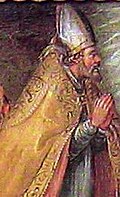 Evasius of AstiSaint · Bishop of AstiNov 12
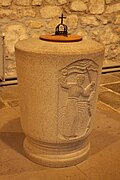 Machar of AberdeenSaint · Missionary among the PictsNov 12
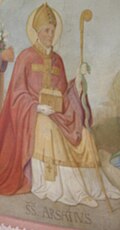 Arsatius of MilanSaint · Bishop of MilanNov 12
- Alexander ArkhangelskyHieromartyr · ArchpriestNov 12
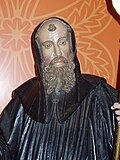 Emilian of CogollaVenerable · Hermit of SpainNov 12
- Alexander AdrianovHieromartyrNov 12
- Anghas of Cruach AnghaisVenerableNov 12