Holy Martyrs
Eustathius of Tsebelda and the Georgian Martyrs of Harran
Eustathius of Tsebelda and the Georgians killed at Harran in Mesopotamia around 740; venerated by the faithful, not formally canonized.
Life
Holy Martyr Eustathius of Tsebelda (also called Eustathius the Apsilian or Eustathius of Harran, † 740) was prince of Apsilia, a land of western Georgia, today in Abkhazia, taken captive by the Arabs and died a martyr at Harran, in Mesopotamia, together with many other Georgians and Christians. He is commemorated on 14 (27) March in the calendar of the Church of Georgia and is venerated by the faithful as a saint.
He was the son of the patrician Marinus, "the most notable and first among the Apsilians." He was born in the time of Emperor Justinian II and was baptised by his father on the eighth day in the old church of his chief fortress, Tsibilium, receiving the name of Saint Eustathius Placidas, the valiant soldier who received the crown of martyrdom at the beginning of the second century, in the time of Trajan. He ruled Apsilia in the early eighth century. In 738 the Arabs, under Suleiman, son of Caliph Hisham, invaded mountainous Apsilia. Eustathius was taken prisoner at the capture of the fortress of Sideron, in the area of today's Tsebelda.
For two years he was held in prison in the city of Harran, in Mesopotamia, where the Arabs tried to force him to accept Islam. Failing, they sentenced him to death, by order of the ruler of the country, Suleiman ibn Isam, in 740. The Chronography of Theophanes the Confessor notes that in the year 740 the Arabs killed Christian prisoners in the cities of their dominion. The grave of the holy martyr became a place of pilgrimage for Christians who came to his relics and were healed. Greek, Latin and Syriac sources call him the martyr of Harran. It is said that he built at Tsebelda a church dedicated to the Great Martyr Eustathius Placidas, adorning the altar screen with stone tiles. He is regarded as one of the most venerated saints of today's Abkhazia, its defender and protector.
Commemorated the same day March 14
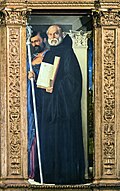 Benedict of NursiaVenerable · Founder of Monte CassinoMar 14
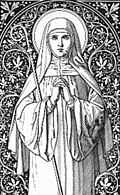 Matilda of RingelheimRight-Believing · Queen of GermanyMar 14
 Rostislav I of KievRight-Believing · Grand Prince of KievMar 14
 Theognostus of MoscowSaint · Metropolitan of Kiev and all RusMar 14
 Lazarus of MilanSaint · Archbishop of MilanMar 14
- Euschemon of LampsacusConfessor · Bishop of LampsacusMar 14
- Andrew of RafailovVenerable · Abbot of Rafailov MonasteryMar 14
- AphrodisiusMartyrMar 14
- BasilMartyrMar 14
- Boniface CuritanSaint · Bishop of RossMar 14
- CaemhanSaintMar 14
- CuimnechSaintMar 14