Saint
Fabiola
Roman matron and physician
Roman matron and physician, a disciple of St. Jerome, who gave up the pleasures of the world.
- Feast
- December 27old style January 9
- Reposed
- 3994th century
- Place
- Rome
Life
Saint Fabiola was a Roman matron of the family of the Fabii, a rich woman who, after a life marked by mistakes, did public penance, gave her wealth to the poor and founded a hospital in Rome. She died in 399 or 400. She is honoured as a saint in the Orthodox and the Catholic Church, on 27 December.
Her earlier life Fabiola belonged to the patrician family of the Fabii. She was married to a man whose life was so corrupt that living with him had become impossible. She obtained a divorce under Roman law and, against the rule of the Church, married a second time while her first husband was alive. During Blessed Jerome's stay in Rome (382 to 384) she was not part of the circle of ascetics gathered around him.
Repentance After the death of her second husband, Fabiola resolved to live in renunciation of the world and in service to others. On the eve of Easter she appeared in penitential garb at the gates of the Lateran basilica and did public penance for her sin, which deeply moved the Christian people of Rome. The pope received her again into full communion with the Church.
The hospital and works of mercy Fabiola gave up all that the world offered her and put her wealth at the service of the poor and the sick. She built a hospital in Rome, regarded as the first of its kind in the West, where she herself brought in from the streets the gravely ill, the crippled, the hungry and lepers, nursed them with her own hands and prepared their food. Jerome describes how she herself led the needy in. She gave large sums to churches and religious communities in Rome and elsewhere in Italy, and helped hermits, virgins and monasteries.
In 395, accompanying her kinsman Oceanus, she went to Bethlehem, to the monastery of Saint Paula, where she lived in the guest house, studying Scripture under the guidance of Jerome. Her questions led to Jerome's letters on the dress of the high priest and on the stations of the wilderness. An incursion of the Huns into the eastern provinces and the quarrel between Jerome and John of Jerusalem over the teachings of Origen made her stay in Bethlehem unpleasant, and she returned to Rome.
In Rome, Fabiola worked together with the former senator Pammachius on a great charitable undertaking, a hospice for pilgrims at Portus, at the mouth of the Tiber. Although Fabiola's medical practice was mainly practical, her legacy shows the part played by early Christian women in the care of the sick. She continued to help the poor and the sick until her death on 27 December 399 or 400.
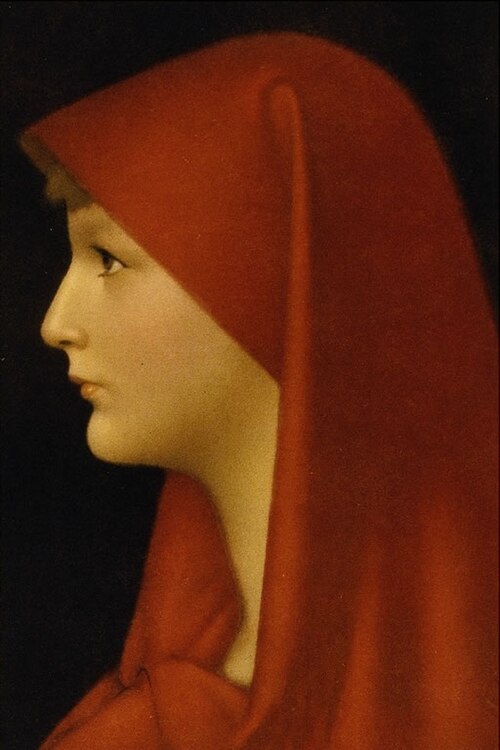
Veneration Her funeral was a sign of the gratitude and esteem of the Roman people. Jerome wrote a letter in praise of her to Oceanus. Fabiola is commemorated on 27 December. Cardinal Wiseman made her the heroine of his novel Fabiola, and the portrait painted by Jean-Jacques Henner (1885) was copied by countless artists.
Commemorated the same day December 27
 Stephen the ProtomartyrMartyr · First Martyr and ArchdeaconDec 27
 Theodore I of ConstantinopleSaint · Patriarch of ConstantinopleDec 27
 Tikhon NikanorovHieromartyr · Archbishop of VoronezhDec 27
 Theodore the BrandedConfessorDec 27
 Vassian PyatnitskySaint · Archbishop of Tambov and ShatskDec 27
- Vonifaty of FeofaniaVenerable · Elder in KyivDec 27
- Mauritius of ApameaMartyrDec 27
- Antonina BryanskikhMartyrDec 27
- FiachaSaintDec 27
- Luke of TrigliaVenerable · Venerable of Triglia, BithyniaDec 27
- Tiopraite of Magh RathaSaintDec 27
 DavidProphet · King and ProphetDec 27