Venerable Martyr
Gayane of Armenia
A virgin of Armenia, put to death for the Christian faith around 335.
- Feast
- September 30old style October 13
- Reposed
- 3354th century
- Order
- Martyrs
Life
Holy Venerable Martyr Gayane of Armenia was abbess of a convent of virgins in Asia Minor and received the crown of martyrdom in Armenia, together with Saint Hripsime and thirty-five other virgins, by order of King Tiridates. She is remembered together with the holy hieromartyr Gregory, the Illuminator of Greater Armenia.
The virgins
Hripsime, with her abbess and sisters, fled to Armenia, because she did not wish to marry the emperor Diocletian (284-305), who had been enamoured of her beauty. Diocletian wrote to the king of Armenia, Tiridates, to send Hripsime back or take her himself as wife. The king's servants found the fugitives and tried to persuade Hripsime to submit. The saint answered that she, like all the sisters of the convent, was betrothed to the heavenly Bridegroom and could not marry. Then a voice was heard from heaven: Be bold and do not fear, for I am with you. The envoys left in fear. Tiridates gave the maiden to very harsh tortures, in which her tongue was cut out, her belly cut open, she was blinded and put to death, her body cut in pieces.
The abbess Gayane, because she had urged Hripsime to bear the torments for Christ bravely, was given, with two nuns, to the same torments, after which they were beheaded with the sword. The other thirty-three sisters were cut down with swords and their bodies thrown to the beasts. The wrath of God struck King Tiridates and those of his servants and soldiers who had taken part in tormenting the virgins: possessed by demons, they became like wild boars, ran through the forests, tore their clothes and gnawed their own flesh. To Tiridates' sister Kusarodukhta it was announced in a dream that the king would not be healed unless Gregory were brought out of the pit. The king's servants went to the pit and asked whether he was alive, and Gregory answered that he was alive by the grace of his God. They brought the holy martyr out, overgrown with hair, blackened and very dried up, but still firm in spirit.
Gregory and the baptism of Armenia
Holy Hieromartyr Gregory was born in the year 257, of the line of the Parthian kings, the Arsacids. His father, Anak, aspiring to the throne of Armenia, killed King Kursar, his relative, for which the whole family of Anak was destroyed. The infant Gregory was saved by a relative, who carried him from Armenia to Caesarea of Cappadocia and raised him in the Christian faith. As a man he married and had two sons, but soon became a widower. He raised his sons in piety: one, Orfan, became a priest, and the other, Aristakes, became a monk and went into the desert. To atone for the sin of his father, who had killed the father of Tiridates, Gregory entered the latter's retinue and was a faithful servant to him. Tiridates loved him as a friend, but could not bear his Christian faith. After ascending the throne of Armenia, he began to press him to renounce Christ. The saint's unshaken firmness embittered Tiridates, who gave him to cruel torments: they hung him head downward with a stone round his neck, for several days smoked him with foul smoke, beat him, mocked him and forced him to walk in iron boots with nails. During these sufferings Saint Gregory sang psalms. In prison the Lord healed all his wounds. When Gregory stood again before the king unharmed and cheerful, the latter marvelled and ordered the torments repeated, and the saint bore them without wavering. Then they drenched him with hot tin and cast him into a pit full of venomous reptiles, but the Lord protected him, and a pious woman fed him with bread let secretly down into the pit. An angel strengthened his powers. So fourteen years passed.
The saint ordered the remains of the tormented virgins gathered, and they were buried with honour, and a church was built on the place. Into this church Saint Gregory brought the demon-possessed king and told him to pray to the holy martyrs. Tiridates was healed, repented of his sins against God and received holy baptism with all his house. Following the king's example, the whole Armenian people was baptized. Through the care of Saint Gregory the cathedral of Etchmiadzin was raised in the year 301, in honour of the Descent of the Holy Spirit. In 305 he went to Caesarea of Cappadocia and was ordained bishop of Armenia by Archbishop Leontius, and for his apostolic labours he received the name of Illuminator of Armenia. He brought many people to Christ also from the neighbouring countries, Persia and Assyria. After establishing the Armenian Church, he called to episcopal service his son Aristakes, who was labouring in the desert, while he himself withdrew into the desert and departed to the Lord in the year 335. His right hand and a part of his holy relics rest today in the treasury of the cathedral of Etchmiadzin. According to the tradition of the Armenian Apostolic Church, kept to this day, with this right hand the supreme catholicos-patriarch of all Armenians blesses the holy myrrh during its preparation. The saints are commemorated on 13 October.
Commemorated the same day September 30
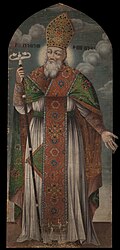 Gregory the IlluminatorHieromartyr · Bishop of Greater ArmeniaSep 30
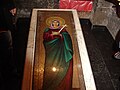 HripsimeGreat MartyrSep 30
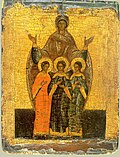 Faith, Hope, Love and their Mother SophiaHoly MartyrsSep 30
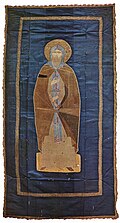 Gregory of PelshmaVenerable · Founder of Pelshma MonasterySep 30
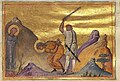 GayaneVenerable Martyr · Armenian abbessSep 30
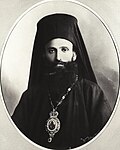 Aimilianos of GrevenaHieromartyr · Metropolitan of GrevenaSep 30
- Alexander OrlovHieromartyr · ArchpriestSep 30
- 32 Virgin MartyrsMartyrSep 30
- 70 Martyrs Slain with RhipsimeMartyrSep 30
- Airinne of BreachmhaghSaintSep 30
- Alexander ShishinHieromartyrSep 30
- Alexandra ChervyakovaVenerable MartyrSep 30