Saint
George of Chkondidi
Archbishop of Chkondidi
Archbishop in western Georgia, tutor and close adviser of King David IV, who died around 1118.
- Feast
- September 12old style September 25
- Reposed
- 111812th century
- Place
- Kingdom of Georgia
- Order
- Hierarchs
Life
Saint George of Chkondidi (Giorgi Chqondideli) was archbishop of Chkondidi in western Georgia, the tutor and closest adviser of King David IV (1089 to 1125), who died around 1118. He was canonized by the Georgian Orthodox Church on 27 June 2005, among the holy hierarchs, and is commemorated on 12 September. The birth year 1001 on the record does not fit the other data.
Nothing is known of his life before his accession to the see of Chkondidi, in 1103 or 1104, except that, already a monk, he was the tutor of David IV when David was only heir to the throne. After David came to the throne, George became tutor of his son, the future king Demetre I. He served as archbishop of Chkondidi and perhaps played a role in a palace coup in which George II was forced to cede power to his young and energetic son David, himself remaining only a co-king. He was the tutor and spiritual father of David and was appointed by the new king grand chancellor of Georgia (Mtsignobartukhutsesi), after the Council of Ruisi-Urbnisi of 1103. From then on this office, for a time the greatest at the Georgian court, was usually held by the archbishops of Chkondidi. He was David's key ally in the reforms of the Church and the state machinery; according to the Russian source, he was in fact second in the kingdom after the king, with the title of Mtsignobartukhutsesi and first of all the viziers.
He personally led, together with David, the operations of driving out the Seljuk Turks: the Kingdom of Kakheti was annexed (1106) and the strongholds of Samshvilde (1110) and Rustavi (1115) were recovered. With his help regular troops were gathered to defend the borders against the Seljuk Turks from among the Cumans, 40,000 families being settled in Georgia in the years 1118 to 1120, who were given land, cattle and houses for a settled life. In 1118 he accompanied the king on a journey to the Cuman lands to negotiate the recruitment of these nomadic tribes into the royal army; he never returned to Georgia, dying in Alania (Ossetia) in that year. According to the Georgian Chronicles, he was mourned as a father, and even more deeply, by the whole kingdom, and by the king himself, who wore black for forty days. The Chronicles say he was buried at the Gelati cathedral, but the Russian source says that the exact place is not known, historians inclining to the monastery complexes of Shiomghvime and Gelati. The art historian Guram Abramishvili identifies him with the figure depicted in a fresco in the Sioni church at Ateni, leading a row of royal donors, otherwise thought to represent George II after his retirement to a monastery.
Commemorated the same day September 12
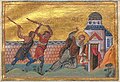 AutonomusHieromartyr · Bishop in BithyniaSep 12
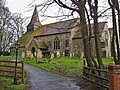 EanswytheVenerable · Princess and abbess of KentSep 12
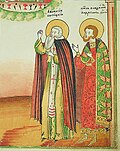 Athanasius of VysotskVenerable · First abbot of Vysotsky MonasterySep 12
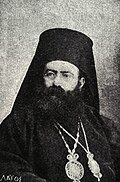 Gregory of KydoniesHieromartyr · Metropolitan of KydoniesSep 12
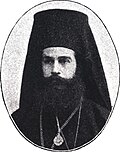 Ambrosios of MoschonisiaHieromartyr · Metropolitan of MoschonisiaSep 12
- Dositheus of TbilisiHieromartyr · Archbishop of TbilisiSep 12
- Felix and CyprianHoly Hieromartyrs · Bishops of AfricaSep 12
- Daniel of ThassosSaintSep 12
- Serapion of CataniaHieromartyrSep 12
- Vassian of TiksnaVenerableSep 12
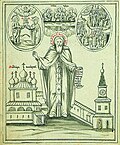 Athanasius the Younger of VysotskVenerable · Abbot of Vysotsky MonasterySep 12
- Cornutus of IconiumHieromartyr · Bishop of IconiumSep 12