
Hieromartyr
Gregory Zlatorunsky
Priest
Priest born in 1877 in the Kuban region, killed on 21 June 1918 at Bogoslovskoye in the Stavropol region.
Life
Saint Gregory Zlatorunsky, the Hieromartyr (1877 to 1918), was a parish priest in the Kuban and the Stavropol region, from a family of psalm-readers, a missionary among sectarians and a gentle man. He was killed by Red soldiers in the night of 20 to 21 June 1918, near the village of Barsukovskaya, after a denunciation accused him of having helped the rebel Cossacks. The Holy Synod of the Russian Church numbered him among the saints in 2023. He is commemorated on 21 June, the day of his death, and on 13 May in the Synaxis of the Saints of the Stavropol Metropolis.
Family and training
He was born on 4 January 1877 in the stanitsa of Mikhailovskaya, Laba district, Kuban region, the third and youngest child of the hereditary psalm-reader Vasily Grigorievich Zlatorunsky and his wife Fekla Semyonovna. His father served almost without a break, from 17 December 1862, at the church of the Protection in the stanitsa of Mikhailovskaya, 120 versts from the spiritual consistory. At first he was sexton, two years later confirmed in the post and in 1868 ordained to the sticharion. From 1886, for more than ten years, he taught the children, under the priest's direction, at the parish school of Mikhailovskaya, with special zeal and love. For fifty years of service he received in May 1911 a gold medal on a ribbon, to be worn on the neck. The three children of the family grew up in the spirit of the Church: the eldest, Benedict, served as a priest in the stanitsa of Novorogovskaya, the youngest was Saint Gregory, and the daughter, Tatiana, became a deacon's wife.
At ten, in 1887, Gregory entered the theological school at Yekaterinodar. At first his studies went well, but then problems appeared: in the third class he had a re-examination in Latin and was left to repeat, and in the fourth, in geography. Still, by diligent work he completed the full course in 1892. Preparing to follow his father and grandfather, on 11 January 1894 he passed the psalm-reader's examination before the commission at Stavropol, and on 24 February he was named psalm-reader at the church of the Nativity of the Mother of God in Novy Burukshun, Alexandrovsk district, Stavropol province. The settlement had been founded only in 1887, 250 versts from the provincial town. The parish was poor, and the church did not even have enough service vessels. Father Gavriil Shulgin, almost twenty years older, was his mentor for four years. In the service record of 1896 he wrote of Gregory: he knows the church order and the short catechism well, reads and sings very well, is capable in his duty.
In 1896 Gregory married the maiden Tatiana Efimovna, who remained his life's companion to the end. On 15 March 1897 he passed the examination as teacher of the primary schools of the Ministry of Education. On 22 April 1898 he was moved as deacon-teacher to the church of the Protection in the village of Severnoe and on 21 June was ordained deacon by Archbishop Agathodor (Preobrazhensky). For almost eleven years he served as deacon in churches of Stavropol province and the Kuban. His many years of labour in the care of schools and the teaching of children brought thanks and in 1909 a jubilee silver medal. On 25 March 1909 he was ordained priest of the church of the Protection in the village of Golitsyno in the Kuban.
The missionary
A turning point in his service was his participation, in 1911, in the glorification of Saint Joasaph of Belgorod. Beside the incorrupt relics he prayed: "Holy father Joasaph, kindle in me the gift of priesthood, help me walk worthy of my calling". The pilgrimage strengthened him in the wish to confirm holy faith in the souls of his flock and to guard it from the influence of sects, heresies and schismatics. From that moment he gave more attention to guiding those who had gone astray in faith and life. In 1912 and 1913 he had his first experience of mission, also in printed word, in the "Stavropol Diocesan Gazette", where he explained the true meaning of the military oath, the need of baptizing infants and the benefit of fasting for the soul and body of the Christian. He presented the teaching in the genre of travel notes, then popular. From August 1914 to June 1918 he served at the church of Saint Nicholas in the stanitsa of Barsukovskaya.
Martyrdom
After the revolution, in 1918 a fierce struggle for power developed in Stavropol and the Kuban between the Bolsheviks and the supporters of the White movement. The Bolsheviks carried out mass shootings and killings, among the victims priests too. Father Gregory, to prevent brother-against-brother war, urged the Cossacks in pastoral talks: "If they take your land, give it, that there be no bloodshed". After the Cossacks' unsuccessful march on the stanitsa of Nevinnomyssk, Red soldiers occupied the stanitsa of Barsukovskaya on the morning of 18 June 1918. The same day a denunciation was received that Father Gregory had supported the rebel Cossacks (had served a moleben for them, given them Holy Communion and helped with money). Red soldiers were among the first to burst into the priest's house, arrested him and sent him as hostage to the headquarters in the village of Bogoslovskoe.
Comforting his wife, Father Gregory said: "Do not grieve, my death is very good, for I perish innocent and need no better death. You know I always desired to suffer for the truth. Perhaps they will kill me somewhere beyond the stanitsa, will not let me be buried, and for this do not weep". The trial was set for 5 p.m. on 20 June 1918 in the stanitsa of Barsukovskaya. According to eyewitnesses, during the trial the accused answered questions "cheerfully and calmly", and on his gentle face "there was not a shadow of fear". By vote, with a majority of only one, Father Gregory was sentenced to death. Because the trial ended late, execution was put off until morning. But the same night of 20 to 21 June 1918 the Bolsheviks, receiving an urgent order to return from Barsukovskaya to the stanitsa of Otradnaya, burst before leaving into the room with the six arrested men, led them beyond the stanitsa, to the river Barsuki, where Father Gregory, with the other prisoners, was cruelly executed, "literally hacked to small pieces". Father Gregory's last words were: "I die for the Faith, the Tsar and the Fatherland". After the Volunteer Army came to the stanitsa, at the request of the saint's widow, Father Nazary Ivanov of the church of Saint Daniel in Stavropol performed the funeral service on 31 July 1918.
Glorification
The memory of the slain priest Gregory Zlatorunsky has been honoured in the dioceses of the Stavropol Metropolis, and his name has been spoken since 2016 at the memorial services on the day of the Synaxis of the New Martyrs and Confessors of the Russian Church. On 25 August 2022 the Holy Synod of the Russian Church, at the request of Metropolitan Kirill of Stavropol and Nevinnomyssk, in the name of the Bishops' Council of the Metropolis, blessed the inclusion in the Synaxis of the New Martyrs of the names of Saints Gregory Zlatorunsky and Dimitry Semyonov. On 3 September 2023 Patriarch Kirill celebrated the Liturgy in the Cathedral of Christ the Saviour in Moscow, at which the glorification took place, among the new martyrs and confessors of Russia of the twentieth century, of the priest Gregory Zlatorunsky.
Commemorated the same day July 21
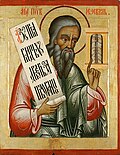 EzekielProphet · The ProphetJul 21
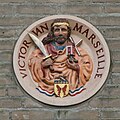 Victor of MarseillesMartyrJul 21
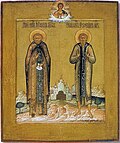 Simeon the Holy FoolFool-for-ChristJul 21
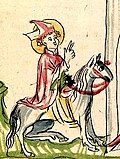 Arbogast of StrasbourgSaint · Bishop of StrasbourgJul 21
 TryphineSaint · Breton saintJul 21
 Arsenia SebryakovaVenerable · Abbess of Ust-Medveditsa ConventJul 21
 Onuphrius the SilentVenerable · Monk of the Near CavesJul 21
 Meletios of KitrosHieromartyr · Bishop of KitrosJul 21
- AcaciusMartyrJul 21
- Curcach of Cill CurcaigheVenerableJul 21
 Éterne of ÉvreuxSaintJul 21
- EugeneMartyrJul 21