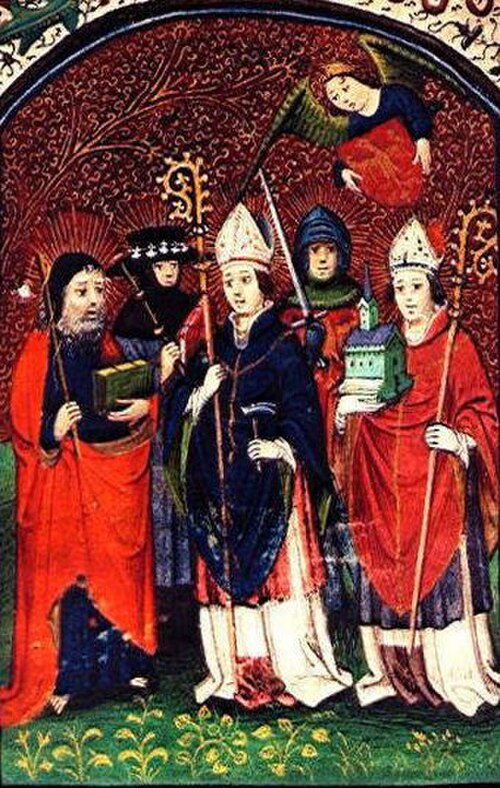
Martyr
Hermes of Rome
Martyr of Rome
Greek by birth, he died a martyr in Rome around 120; a great basilica was built over his tomb.
Life
Saint Hermes the Martyr was Greek by birth and died a martyr at Rome around 120. He is venerated by the Roman Catholic and the Orthodox Church. The Church remembers him on 28 August. His name appears in the Martyrologium Hieronymianum and in the Depositio Martyrum of 354. The Roman Martyrology says of him: "In the cemetery of Basilla on the Old Salarian Way, Saint Hermes, martyr, whom, as Pope Damasus reports, Greece sent forth, but Rome kept as its citizen when he died for the holy name."
His existence is attested by his early cult. His Acts, however, included in those of Pope Alexander I, are legendary. According to them Hermes was a wealthy freedman of Greek descent, who was killed at Rome with his companions by order of a judge, Aurelian. He was buried in the cemetery of Basilla. Over his tomb a great basilica was built around 600 by Pope Pelagius, restored later by Pope Adrian I. The catacomb of Sant'Ermete on the Via Salaria bears his name.
Some relics were given to Spoleto by Pope Gregory the Great. Others were given to Lothair I by Pope Leo IV, who brought them first to Cornelismünster near Aachen. The relics came then to Ronse in the ninth century. Viking attacks forced the monks to flee, and the monastery was burned by the Normans in 880. The relics were found again in 940 and placed in 1083 in a Romanesque crypt. Since 1090 the Fiertelommegang has been held at Ronse, a procession with the relics through the city. The church of Saint Hermes, built afterward above the crypt, was consecrated in 1129. A pilgrimage in his honour, he having become known as a healer of mental illnesses, sustained the local economy. A French saying is still told: "Saint Hermes cures the area's madmen but keeps the Ronse dwellers as they are." He is patron of Ronse. In 1969 his commemoration was removed from the General Roman Calendar, because of the paucity of information about him. In 829 Pope Gregory IV ordered the body moved to the basilica of Saint Mark in Rome.
Commemorated the same day August 28
 HezekiahRight-Believing · King of JudahAug 28
 Moses the BlackVenerable · Ascetic of the Scetis DesertAug 28
 Julian of BrioudeMartyr · Martyr of BrioudeAug 28
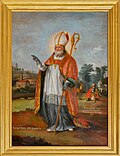 Vivianus of SaintesSaint · Bishop of SaintesAug 28
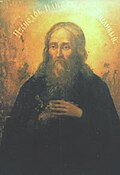 Paul the ObedientVenerable · Ascetic of the Far CavesAug 28
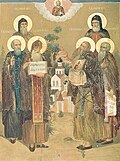 Savva of KrypetsVenerable · Founder of Krypets MonasteryAug 28
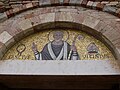 Vicinius of SarsinaSaint · First bishop of SarsinaAug 28
 Zechariah the FasterVenerable · Faster of the Kiev CavesAug 28
 Ignatius of the Kiev CavesVenerable · Archimandrite of the Kiev CavesAug 28
 Pancratius the RecluseVenerable · Hieromonk of the Kiev CavesAug 28
 Theophilus of NovgorodSaint · Archbishop of Novgorod and PskovAug 28
- Akindin of the CavesVenerable · Archimandrite of the Kyiv Caves LavraAug 28