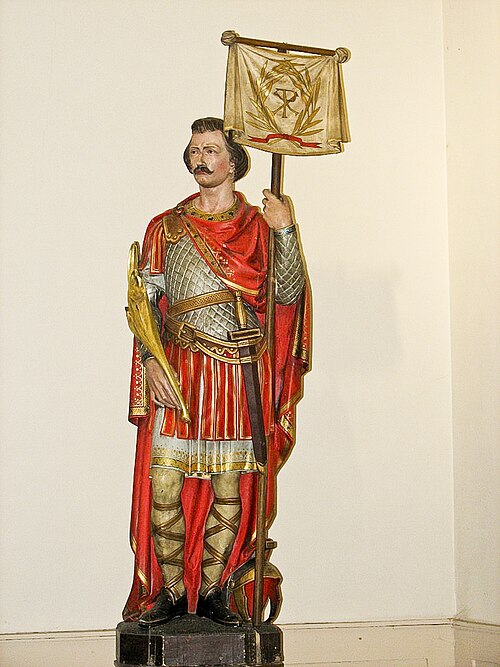
Martyr
Julian of Brioude
Martyr of Brioude
Legendary martyr from Vienne who died around 304; his cult took root at Brioude in the Auvergne.
Life
Saint Julian was a Christian soldier from Vienne, in Gaul, who died a martyr around the year 304, in the time of the persecution under Diocletian. His veneration took root at Brioude, in the Auvergne, where his tomb lies, and it became one of the most widespread in Gaul. His story is known mainly from the writings of Gregory of Tours.
Martyrdom
Little certain is known about his life. He was an officer in the Roman army and was at Vienne when the governor Crispinus began to persecute the Christians, although the name of the governor is disputed. His friend the tribune Ferreolus, himself honoured as a saint, advised him to leave the city and hid him for a time.
Julian fled towards the region of Clermont and hid in the house of a poor woman. When he learned that the persecutors were looking for him, he no longer wished to hide, and presented himself to receive death. His executioners beheaded him at Brioude, washed his head in a spring nearby and carried it to Vienne. His body was buried at Brioude by two old men who, according to tradition, felt young again afterwards.
Miracles and veneration
According to the accounts this was the first of a series of miracles. Gregory of Tours, who wrote the life and the Miracles of Julian, records healings, among them that of his own brother, and the punishment of the wicked, above all of perjurers. The place of the saint's death very early became a place of pilgrimage, and a small shrine was raised over the spring. Gregory tells of many people cured by drinking water from the fountain.
In 543 Bishop Gallus of Clermont ordained rogation prayers, and the faithful went in procession to the church of Saint Julian at Brioude, asking for help against the plague that afflicted their city. Gallus and his nephew Gregory, who became bishop of Tours, tried to turn this regional cult into one of wide importance. The relics were divided, and the veneration spread to Reims, Tours, the monastery of Limoges and eastwards. Gregory also mentions a church in Paris dedicated to the saint near the bridge called the Petit Pont. His attempt to make the saint known in Touraine and Aquitaine, however, had no lasting fruit.
A church was built over the tomb and grew into the Basilica of Saint-Julien de Brioude, the largest Romanesque church in the Auvergne. The feast on 28 August drew so many pilgrims that in the mid-eleventh century the chapter had to build a hostel for the poor and sick who came. Odilo of Cluny studied at the seminary of Saint Julian in Brioude. To this day a liturgy is celebrated beside the fountain on the feast day, during the patronal feast of the town.
Commemorated the same day August 28
 HezekiahRight-Believing · King of JudahAug 28
 Moses the BlackVenerable · Ascetic of the Scetis DesertAug 28
 Hermes of RomeMartyr · Martyr of RomeAug 28
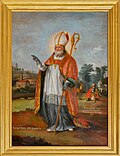 Vivianus of SaintesSaint · Bishop of SaintesAug 28
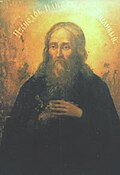 Paul the ObedientVenerable · Ascetic of the Far CavesAug 28
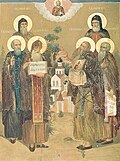 Savva of KrypetsVenerable · Founder of Krypets MonasteryAug 28
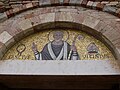 Vicinius of SarsinaSaint · First bishop of SarsinaAug 28
 Zechariah the FasterVenerable · Faster of the Kiev CavesAug 28
 Ignatius of the Kiev CavesVenerable · Archimandrite of the Kiev CavesAug 28
 Pancratius the RecluseVenerable · Hieromonk of the Kiev CavesAug 28
 Theophilus of NovgorodSaint · Archbishop of Novgorod and PskovAug 28
- Akindin of the CavesVenerable · Archimandrite of the Kyiv Caves LavraAug 28