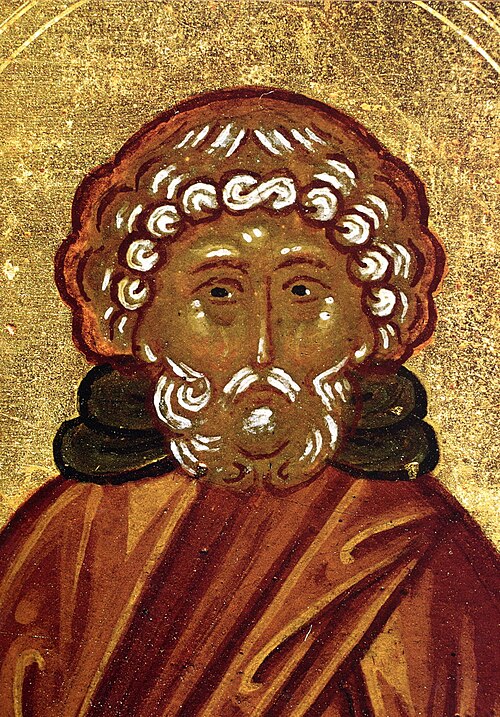
Venerable
Moses the Black
Ascetic of the Scetis Desert
Ethiopian who was once a robber, then repented and became a monk and priest in the desert of Egypt.
- Feast
- August 28old style September 10
- Reposed
- 3954th century
- Place
- Egypt
- Order
- Venerables
Life
Saint Moses the Black (Moses the Ethiopian, Moses the Robber) was a Nubian monk and priest, an ascetic in the desert of Scetis in Egypt, in the fourth century, one of the Desert Fathers. He turned from a life of banditry to one of ascetic struggle and is much honoured in the Orthodox Church and the ancient Eastern Churches. He is commemorated on 28 August. The historian Sozomen speaks of him, some seventy years after his death.
Youth
Moses was a Nubian, black of face, whence the name “Murin” (like an Ethiopian). In youth he was the slave of an important man, but after he committed a murder his master drove him out, and he joined a band of robbers. A man of huge stature, with strength and courage, he became leader of a gang of seventy-five robbers, which ravaged the Nile Valley and was a terror to the villages it passed through. Once a barking dog kept him from robbing, and he swore vengeance on its owner. He swam the Nile with a sword in his mouth toward the man’s hut, but the man, warned again, hid, and Moses, angry, stole four sheep, slaughtered them and sold the fleece for wine. Pursued by the authorities, he hid with some monks in the desert of Wadi El Natrun, then called Scetis, near Alexandria. Their life of prayer, with peace and contentment, moved him deeply; soon he gave up his old ways, was baptized and joined the monastic community at Scetis.
Ascetic struggle
It was hard for him to get used to monastic order, and traces of his old habits lingered for a time. Once, attacked in his cell by robbers, he fought them, overpowered them and dragged them into the chapel, where the brothers were at prayer, saying that he did not think it Christian to hurt them and asking what to do with them. The robbers repented and joined the community too. Moses was zealous in all he did, but fell into discouragement, thinking himself not perfect enough. Then at dawn Abba Isidore took him up on the roof, showed him the first rays of the day and said, “Only slowly do the rays of the sun drive away the night and bring in the new day, and so only slowly does a man come to perfection.”
In a week of fasting ordered by the abbot, some brothers came to Moses and he prepared food for them. Neighbouring monks told the abbot that Moses had broken the fast, but when they came to rebuke him, they said, “You did not keep a human commandment, but the divine commandment of hospitality.” When a brother had erred and Moses was called to a meeting to decide the penance, he refused to come. Called a second time, he came with a sack full of sand on his shoulder. Asked why he carried it, he answered, “My sins run out behind me and I do not see them, and today I come to judge another’s error.” Hearing this, the brothers forgave the guilty one. Later Moses was ordained priest by Patriarch Theophilus of Alexandria and became spiritual father of a colony of hermits in the western desert. He was given the gift of foresight and of working miracles.
His end
At about seventy-five, around the year 405, word came that the Mazices, a Berber people, were going to attack the monastery. The brothers wanted to defend themselves, but Moses forbade it, telling them to retreat without arms. Saying that a death by the sword was fitting for a former robber, “all who take the sword will perish by the sword”, he resolved to stay. Seven brothers stayed with him and together they received death from the raiders, on 24 Paoni (1 July). He is patron of Africans and is invoked for deliverance from drunkenness. The Orthodox Church commemorates him on 28 August, with the seven monks.
Commemorated the same day August 28
 HezekiahRight-Believing · King of JudahAug 28
 Hermes of RomeMartyr · Martyr of RomeAug 28
 Julian of BrioudeMartyr · Martyr of BrioudeAug 28
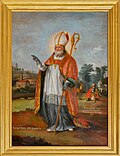 Vivianus of SaintesSaint · Bishop of SaintesAug 28
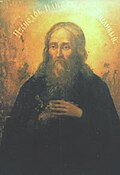 Paul the ObedientVenerable · Ascetic of the Far CavesAug 28
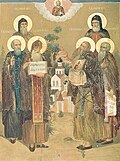 Savva of KrypetsVenerable · Founder of Krypets MonasteryAug 28
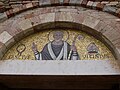 Vicinius of SarsinaSaint · First bishop of SarsinaAug 28
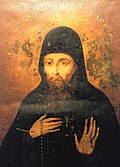 Zechariah the FasterVenerable · Faster of the Kiev CavesAug 28
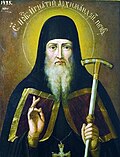 Ignatius of the Kiev CavesVenerable · Archimandrite of the Kiev CavesAug 28
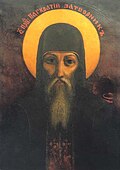 Pancratius the RecluseVenerable · Hieromonk of the Kiev CavesAug 28
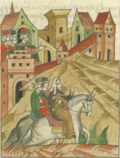 Theophilus of NovgorodSaint · Archbishop of Novgorod and PskovAug 28
- Akindin of the CavesVenerable · Archimandrite of the Kyiv Caves LavraAug 28