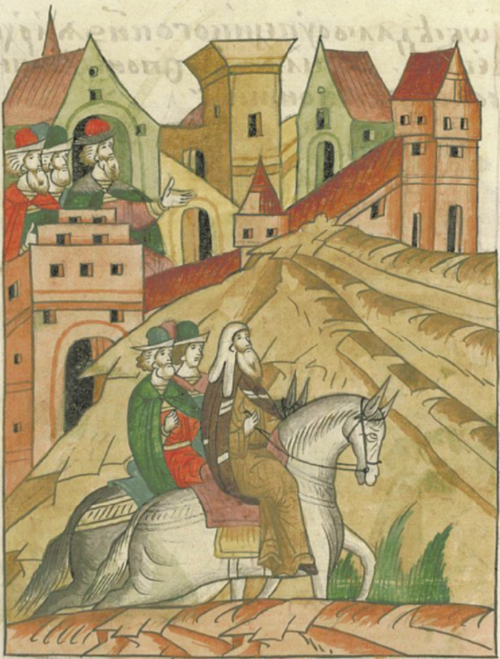
Saint
Theophilus of Novgorod
Archbishop of Novgorod and Pskov
Last archbishop of Novgorod chosen by the popular assembly, who died in 1484.
Life
Saint Theophilus (died 26 October 1484) was Archbishop of Great Novgorod and Pskov, the last hierarch of Novgorod chosen by the popular assembly (veche). He was glorified as Theophilus of the Caves; his incorrupt relics lie in the Far Caves of the Kyiv Caves Lavra. He is commemorated on 26 October and on 28 August, the day of the synaxis of the Fathers of the Far Caves (the Ukrainian source gives 8 November instead of 28 August).
Life
The date of Theophilus' birth is unknown. He received monasticism at the Otensky monastery and, under Saint Jonah of Novgorod, was protodeacon and sacristan of the see. Archbishop Jonah died on 5 November 1470. After his death Theophilus became the last bishop of Novgorod chosen by lot from candidates presented by the Novgorod veche; the date of election is 15 November (according to the Russian source) or 5 December (according to the Ukrainian). The sources disagree on the consecration: the Russian says he was installed in Moscow by Metropolitan Philip I of Moscow on 15 December 1471, and the Ukrainian says that, after Ivan III proclaimed Novgorod his patrimony, Theophilus refused to receive consecration at Moscow and, despite the break of diplomatic ties with Moscow, did not dare to take episcopal consecration at Kiev. His election coincided with the invitation to rule in Novgorod of Prince Michael Olelkovich from Lithuania, which showed the Novgorodians' turning away from the pro-Moscow line. The Lithuanian party demanded a total break with Moscow and held talks with Casimir IV. The possibility was not excluded that Theophilus would be consecrated by the Metropolitan of Kiev, Galicia and All Rus, Gregory II (the Bulgarian), a former Uniate. Amid the political turmoil in Novgorod, the prince of Moscow Ivan III Vasilievich decided in March 1471 to march against Novgorod.
After the defeat of the Novgorod army on the Shelon, Theophilus held talks with the grand prince, ending in the signing at Korostyn of the Moscow-Novgorod treaty and his installation as archbishop by the Metropolitan of Moscow. On 31 March 1476 he led the embassy to Moscow to Ivan III, which also included the posadniks Yakov Alexandrovich Korob, Akinfy Tolstoy and Yakov Fyodorovich; the aim was "to bow the forehead to the grand prince for those posadniks whom the grand prince had seized in Novgorod". The seized posadniks were held at Kolomna and at Murom. The embassy failed: "those seized posadniks the grand prince let go not a single one". After two weeks of fruitless talks the envoys set out on the way back. On 26 October 1479 Ivan III again set out for Novgorod, to abolish the remnants of Novgorodian independence. By his order, Theophilus was removed from the see on 19 (or 24) January 1480, arrested and imprisoned in the Chudov monastery (or, according to the Ukrainian source, exiled to Moscow, to the Chudov monastery, on the charge of secret ties with Lithuania; the Ukrainian source also shows that in 1478 he tried in vain to persuade the prince to lift the siege, but Ivan III entered Novgorod). In 1483, in confinement, he signed the so-called document of renunciation, by which he undertook not to be called archbishop and to remain in the greatest humility to the last breath, after which he was freed but stayed in Moscow.
The end and the relics
In 1484 Theophilus set out for Kiev to venerate the saints of the Caves, but died on the way. He was buried in the Far (Theodosian) Caves of the Kyiv Caves Lavra. Tatiana Panova, on the other hand, lists his name among those buried in the Chudov monastery in the Kremlin and says his grave is lost. The Ukrainian source shows several versions of his death: according to one, he died in the Chudov monastery; according to another, he was laid in Great Novgorod in the Saint Sophia cathedral; according to a third, toward the end of his life, gravely ill, to fulfil an old vow to venerate the saints of the Lavra, he ordered himself taken to Kiev, but died on the way, near the Dnieper; the hierarch's body, in a tarred log, was set on the Dnieper and came ashore beside the walls of the Caves monastery, whence it was buried in the Far Caves, where his relics rest today.
Information about his spiritual labors has not been preserved; his holiness is attested by posthumous miracles from his relics, recorded in the Caves Lavra. In the akathist to all the venerable ones of the Caves it is said of him: "Rejoice, holy hierarch Theophilus, good shepherd, who wast ready to lay down thy life for the sheep thou didst pasture". His incorrupt relics are in the Far Caves, not far from the relics of Arsenius the Hard-worker and from the underground church of the Annunciation. Anthropological research shows that he died at the age of sixty to seventy, that his height was 172 to 176 cm, that he had limited mobility at the hip joints and probably could no longer walk alone; the Ukrainian source adds that, at his death, he was the oldest of those studied.
Commemorated the same day August 28
 HezekiahRight-Believing · King of JudahAug 28
 Moses the BlackVenerable · Ascetic of the Scetis DesertAug 28
 Hermes of RomeMartyr · Martyr of RomeAug 28
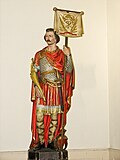 Julian of BrioudeMartyr · Martyr of BrioudeAug 28
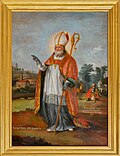 Vivianus of SaintesSaint · Bishop of SaintesAug 28
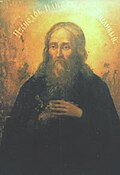 Paul the ObedientVenerable · Ascetic of the Far CavesAug 28
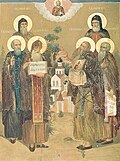 Savva of KrypetsVenerable · Founder of Krypets MonasteryAug 28
 Vicinius of SarsinaSaint · First bishop of SarsinaAug 28
 Zechariah the FasterVenerable · Faster of the Kiev CavesAug 28
 Ignatius of the Kiev CavesVenerable · Archimandrite of the Kiev CavesAug 28
 Pancratius the RecluseVenerable · Hieromonk of the Kiev CavesAug 28
- Akindin of the CavesVenerable · Archimandrite of the Kyiv Caves LavraAug 28