Saint
Hermion
A saint of the great persecution, venerated in the West, of around 303.
- Feast
- February 28old style March 13
- Reposed
- 3034th century
Life
Saint Hermion is a martyr who died, according to tradition, in the year 303, in the persecutions of the Emperor Diocletian. No life of him survives; his veneration rests only on his relics.
The relics were found in the catacombs of Saint Cyriaca in Rome. In his tomb were the name of the saint and a vessel with blood, a sure sign of martyrdom. The exiled Jesuit Pedro José Márquez Ochoa, at the request of a priest of the parish of Santa María de los Lagos (Jalisco, Mexico), asked Pope Pius VI for the relics. They were taken from the catacombs on 29 December 1789, and the deed of donation was issued on 7 April 1790. They left Rome on 2 June 1790 by the Tiber, toward the port of Civitavecchia, from where they were shipped to Cádiz at the end of January 1791. They then came to Lagos de Moreno, where they were set on an altar in July 1791.
The Bishop of Guadalajara decreed in 1792 that the feast of Saint Hermion be kept on 28 February, the day on which a wooden stairway is placed before the altar so that the faithful can see the shrine closely. The remains lie in a wax body dressed as a Roman soldier; for this reason some have wrongly taken him for a soldier, though no data confirm or deny it. In 2018 the wax body-reliquary was examined by X-ray. He is honored as a saint of the undivided Church.
Commemorated the same day February 28
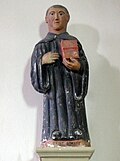 Romanus of CondatVenerable · Hermit of the JuraFeb 28
 Nestor of MagydosHieromartyr · Bishop of MagydosFeb 28
 Kyranna of ThessalonicaNew Martyr · Martyr of ThessalonicaFeb 28
 Nicholas Salos of PskovFool-for-Christ · Fool for Christ of PskovFeb 28
 Basil the ConfessorVenerable · Byzantine monkFeb 28
 Marina and CyraHoly Venerables · Nuns of SyriaFeb 28
- NymphasApostle · One of the SeventyFeb 28
- Leo of CappadociaVenerable · Ascetic of CappadociaFeb 28
- AvrikiosMartyrFeb 28
- BarsusSaint · Bishop of DamascusFeb 28
- Cairalius, Pupulius, Gaius and SerapionHoly MartyrsFeb 28
 Cyra of BeroeaVenerableFeb 28