Saint
Hilary of Arles
Bishop of Arles
Bishop of Arles in southern Gaul from 429 to 449, venerated in both the East and the West.
Life
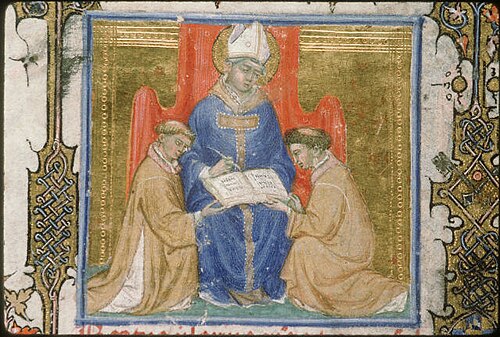
Saint Hilary of Arles (in Latin Hilarius), hierarch, was bishop of Arles in southern Gaul from 429 to 449. Venerated in the Orthodox and in the Catholic Church, he is commemorated on 5 May. He was a monk at the monastery of Lérins, a preacher famous for his learning and piety, and a shepherd who wished to preserve the primacy of his see in Gaul, which brought him into conflict with Pope Leo I.
Youth
Hilary was the son of noble parents of southern Gaul and, it is said, a relative of a Hilarius who had been prefect of Gaul in 396 and of Rome in 408. After a restless youth he met his kinsman, Bishop Honoratus of Arles, who brought him to the faith and to a pious life. He sold his inheritance and in the 420s entered the monastery of Lérins, with a very strict community, then led by Honoratus. Later he wrote the latter's Life.
Episcopate
In 429 he succeeded Honoratus as bishop of Arles, chosen for his wisdom and worthy life. After the example of Augustine of Hippo, it is said that he organized the clergy of his cathedral into a congregation, devoting much time to ascetic labours. He was known as a notable preacher, in a rather simple style, and promoted asceticism among the clergy. He was also metropolitan of Vienne and Narbonne and sought to make his primacy felt over the Church of southern Gaul, in the manner in which it had been recognized for his predecessor, Patroclus, in 417.
He deposed Bishop Chelidonius of Besançon, because he did not accept this primacy and claimed for Besançon the rank of metropolis. Appeal was made to Rome, and Pope Leo I used the appeal in 444 to abolish the Gallic vicariate headed by Hilary, taking from him the right to consecrate bishops, to call synods and to oversee the Church in the province. The pope also obtained an edict of Valentinian III that made these claims imperial law. It is thought that the dispute arose because the rights of Rome and of the metropolitans were not yet well established. It is also said that he opposed the Augustinian teaching on predestination.
Death and writings
Tradition says that he died on 5 May 449, aged 48, at Arles. Hilary was esteemed in his lifetime for learning, eloquence and piety. Of his writings the Life of Honoratus and a poem, Metrum in Genesin, survive; the poem De providentia is sometimes also attributed to him. The sermons collected under his name are valuable also for the history of daily life in Western Europe in the fifth century.
Commemorated the same day May 5
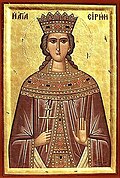 Irene of MacedoniaGreat Martyr · Great Martyr of MacedoniaMay 5
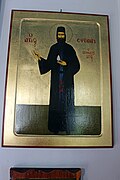 Ephraim of Nea MakriVenerable Martyr · Monk martyr of AtticaMay 5
 Irene of ThessalonicaMartyr · Martyr of ThessalonicaMay 5
- Maximus III of JerusalemSaint · Bishop of JerusalemMay 5
 Adrian of MonzaVenerable · Founder of the Monza River monasteryMay 5
- LannoMartyrMay 5
- Matrona of HureziVenerable · Abbess of Hurezi MonasteryMay 5
- Gideon of SerpukhovVenerable · MonkMay 5
- Euthymius of MadytosSaint · Bishop of MadytosMay 5
- Amador, Pedro and Luis of MartosHoly MartyrsMay 5
- Amator of CórdobaHieromartyrMay 5
- Barlaam of SerpukhovVenerableMay 5