Saint
Maximus III of Jerusalem
Bishop of Jerusalem
Bishop of Jerusalem from about 333 until his death in 347, the third of that name.
Life
Saint Maximus III was Bishop of Jerusalem from about 333 until his death in 347 (some dates say 350), a confessor of the faith, tortured in a persecution. He is the third bishop of Jerusalem of that name, the other two having lived in the second half of the second century. The Roman Catholic Church commemorates him on 5 May, and the Orthodox Church on 9 May and, according to one source, on 26 August.
Confessor and bishop
In one of the persecutions of the early fourth century he was tortured for the Christian faith and was called a confessor, though modern sources disagree whether this was in the time of Galerius Maximian or of the co-emperors Diocletian and Maximian. He was a priest in Jerusalem. According to Sozomen, he was so beloved by the people for his goodness and his confession that when Saint Macarius wished to make him bishop of Lydda (Diospolis), the people insisted that he remain in Jerusalem. After Macarius's death he became bishop of Jerusalem.
In 335 he took part in the synod of Tyre and signed the condemnation of Athanasius. Around 346, when Athanasius returned from exile, Maximus convened at Jerusalem a synod of sixteen Palestinian bishops, who received Athanasius. Socrates Scholasticus writes that Maximus restored to him communion and rank. Athanasius received support against the Arians, and Maximus advanced the wish of the bishops of Jerusalem that their see be regarded as equal to the metropolitan see of Caesarea, a wish achieved later, in 451.
His successor
Maximus was succeeded by Saint Cyril, but the manner of it is unclear. Sozomen and Socrates say that he was set aside in favour of Cyril by the Arians Acacius of Caesarea and Patrophilus of Scythopolis. Jerome says instead that Maximus's intended successor was Heraclius, named on his deathbed, but that Acacius and Cyril set Heraclius aside and made Cyril bishop. Rufinus says only that the ordination was in some unspecified way irregular. However the succession took place, Cyril and Acacius became bitter enemies in the following years, both in the Arian dispute and over the precedence of their sees.
Commemorated the same day May 5
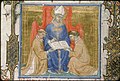 Hilary of ArlesSaint · Bishop of ArlesMay 5
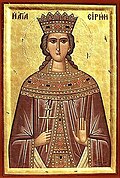 Irene of MacedoniaGreat Martyr · Great Martyr of MacedoniaMay 5
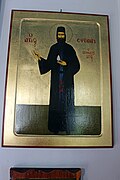 Ephraim of Nea MakriVenerable Martyr · Monk martyr of AtticaMay 5
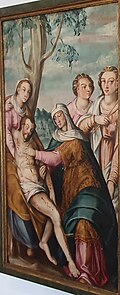 Irene of ThessalonicaMartyr · Martyr of ThessalonicaMay 5
 Adrian of MonzaVenerable · Founder of the Monza River monasteryMay 5
- LannoMartyrMay 5
- Matrona of HureziVenerable · Abbess of Hurezi MonasteryMay 5
- Gideon of SerpukhovVenerable · MonkMay 5
- Euthymius of MadytosSaint · Bishop of MadytosMay 5
- Amador, Pedro and Luis of MartosHoly MartyrsMay 5
- Amator of CórdobaHieromartyrMay 5
- Barlaam of SerpukhovVenerableMay 5