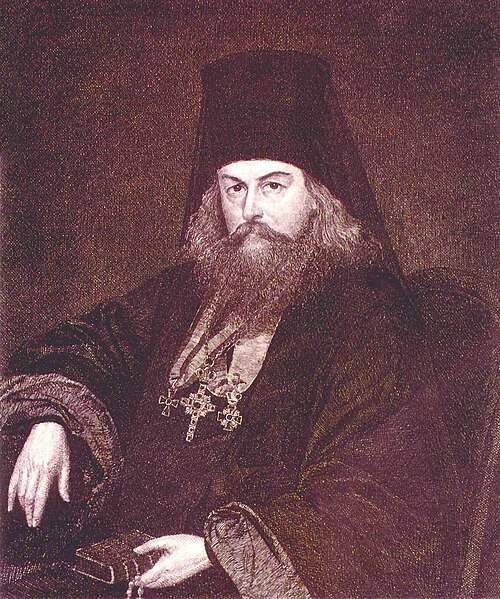
Saint
Ignatius Brianchaninov
Bishop and spiritual writer
Russian bishop and theologian, spiritual writer, retired to Babaevsky Monastery, who died in 1867.
Life
Saint Ignatius Brianchaninov (born Dmitry Alexandrovich Brianchaninov) was Bishop of the Caucasus and the Black Sea and one of the foremost spiritual writers of the Russian Church in the nineteenth century. He was born in 1807 into a noble family of the Vologda region and fell asleep in 1867 at the Nikolo-Babaevsky Monastery. The Church remembers him for his monastic life and for his writings on prayer and the spiritual life, written chiefly for monks but read also by lay people.
Youth and calling He was born in 1807 in the village of Pokrovskoe, into an old noble family, and received an excellent education. He studied superbly and had gifts for drawing and music; in the houses he frequented he met writers such as Pushkin and Krylov. But from childhood he was drawn to monastic life and spiritual reading. At his father's insistence he entered the Military Engineering School in St Petersburg in 1822. There he met monks from Valaam and from the Alexander Nevsky Lavra. Decisive for him was a meeting in 1826 with Hieromonk Leonid, the future elder of Optina.
He graduated with distinction in 1826, but his request to leave the army was refused by Emperor Nicholas I. That same year he fell gravely ill with tuberculosis and, despite the doctors' forecasts, recovered. In November 1827, with the rank of engineer-lieutenant and against his parents' wishes, he obtained his discharge on grounds of health.
Monastic beginnings He entered as a novice at the Alexander-Svirsky Monastery under the guidance of Father Leonid, and a year later followed him to the Ploshchansk hermitage. In 1829 he went with his friend Mikhail Chikhachev to Optina and then returned to Pokrovskoe. At the end of 1830 and the beginning of 1831 he stayed at the Semigorodnaya hermitage and wrote there The Lament of a Monk, a work that a contemporary could hardly believe to have been written by a youth barely of age.
On 28 June 1831 he was tonsured by Bishop Stephen of Vologda with the name Ignatius, in honour of the Holy Hieromartyr Ignatius the God-bearer. On 5 July he was ordained hierodeacon and on 20 July hieromonk.
Abbot and archimandrite At the end of 1831 he was appointed abbot of the Pelshma monastery in the Vologda region. In November 1833, by the emperor's command, he took charge of the derelict Trinity-St Sergius hermitage near St Petersburg. On 1 January 1834 he was raised to archimandrite, at the age of twenty-six. He organized a choir, for which Mikhail Glinka gave him advice, and in 1838 he was named supervisor of the monasteries of the St Petersburg diocese. For the Konevets monastery he built a harbour, workshops and other buildings. From 1847, ill with rheumatism, he spent a period at Nikolo-Babaevsky and then returned to the Trinity hermitage.
Bishop of the Caucasus In 1857 he was consecrated Bishop of the Caucasus and the Black Sea, with his see at Stavropol. He visited parishes and preached, introduced solemn services, set up a hierarchical choir, built a new residence, moved the seminary into new premises and watched over the life of the diocese. Because of illness, and according to some sources an outbreak of smallpox, he asked to be relieved, and in 1861 he withdrew to the Nikolo-Babaevsky Monastery near Kostroma to devote himself to writing.
Writings and veneration There he wrote much of his work: Ascetic Experiences, Ascetic Sermon and Letters to Laymen, An Offering to Contemporary Monasticism, and the Otechnik, books on prayer, on death and on the spiritual life, which have also been translated into English and Romanian. He fell asleep on 30 April 1867.
The Russian Church numbered him among the saints and hierarchs at its Local Council in 1988, and his relics were placed at the Tolga Monastery near Yaroslavl. Particles of them have been in Varna, Bulgaria, since 2005. His feast is kept on 30 April.
Commemorated the same day April 30
 James, son of ZebedeeApostle · Brother of John the TheologianApr 30
 Quirinus of NeussMartyrApr 30
 Erkenwald of LondonSaint · Bishop of LondonApr 30
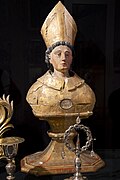 Eutropius of SaintesSaint · First Bishop of SaintesApr 30
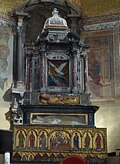 Donatus of EuroeaSaint · Bishop of Euroea in EpirusApr 30
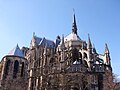 Maternianus of ReimsConfessor · Bishop of ReimsApr 30
- Pomponius of NaplesSaint · Bishop of NaplesApr 30
- Amator of Córdoba and CompanionsHoly MartyrsApr 30
- Anna JovanovichRighteousApr 30
- AphrodisiusHieromartyrApr 30
- ArgyraMartyrApr 30
- Augulus of ViviersSaintApr 30