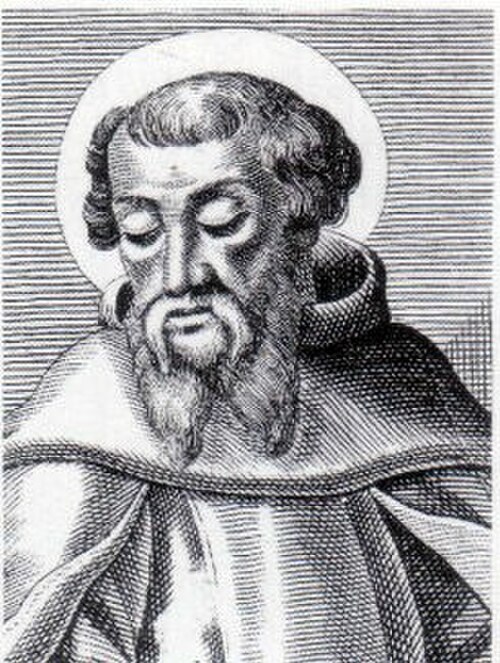
Hieromartyr
Irenaeus of Lyons
Bishop of Lyons
Greek bishop of Lyons in the second century, disciple of Polycarp and author of Against Heresies.
Life
The holy Hieromartyr Irenaeus of Lyons was bishop of Lugdunum (modern Lyons) in Gaul in the second half of the second century. A disciple of Saint Polycarp of Smyrna, he joins the Church of the Apostles to the Church of the following centuries, and his writings against the Gnostics remain a foundation of Christian theology. The Orthodox Church keeps his feast on 23 August.
Youth
He was born at Smyrna in Asia Minor, around 130 (the Greek Synaxarion gives 140), in a Christian family. He received a fine education in the learning of his day and was guided in the faith by Saint Polycarp, a disciple of the Apostle John. In his old age Irenaeus wrote to the priest Florinus that he remembered those days more clearly than recent events: the place where Polycarp sat, his manner of life, his talks to the people and his recollections of John and of others who had seen the Lord; he had written them, he said, not on paper but in his heart.
Priest and bishop at Lyons
According to the synaxarion life, Polycarp baptized him, ordained him priest and sent him to Lugdunum, where Bishop Pothinus was nearing death. In 177 the imprisoned confessors of Lyons sent him with a letter to Bishop Eleutherius of Rome about Montanism. While he was away a terrible persecution broke out, in which Bishop Pothinus died. On his return Irenaeus was chosen bishop, in 178. Saint Gregory of Tours says that by his preaching the whole of Lugdunum became a Christian city.
The struggle for the right faith
In his great work Against Heresies, in five books, written around 180, Irenaeus exposed the errors of the Gnostics, especially of Valentinus, who taught that matter is evil, that the Son of God is only an emanation, and that the world was not made by God himself. Against them he confessed that Christ became man in order to deify man, that the Old and New Testaments come from the same Spirit, that there are four Gospels, and that the truth is kept in the Scriptures, in the Tradition received from the Apostles, and in the teaching of the bishops who succeeded them without interruption. He also wrote the Demonstration of the Apostolic Preaching, preserved in Armenian and rediscovered in 1904.
When Bishop Victor of Rome wished to break communion with the Churches of Asia Minor over the date of Pascha, Irenaeus, in the name of the Christians of Gaul, wrote to Victor and others urging them to peace.
Martyrdom and veneration
The date of his death is not known. The Orthodox synaxaria say, following Gregory of Tours, that he was beheaded around 202 in the reign of Emperor Septimius Severus, but other sources have no sure testimony of a martyrdom. He was buried under the church of Saint John in Lyons, later renamed for him; the church was devastated by the Huguenots in 1562. Some relics attributed to him are kept in churches of Lyons, though two skulls were dated by radiocarbon to the Middle Ages, while a piece of heelbone in the cathedral is from the right period. The Orthodox Church commemorates him on 23 August, the Church of Rome on 28 June. In 2022 Pope Francis named him a doctor of the Church.
Commemorated the same day August 23
 Callinicus I of ConstantinopleSaint · Patriarch of ConstantinopleAug 23
- Zacchaeus of JerusalemSaint · Bishop of JerusalemAug 23
 Lupus of NovaeMartyr · Servant of Saint DemetriusAug 23
 Tydfil of MerthyrMartyr · Welsh martyrAug 23
 Asterius, Claudius and NeonHoly MartyrsAug 23
 John VostorgovHieromartyr · Archpriest, preacher and missionaryAug 23
- Cyriacus of OstiaHieromartyr · Bishop of OstiaAug 23
 Ephraim KuznetsovHieromartyr · Bishop of SelengaAug 23
- Anthony of GeraceSaintAug 23
 Nicholas VarzhanskyMartyrAug 23
- Antonios of SardisSaint · Bishop of SardisAug 23
- 38 Martyrs of ThraceMartyrAug 23