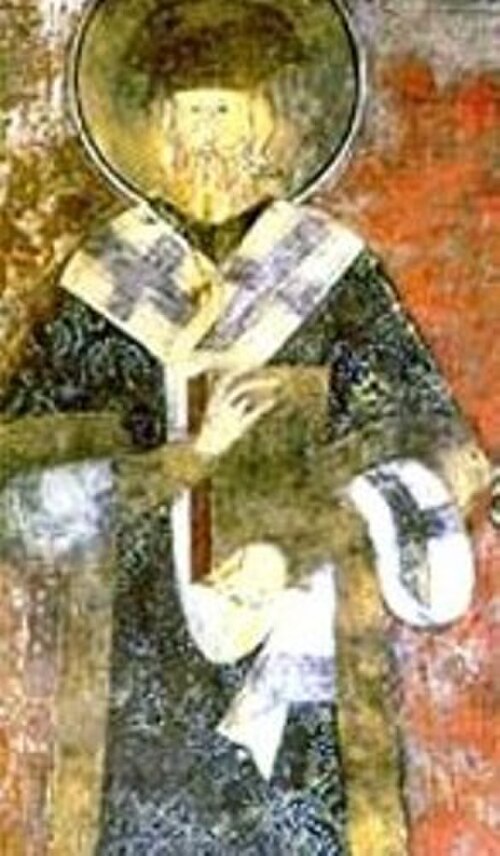
Saint
Joanikije II
Patriarch of Peć
Serbian archbishop from 1338 and first Patriarch of Peć from 1346 to 1354, formerly chancellor of the royal court.
- Feast
- September 3old style September 16
- Reposed
- 135414th century
- Place
- Prizren
- Order
- Hierarchs
Life
Saint Joanikije II was Serbian archbishop from 1338 to 1346 and then first Serbian Patriarch of Peć from 1346 to 1354, formerly logothete (chancellor) of the royal court of Serbia. He died on 3 September 1354 (16 September in the new style), his day of commemoration in the Serbian Church, and was buried in the patriarchal monastery of Peć.
Beginnings
He was born of pious parents in the neighbourhood of Prizren in Serbia. His family name is not known; one Bulgarian source says he was Bulgarian by birth. He served as logothete, chancellor, to King Stefan Uroš IV Dušan (1331-1346, then, as emperor, until 1355). After the death of Archbishop Danilo II, on 19 December 1337, he was elected Serbian archbishop by the church council on 3 January 1338. He continued the church work of his predecessors and had the monastery of Peć, the seat of the archbishops, built by Nikodim and Danilo I, adorned with icons, frescoes and other necessities.
Patriarch
In the 1340s King Dušan extended his rule deep into the Greek, Byzantine south. To crown him emperor he needed a patriarch, for only a patriarch could crown an emperor. In 1346 the king convened a council of church leaders, which declared the independence of the Serbian Church and raised it to a patriarchate. Joanikije was proclaimed patriarch, probably on Palm Sunday, 6 April 1346, with the help of the Bulgarian Patriarch Simeon of Tarnovo, Archbishop Nicholas of Ohrid, and the abbots and elders of Mount Athos. The date cannot be fixed exactly: it is assumed to have been between January and April 1346. The Serbian Church had been recognized as autocephalous since Saint Sava's diplomatic activity at Nicaea, and the council at Skopje thought it could proclaim the Serbian archbishop patriarch, "of all the Serbs and the coastal lands". After that, at Easter 1346 (16 April), Patriarch Joanikije anointed Dušan emperor of the Serbs and Greeks, with his wife Helena, and at the council of Skopje in 1349 he issued with him the important Serbian "Zakonik", which gave a legal basis to the Serbian empire and church. The see of Skopje became the first in the Serbian Church, followed by the archbishopric of Ohrid. New bishoprics were founded, among them Zletovo, and Serbian hierarchs were set over them. The patriarchs of Constantinople at that time, John Kalekas and Isidore, said nothing against it. Yet after the extension of Dušan's rule into the Greek lands and the entry of Greek dioceses and Mount Athos into the jurisdiction of the Serbian Church, and because of the illegality of his elevation to the patriarchate, the Ecumenical Patriarch Callistus I laid an anathema in 1350 on Dušan, on Joanikije and on the whole Serbian clergy; the anathema was lifted in 1375 through the efforts of Nikodim of Tismana.
Joanikije built many churches, among them two in the Holy Land: the church of Saint Elias on Mount Carmel and the church of the Transfiguration (or of Saint Nicholas, according to one source) on Mount Tabor.
His end
In autumn 1354, when the Hungarians attacked from the north, Emperor Dušan, who was setting out to fight, asked to meet Joanikije at the Žiča monastery. During his stay there Joanikije fell ill and asked, at his own wish, to be taken back to the patriarchate at Peć. He died on the way and did not arrive alive. His body was laid in the middle church of the patriarchate at Peć, the church of the Holy Apostles, where it remains today, and above the tomb his repose is painted. The Serbian Church commemorates him as a saint on 3 September in the old style, which now falls on 16 September in the new. A street in Belgrade bears his name, and he is the slava of the deanery of Stara Pazova in the diocese of Srem.
Commemorated the same day September 3
 PhoebeApostle · Deaconess of CenchreaeSep 3
 Anthimus of NicomediaHieromartyr · Bishop of NicomediaSep 3
 The 20,000 Martyrs of NicomediaHoly MartyrsSep 3
 Vasilissa of NicomediaMartyr · Child martyr of NicomediaSep 3
 Auxanius of MilanSaint · Archbishop of MilanSep 3
 Chrodegang of SéesSaint · Bishop of SéesSep 3
 John the Hairy of RostovFool-for-Christ · Fool for Christ of RostovSep 3
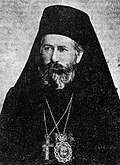 Joanikije LipovacHieromartyr · Metropolitan of Montenegro and the LittoralSep 3
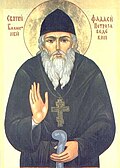 Thaddeus of PetrozavodskFool-for-Christ · Fool for ChristSep 3
 AristionHieromartyr · Bishop of Little AlexandriaSep 3
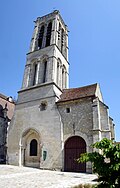 Rieul of ReimsSaint · Bishop of ReimsSep 3
 IndesMartyr · Eunuch of NicomediaSep 3