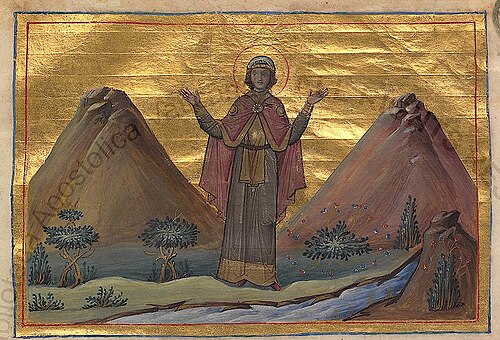
Martyr
Vasilissa of Nicomedia
Child martyr of Nicomedia
Young Christian girl of Nicomedia, put to death for her faith around the year 309.
- Feast
- September 3old style September 16
- Reposed
- 3094th century
- Order
- Martyrs
Life
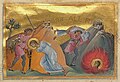
Holy Martyr Vasilissa of Nicomedia was a Christian girl of Nicomedia, put to death for her faith around the year 309, in the Great Persecution of Diocletian. She is venerated in the Orthodox Church and commemorated on 3 September by the old calendar. In the old Russian lives, until the eighteenth century, she is called Vassa or Vasilisa. The sources do not agree on her age: by one source she was 9 years old, by another she survived as a four-year-old the massacre at Nicomedia.
According to her life, she was denounced, seized and brought before the prefect of Nicomedia, Alexander. After vain attempts to persuade her to renounce Christ and bow to idols, the prefect ordered her subjected to torments. They struck her on the face, then stripped her and hung her head down by the feet, burning her from below with fire and smoking her with sulphurous fumes. The girl was thrown into a blazing furnace. Vasilissa, making the Sign of the Cross, entered the fire and came out unharmed. Then she was given to two hungry lions to be eaten, but remained unharmed. The prefect Alexander released her after the torments, himself believed in Christ, spent his life in repentance and died peacefully.
After the torments Vasilissa went out of the city and prayed, standing on a rock. At her prayer a spring of water burst from the rock. Beside that rock Vasilissa died in peace and was buried by Bishop Antonin (in the English source, Anthimus). The water of the spring gave healing to Christians. Another source says that she was tortured with fire and wild beasts but remained unharmed, that her tormentor, Alexander, seeing the wonders, repented and became a Christian, and that Vasilissa went out to a field, fell on her knees in prayer, thanking God for her endurance in the torments, and, while praying, received martyrdom. Two lives of hers survive: one anonymous and one composed by Nikephoros Gregoras.
Commemorated the same day September 3
 PhoebeApostle · Deaconess of CenchreaeSep 3
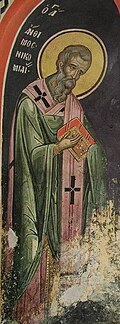 Anthimus of NicomediaHieromartyr · Bishop of NicomediaSep 3
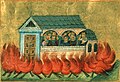 The 20,000 Martyrs of NicomediaHoly MartyrsSep 3
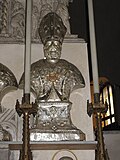 Auxanius of MilanSaint · Archbishop of MilanSep 3
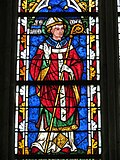 Chrodegang of SéesSaint · Bishop of SéesSep 3
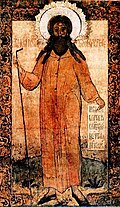 John the Hairy of RostovFool-for-Christ · Fool for Christ of RostovSep 3
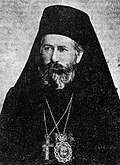 Joanikije LipovacHieromartyr · Metropolitan of Montenegro and the LittoralSep 3
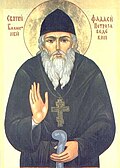 Thaddeus of PetrozavodskFool-for-Christ · Fool for ChristSep 3
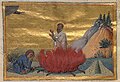 AristionHieromartyr · Bishop of Little AlexandriaSep 3
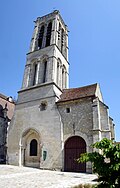 Rieul of ReimsSaint · Bishop of ReimsSep 3
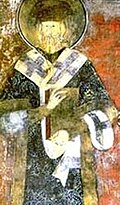 Joanikije IISaint · Patriarch of PećSep 3
 IndesMartyr · Eunuch of NicomediaSep 3