Righteous
John of Meniuga
A child saint of the Novgorod region, commemorated in the Russian calendar.
- Feast
- June 24old style July 7
- Era
- 16th century
- Order
- The Righteous
Life
Holy Righteous John of Meniuga, the child of Novgorod, is commemorated with his brother, James. They were the children of pious parents, Isidore and Varvara, farmers in a village of the Medvedsky churchyard, Novgorod province, in the time of the tsar and Grand Prince Ivan Vasilievich IV, under Saint Metropolitan Philip of Moscow and Archbishop Pimen of Novgorod, in the second half of the sixteenth century (around 1570). They are called children because an unexpected and extraordinary death overtook them in childhood: the elder was five years old, and the younger three.
On an autumn day Isidore, preparing to go with his wife to the usual work, slaughtered a ram, prepared it for food, and went with his wife to the field, near the house, leaving the children alone, without supervision. Seeing what the father had done with the ram and taking it for an ordinary game, they wanted to play the same way. The elder brother said to the younger: "Brother, let us do as our father did", and in his thoughtlessness, not foreseeing the evil consequences, he took a stick and struck his younger brother on the head, who fell to the ground at once and died. Seeing him dead, John was terrified and, not knowing what to do, hid like an infant in the stove, behind the wood placed there to dry because of the rainy autumn. Returning in the evening from work, the parents found the youngest dead and wept bitterly. Unable to find the elder anywhere, they redoubled their weeping, and the neighbours and relatives who gathered grieved with them and barely quieted at last. Then the mother lit the fire in the stove, as was the custom, not knowing that her son was hiding behind the wood. When the wood had burned down to embers and Varvara looked in, she saw her son dead, but whole and untouched by fire.
The Lord, knowing the innocence of the children, willed to glorify His Name in them, honouring their pure bodies with incorruption and numbering them among His saints: one as killed without guilt, the other as one who received for the killing of his brother a martyr's death by fire. Hearing his wife's cry, Isidore ran and, seeing too, was filled with terror. Relatives and neighbours gathered again, marvelled at this sign and glorified God. The news spread quickly and far, and the Name of God began to be glorified in other places also. After mourning their children, Isidore and Varvara clothed them in burial garments, put them in coffins and buried them by the Christian rite at the parish church of Saint Nicholas the Hierarch in the Medvedsky churchyard.
A few days after the burial, their coffins appeared floating on a small lake, two versts from the Meniuga monastery. This is how it became known. The peasants of the neighbourhood, who were used to hunting birds and beasts in the forests, once set out in the morning to return in the evening, but, losing their way, they returned neither that day nor the next. On the third day they came to the lake and saw two coffins floating. Examining them, they judged that they were the very coffins in which John and James had been buried a short time before. They began to ask the holy children to show them the way, and suddenly a small path appeared before them, by which they reached home. Telling everything to their neighbours, the priests of the surrounding churchyards, with their clergy and a multitude of people, went to the lake, saw the coffins and decided to carry them to the church of Saint Nicholas. But the hunters said that the holy children, appearing to them in a dream, wished to be buried not at the churchyard but in a deserted place on the Menyusha, where there had formerly been a monastery. The coffins with the relics were carried there and set with honour beside a small stream, and above them a chapel was soon built.
The Lord granted them the gift of wonderworking, and many of those who came to the coffins received healing of various ills. A monk, Macarius, who was going from Pskov to Novgorod past that place, was struck by a grave illness, without hope of recovery. He barely reached the relics of the saints, prayed with zeal and faith, and was healed at once. Full of gratitude, he stayed by the relics, resolved to do all he could to renew the Meniuga monastery. Telling the pilgrims of the healing he had received, he asked them to give for the building of a church, and he succeeded in building one above the relics with the gifts of the pilgrims. Later the men's monastery of the Holy Trinity at Meniuga was renewed. In the time of the tsars Ivan and Peter Alexeyevich, under Metropolitan Cornelius of Novgorod, the relics were examined and found whole and untouched, as they rest to this day, giving healings to all who come with faith.
The commemoration of the holy children John and James is kept on 24 June in the old style (7 July in the new style), the day on which by tradition they fell asleep. The page gives it also on 11 July, on a movable day, in the Synaxis of the Saints of Novgorod.
Commemorated the same day June 24
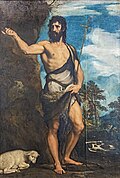 John the BaptistProphet · The ForerunnerJun 24
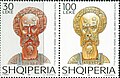 Nicetas of RemesianaSaint · Bishop of RemesianaJun 24
 Rumbold of MechelenMartyr · Missionary and martyrJun 24
 Mikhail II of TverRight-BelievingJun 24
 Athanasios PariosVenerable · Hieromonk and Teacher of the NationJun 24
 John the Hermit of BohemiaVenerable · First hermit of BohemiaJun 24
- Orentius, Pharnacius, Heros, Firmus, Firminus, Cyriacus and LonginusHoly Martyrs · The Seven Brothers of LazicaJun 24
- James and John of MenyugaHoly Right-Believing Rulers · Child brothers of NovgorodJun 24
- OrentiusMartyrJun 24
- Panagiotes of CaesareaNew MartyrJun 24
- Agilbert of CréteilMartyrJun 24
- Agoard and Aglibert of CréteilHoly MartyrsJun 24