
Hieromartyr
John Smirnov
Archpriest at Zaraysk
Archpriest of Saint Nicholas Cathedral at Zaraysk, who died a martyr at Moscow in 1937; canonized in 2000.
Life
Saint John Smirnov (1873-1937) the hieromartyr was an archpriest and rector of the cathedral of Saint Nicholas at Zaraysk in the Ryazan governorate. He was shot on 9 September 1937 and buried in an unknown common grave at the Butovo range near Moscow. He was numbered among the saints for veneration in the whole Russian Church by the Jubilee Council of 13-16 August 2000. He is commemorated on 27 August (9 September in the new style) and in the synaxes of the New Martyrs of Russia and of Butovo.
Family and ministry
He was born on 20 March 1873 in the village of Vysokoe, Mikhailov district, Ryazan governorate, in the family of the church servant Alexei Smirnov. In 1904 he graduated with distinction from the Ryazan theological seminary. With his father's support he was ordained priest in 1904 at the cathedral of Saint Nicholas in Zaraysk. He settled there with his family in a wooden house within the city kremlin. In the cathedral at that time was the famous wonder-working icon of Saint Nicholas of Zaraysk, which drew a multitude of pilgrims from all over Russia. Here were kept old handwritten and early printed service books, vessels of silver and gold, gifts of grand princes, voivodes and boyars. In summer Father John served in the summer cathedral of Saint Nicholas, in winter in the winter church of John the Baptist. At festal services up to a thousand pilgrims gathered. He was treasurer-member of the Zaraysk section of the diocesan school council (1912-1914). For his zeal as a pastor he was appointed rector of the cathedral, raised to archpriest and made dean of the churches of the Zaraysk district.
The struggle for the faith
In 1922 many valuables and icons were confiscated from the city's churches, some of which could be saved. On the proposal of the director of the local museum and member of the parish council I. P. Perlov, part of the precious vessels and ancient books were given to the museum for safekeeping. In 1928, by order of the authorities, the cathedral of Saint Nicholas and the church of John the Baptist were closed. Archpriest John was appointed to serve at the Transfiguration church in the same city and laboured for the reopening of the cathedral, collecting the signatures of the faithful on a petition to leave the cathedral as a working church.
In February 1930 the OGPU arrested Archpriest John Smirnov and with him members of the community, eleven in all, all held in Kolomna. At interrogation the investigators asked him about his attitude to Soviet power and to the closing of the cathedral, and the questions were put so that any answer could be used against him, so he answered as evasively as possible: that since June 1904 he had lived continuously in Zaraysk, that he belonged to no political current, that he held to the "old churchmen" (Tikhonites), that he was indifferent to the confiscation of valuables in 1922 and to the closing of the cathedral, that he viewed Soviet measures with sympathy, and that he pleaded guilty to nothing. On 30 April 1930 the OGPU "troika" sentenced him to three years of exile in the Northern Region. After his arrest the authorities first set up a museum exhibition in the cathedral of Saint Nicholas, but then the priceless vessels and ancient manuscripts were carried off and the NKVD archive was installed in the church. The church of John the Baptist was turned into a cinema.
The priest's wife, Zinaida Ivanovna, with five children, was evicted from the parish house. At first they wandered through the city, finding only temporary shelter. She begged, and the children did all kinds of work to survive. One morning Zinaida Ivanovna opened the door and found on the threshold a bundle of food, with no note. The same happened on the second day, the third and the following days, until one of the daughters found a steady job. They never learned who their benefactor was, but Zinaida Ivanovna always believed it was the help of Saint Nicholas.
The last arrest and martyrdom
After returning from exile, Father John was appointed rector of the Transfiguration church in Zaraysk. In 1937 the persecution of the Russian Church intensified. At the request of the authorities, secret informers began to collect information about priests returned from exile. One wrote of Father John that he had said that nothing written in the Soviet press can be believed, that Soviet power lives only on deceit, otherwise it would long have been overthrown, and that the people must have an infernal patience to bear such torments. The informer wrote that on 11 August, in the church of the Saviour in Zaraysk, before the service, Smirnov told the priests: "Soviet power is returning to the arrests of 1930; in Moscow they have arrested a bishop, John, and many priests. Here is the constitution, here is the inviolability of the person. We must not fear repressions, but stand firm at our post."
In mid-August 1937 the investigator questioned false witnesses, who signed statements drawn up for them. On 20 August the NKVD arrested Father John and held him in a prison of the Kolomna district. He was accused of "uttering vile slander of a counter-revolutionary character against Soviet power" and of "calling on the population to vote against the Communists in the elections to the soviets". At interrogation he said that the people themselves had complained of hard life, and that he had explained to them that they suffer their troubles on their own account and that the Lord sent them as a trial, as Orthodox. He admitted that on 11 August he had told the clergy present that arrests of clergy had begun in Moscow, among them Archpriest Lebedev, and that this was a warning to be more careful. He denied spreading slander about the Soviet press and did not plead guilty to counter-revolutionary agitation. Then he was taken to Moscow, to an NKVD prison. On 8 September the NKVD "troika" sentenced him to death, and Archpriest John Smirnov was shot the next day, 9 September 1937, and buried in an unknown common grave at the Butovo range near Moscow. In 1930 he had been awarded the mitre.
Commemorated the same day August 27
 Liberius of RomeSaint · Bishop of RomeAug 27
 Hosius of CordubaSaint · Bishop of CordubaAug 27
 Caesarius of ArlesSaint · Archbishop of ArlesAug 27
 Poemen the GreatVenerable · Desert FatherAug 27
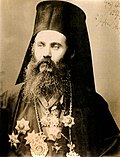 Chrysostomos of SmyrnaHieromartyr · Metropolitan of SmyrnaAug 27
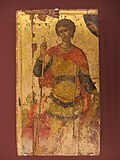 PhanouriosMartyr · the Newly RevealedAug 27
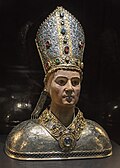 Lycerius of CouseransSaint · Bishop of CouseransAug 27
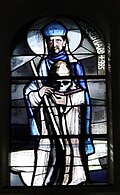 Gebhard of ConstanceSaint · Bishop of ConstanceAug 27
 NarnusSaint · First bishop of BergamoAug 27
 Kuksha of the Kiev CavesHieromartyr · Monk of the Kiev Caves LavraAug 27
 Rufus of CapuaMartyrAug 27
- Alexander TsitserovHieromartyr · PriestAug 27