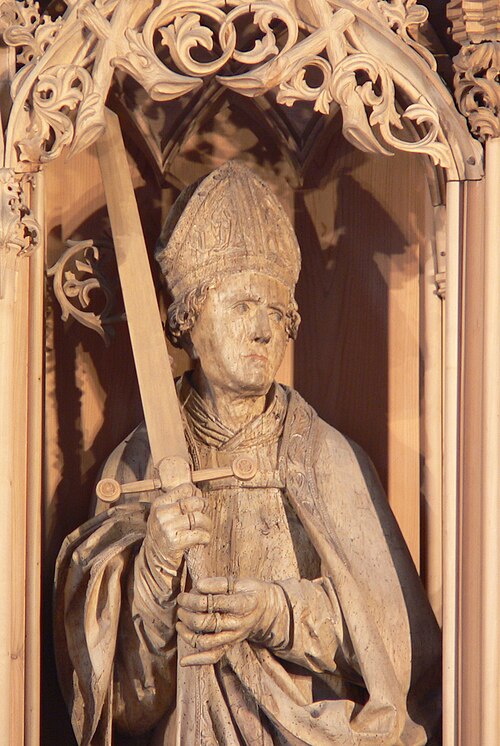
Hieromartyr
Kilian of Würzburg
Bishop of Würzburg
Irish missionary bishop, apostle of Franconia, martyred at Würzburg around 689.
Life
The holy hieromartyr Kilian of Würzburg was an Irish missionary bishop, called the Apostle of Franconia, killed at Würzburg around 689. He is commemorated on 8 July, and in the Orthodox calendars on 21 July.
Beginnings
According to the Irish sources, Kilian was born around 640 of noble parents, at Cloughballybeg, in the region of Cavan today. Some accounts say he was a monk at the renowned monastery of Hy, that is, Iona. He began his education at Rosscarbery and finished it at Tuosist. In the summer of 686 Kilian set out with eleven companions through Gaul for Rome, to receive from the pope the right to preach, and arrived in late autumn, meeting Pope Conon. From there they went to the stronghold of Würzburg, where Duke Gozbert ruled, still a pagan, like his people.
The mission
The group separated: some went to seek other lands, while Kilian remained at Würzburg with two companions, the priest Colman and the deacon Totnan, and made the town the base of his work, which spread ever wider in eastern Franconia and Thuringia. He brought to the faith Duke Gozbert, with a large part of his subjects.
Martyrdom
Kilian told the duke that he was violating Scripture, being married to his brother’s widow, Geilana. When Geilana, whom Kilian had not succeeded in bringing to Christianity, heard of his words against her marriage, she was so angry that, in the duke’s absence, she sent soldiers to the square in Würzburg, where Kilian and his companions were preaching, and had his head cut off, together with those of Colman and Totnan. About the circumstances of the death the accounts differ: according to Rabanus Maurus the order was given by Gozbert, according to others by Geilana.
Veneration
Burchard, set by Boniface as first bishop of Würzburg, built a cathedral on the spot where the martyrs are said to have died and unearthed their relics and buried them in a crypt of the cathedral. Their skulls, set with precious stones, are preserved to this day. On Saint Kilian’s day, a glass case with the three skulls is taken from the crypt, carried through the streets before a great crowd, and placed in the cathedral of Würzburg, which bears his name. Statues of the three stand on the Saints’ Bridge over the river Main. He is usually shown with a bishop’s mitre and the sword of martyrdom. He is patron of those suffering from rheumatism, of the parish of Tuosist in Kerry and of the city of Paderborn. The Kiliani festival, two weeks every July, is the greatest festival of the Würzburg region.
Commemorated the same day July 8
 Adrian III of RomeSaint · Bishop of RomeJul 8
 Edgar the PeacefulRight-Believing · King of EnglandJul 8
 Procopius of ScythopolisGreat Martyr · Reader and exorcist at ScythopolisJul 8
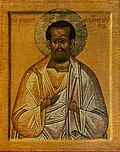 Procopius of UstyugFool-for-Christ · Fool for ChristJul 8
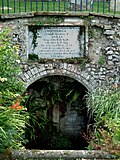 Withburga of DerehamVenerable · Abbess of DerehamJul 8
- Auspicius of ToulSaint · Bishop of ToulJul 8
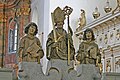 Colman of WürzburgHieromartyr · Irish missionary at WürzburgJul 8
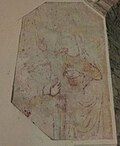 MorwennaVenerable · Saint of CornwallJul 8
 Procopius of UstiaRighteousJul 8
 Theophilus the Myrrh-streamerVenerable · AthoniteJul 8
- Epictetus and AstionHoly Venerable Martyrs · Martyrs of HalmyrisJul 8
- AbdaMartyrJul 8