Right-Believing
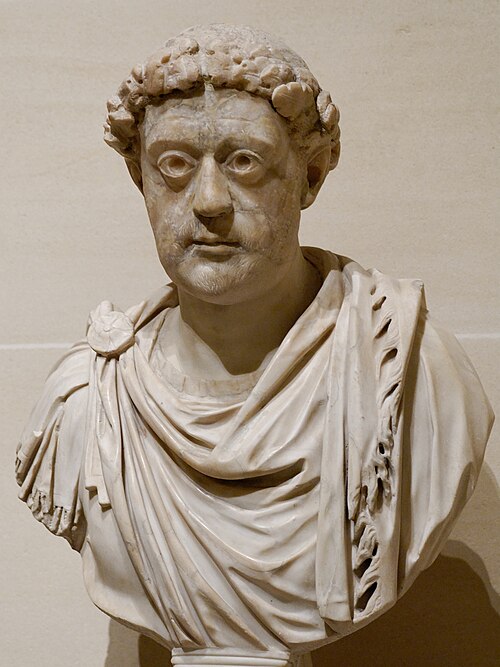
Leo I the Thracian
Byzantine Emperor
Emperor of the East from 457 to 474, a native of Thrace.
- Feast
- January 20old style February 2
- Reposed
- 4745th century
- Place
- Constantinople
Life
The Holy Right-Believing Emperor Leo I the Thracian was emperor of the Roman East from 457 to 474. He is also called Leo the Great, probably to distinguish him from his grandson Leo II, and Makelles, "the Butcher", a nickname from a rumour with no sure foundation. He was the first eastern emperor to legislate in Greek, not Latin, and the first crowned with a service of the Church. The Orthodox Church commemorates him on 20 January, new style (Churches keeping the old calendar observe it on 2 February).
Beginnings
He was born around the year 401, in Thrace or in the province of Dacia Aureliana, into a Thraco-Roman family. A Byzantine chronicler counts him of Bessian stock, a Thracian people. By rumour, he had been a butcher in youth, and in the capital the shop in which he sold meat with his wife, Verina, was shown for a long time, but there is no certainty about it. He entered the Roman army and rose to the rank of comes, a high officer.
Tradition also tells that, on 4 April 450, while he was a soldier, Leo walked through a grove near the Golden Gate of Constantinople, where there was an abandoned spring. He met a blind man, lost and weary, set him on the path and went to look for water for him. Then he heard a voice: "Leo, do not look for water far away, it is near." The voice commanded him to take water from the spring, give it to the blind man and put the mud from it on his eyes, telling him that he would learn who She was who had long hallowed the place, and that he would build a church there. The blind man received his sight, and the voice was the voice of the Mother of God. The icon of the Life-giving Spring (Zoodochos Pege) is linked with this.
Emperor
After the death of Emperor Marcian, the generals Aspar and Ardabur raised Leo to the throne, thinking they would rule through him. They were mistaken. His coronation, on 7 February 457, had a new character: after the military ceremony at the Hebdomon, Leo went to Hagia Sophia and laid his crown on the altar, and Patriarch Anatolius placed it on his head. The custom remained, in Constantinople and then in many Christian lands.
Meanwhile Leo surrounded himself with Isaurian soldiers, gave his daughter Ariadne in marriage to their leader, who took the name Zeno, and escaped the power of Aspar, who was killed in 471 together with his son Ardabur. Under him the Balkans were ravaged by Goths and Huns, but the walls of Constantinople, strengthened in the time of Theodosius II, held. At his court the young Theodoric, the future king of the Ostrogoths, was brought up.
In the West, Leo set Anthemius on the throne in 467. In 468 he sent against the Vandals in Africa a vast force, with over a thousand ships and nearly a hundred thousand men, but the expedition was defeated, through the poor leadership of his brother-in-law Basiliscus. The disaster emptied the treasury. The historian Malchus writes that Leo was burdensome by taxes and by seizing property, and tradition does not hide that his reign had shadows.
Defender of the right faith
Leo was ardent and strictly Orthodox. After the death of Marcian, the Monophysite Timothy Aelurus was elected bishop of Alexandria, in the early years of Leo's reign. Leo asked the opinion of the bishops of the East, removed him and set on the throne Timothy Salofaciolus, of right faith. In Antioch, the presbyter Peter the Fuller became patriarch in 469 or 470 and added to the Trisagion the words "who was crucified for us", which was regarded as a new form of Monophysitism. Leo and Patriarch Gennadius of Constantinople opposed it, and the Fuller was exiled to the Thebaid. By a decree of 31 March 465, only Orthodox Christians could work in the state service and in the courts. In 468 pagans were forbidden to be advocates, and in 472 a decree punished officers who allowed pagan sacrifices.
The robe of the Mother of God
In his days the robe of the Mother of God, found by pilgrims in the Holy Land, was brought to Constantinople. Leo and Patriarch Gennadius found it whole and venerated it. At Blachernae, by the sea, a new church was raised, and on 2 July 458 Patriarch Gennadius moved the holy relic there. The feast of the Deposition of the Honoured Robe of the Mother of God at Blachernae is kept in the calendar on 2 July. According to tradition, Leo cleaned the spring in the grove, raised there a church dedicated to the Mother of God and named it the "Life-giving Spring". Historians, however, say the church was renewed later by Justinian.
Repose and veneration
In October 473 Leo made his grandson, Leo II, the son of Ariadne and Zeno, co-emperor. He died of dysentery at Constantinople on 18 January 474, at the age of seventy-three. His grandson died in the same year, and the throne passed to Zeno.
Leo is commemorated on 20 January in the Greek synaxarion as a right-believing emperor and defender of Orthodoxy. The saint is less known than other holy emperors, and his veneration is more a remembrance of one who protected the faith, raised churches and gave the Church the order of coronation.
Commemorated the same day January 20
 Euthymius the GreatVenerable · Abbot in PalestineJan 20
 Euthymius of TarnovoSaint · Patriarch of BulgariaJan 20
 Theodore Kuzmich of TomskRighteous · Elder of SiberiaJan 20
 Inna, Pinna and RimmaHoly MartyrsJan 20
AbadiosMartyrJan 20
 Euthymius of the Kiev CavesVenerable · Schemamonk of the Kiev CavesJan 20
 Bassus, Eusebius, Eutychius and BasilidesHoly Martyrs · Martyrs of NicomediaJan 20
- Aenna ua LaighsighSaintJan 20
- Anna of RomeMartyrJan 20
- Basilides of NicomediaMartyrJan 20
- CronanSaintJan 20
- Ecca mac H-Uca of LethcainSaintJan 20