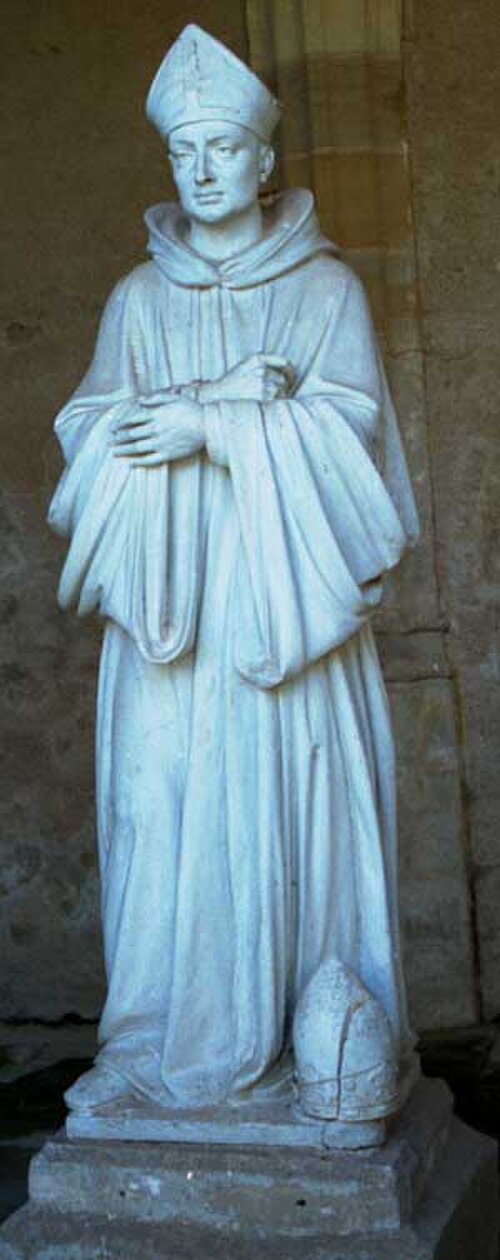
Venerable
Majolus of Cluny
Abbot of Cluny
Abbot of Cluny, reposed in 994.
- Feast
- May 11old style May 24
- Reposed
- 99410th century
- Place
- Cluny
- Order
- Venerables
Life
Saint Majolus of Cluny (Maieul, Mayeul) was the fourth abbot of the monastery of Cluny in France, born around 906 and reposed on 11 May 994. He reformed many monasteries, advised emperors and popes, and is commemorated on 11 May; some also keep his memory on 29 April together with four other early abbots of Cluny.
His father, Fulcher, came from a wealthy family of Avignon, and his mother was called Raimodis. Around 916 he fled the family estates because of the feudal wars and settled with relatives at Mâcon. His parents died while he was young. He studied the liberal arts at Lyon, became a canon, then archdeacon of Mâcon, and was ordained priest there. He taught a crowd of clerics free of charge and had built a small oratory across the river where he retired to pray. He was kind, never lied, slandered or flattered. When Besançon needed a bishop many called on him, but he refused.
During a famine, as he prayed for those begging for food, seven gold coins appeared before him. Fearing a trick of the enemy, or lost money, he would not touch them, but when he learned that no one claimed them he used them to buy food for the starving.
He then entered Cluny, where Aymard was abbot and made him armarius, keeper of the books and master of ceremonies, and later librarian. A story tells that on the road back from Rome his companion fell ill; Majolus stayed three days beside him, and on the third night dreamed of a white-haired old man who reminded him of the apostle James's command for the sick. He woke, anointed the monk with holy oil, and the monk recovered. The event was told at Cluny and the brothers held him in greater veneration.
Around 948 he became coadjutor to Abbot Aymard, who had gone blind and proposed him as successor. Majolus refused, but then dreamed that Saint Benedict told him to accept the charge. About 954 he became abbot. Under him Cluny II was built, from 955 to 981, after the Hungarian raids of 953. Relics of the apostles Peter and Paul are said to have been brought to Cluny during his abbacy.
In 972, returning from the imperial court at Pavia, monks of his company were captured by the Arabs of Fraxinet. A ransom was quickly raised, but the people of Provence then rose against the raiders, and Count William defeated them at Tourtour, opening the Alpine passes.
The emperor Otto I and his wife Adelaide of Burgundy esteemed him. In 971 he founded the monastery of San Salvatore in Lombardy with Adelaide's help. In 974 Adelaide and Otto II summoned him to Italy to make him pope, but he refused. Around 980 at Pavia he helped reconcile Otto II with his mother.
He reformed many German monasteries at Otto the Great's request and took charge of others, among them Sant'Apollinare in Classe near Ravenna, San Giovanni Evangelista in Parma, Romainmôtier and Saint-Germain at Auxerre. Under him the network of monasteries depending on Cluny began to take shape, to be carried on by Odilo and Hugh. His two Lives, by the monk Syrius and by Odilo, describe him as a man of prayer and solitude who did good in secret, always read on journeys, spoke little, disliked honours, ate what the powerful ate at their table, and wore clothes neither shabby nor costly.
The Lives attribute many healing miracles to him. He is buried at the priory of Souvigny, beside Odilo.
Commemorated the same day May 11
 Cyril and MethodiusHoly Equal-to-the-Apostles · Apostles to the SlavsMay 11
 Rastislav of MoraviaRight-Believing · Prince of MoraviaMay 11
 Mamertus of VienneSaint · Bishop of VienneMay 11
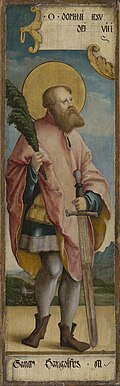 Gangulphus of BurgundyMartyrMay 11
 Mocius of AmphipolisHieromartyr · Priest of AmphipolisMay 11
 Anthimus of RomeHieromartyr · Priest of RomeMay 11
 Nikodim I of PećSaint · Archbishop of the SerbsMay 11
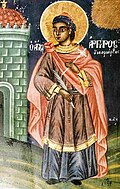 Argyrios of EpanomiNew MartyrMay 11
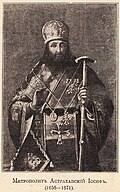 Joseph of AstrakhanHieromartyr · Metropolitan of AstrakhanMay 11
- Nepotian of AltinumVenerableMay 11
- Blessed KristesiaSaintMay 11
- OlympiaMartyrMay 11