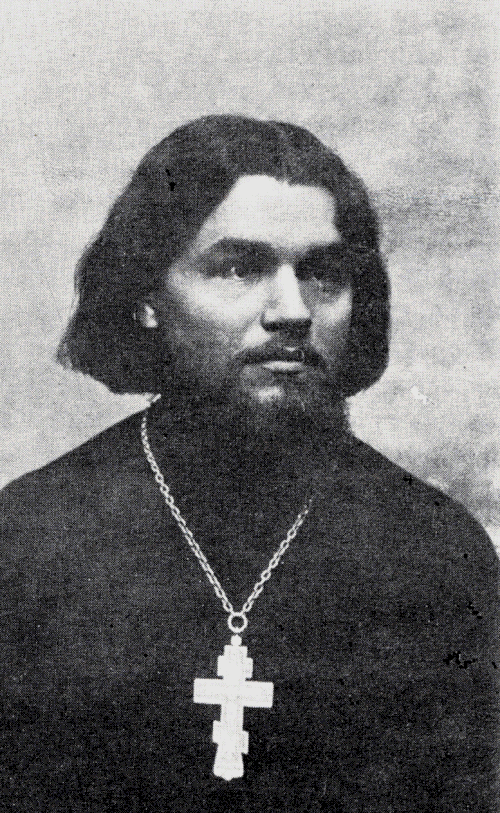
Hieromartyr
Maxim of Gorlice
Priest of Gorlice
Orthodox priest born in 1888, killed at Gorlice in August 1914 at the start of the First World War; canonized as a new martyr.
Life
Saint Maxim of Gorlice, Hieromartyr, in the world Maxim Timofeyevich Sandovich, an Orthodox priest of Lemko country, was killed at Gorlice at the start of the First World War, in September 1914. He was canonized by the Polish Orthodox Church in 1994 and is regarded as the first martyr of the Lemko people. He is remembered on 6 September (24 August on the old calendar).
Childhood and calling
He was born on 1 February 1886 (in one source, 1888) in the village of Zdynia in Lemkovyna, in Austrian Galicia, into a Greek-Catholic peasant family. His father, Timothy, owned a farm and was a chanter in the local Greek-Catholic church of the Protection of the Mother of God, and his mother, Christina, kept house. He finished the four-class school in Gorlice, then attended the gymnasium at Jasło and at Nowy Sącz. Among his classmates he stood out for religiosity and planned to enter a monastery. Because of poor results he had to leave high school after the fourth class. Without his parents' consent he then entered the novitiate of the Basilian monastery at Krekhiv, but after three months, in 1904, he left, disappointed with the spiritual level and general atmosphere of the monastery. His disappointment with the Greek-Catholic Church came from the fact that by the beginning of the twentieth century the Greek-Catholic monasteries and seminaries of eastern Galicia, with the help of the Austrian and Polish administrations, had turned into centres of Ukrainian propaganda, and the admission to the seminaries of people of traditional Russophile orientation had been made difficult; such an atmosphere, established by Metropolitan Andrey Sheptytsky, was unacceptable to Maxim, a firm supporter of all-Russian unity.
In Russia
In the same year he went to Russia, where high-school study was not required for those wishing to enter the Orthodox seminary or to receive ordination. He entered the Pochaiv Lavra as a novice and worked in the monastery's printing house. There he was noticed by Archbishop Anthony (Khrapovitsky) of Volhynia and Zhytomyr, one of the coordinators of the work of spreading Orthodoxy in Galicia. The archbishop attached great importance to drawing into mission people from Galicia, who were to receive theological education in Russia and then return to their own as preachers of Orthodoxy, often paying for their studies himself. So Maxim too was able to be educated in Russia, with a scholarship given by the archbishop, and Anthony counted him his spiritual disciple and sent him to the seminary at Zhytomyr. Even before finishing, on a family visit, he was offered the duties of pastor of an Orthodox parish at Hrab, where the inhabitants had converted en masse from the Greek-Catholic faith. According to some scholars the initiator of the conversion was he himself, who, in agreement with the Uniate priest Theodor Durkot of Zdynia, advised the peasants of Hrab to settle their conflict with the local priest by founding an Orthodox parish, and offered to serve. When he asked for a passport to return to Russia to study, he was arrested for eight days; after his release he crossed the border illegally and returned to Zhytomyr. In 1911 he graduated from the seminary with the best results of his year, married Pelagia Hryhoruk, daughter of an Orthodox priest, and, on 11 September 1911, was ordained priest by Archbishop Anthony, who sent him to serve the Lemkos.
Ministry and arrests
Maxim served in several Lemko villages, where the people were returning to the old faith, among them Hrab. He was repeatedly persecuted and imprisoned by the Austro-Hungarian authorities. In 1912 he was arrested and taken to Lviv, accused of spying for the Russian Empire, with another priest, Ignatius Hudyma, and two Russophile students, Koldra and Bendasiuk; he was defended by the lawyer Kyrylo Cherliunchakevych. Testimonies survive that the police and administration forced peasants to testify against the accused. The investigation lasted nearly two years, which they spent in the Lviv prison, and ended in the summer of 1914 with the acquittal of all. With the start of the First World War he was arrested again, accused of spreading Russian propaganda.
Martyrdom and veneration
On 6 September 1914 Austrian soldiers (Captain Dietrich) killed him in the back yard of the court at Gorlice, without trial, before the eyes of Father Joseph and of his wife, who was pregnant. His last words were: “Long live the Rusyn people and holy Orthodoxy.” (in another source: “Long live holy Orthodoxy, long live holy Russia”). His wife was imprisoned in the Talerhof camp, where their son, also Maxim Sandovich, was born. His fellow in pastoral work, Ignatius Hudyma, was sent to Talerhof too, where he lost his mind. On 7 July 1994 the Council of Bishops of the Polish Orthodox Church canonized him as hieromartyr, with the name “Maxim of Gorlice,” after the place of death. On 10 September 1996 he was entered in the calendar by the Russian Church Outside Russia, on 3 April 2001 in the list of saints of Galicia by the Ukrainian Orthodox Church, on 22 November 2006 in the list of Carpatho-Russian saints and on 20 July 2012 in the list of saints of Volhynia. A new iron Russian cross was placed on his grave. On 24 December 2015 the Holy Synod of the Russian Church entered his name in its calendar, with commemoration on 6 September. In 2007 his relics were moved from the family cemetery.
Commemorated the same day August 24
 Ouen of RouenSaint · Bishop of RouenAug 24
 Kosmas the AetolianVenerable Martyr · Missionary and teacher of the GreeksAug 24
 Peter of MoscowSaint · Metropolitan of Kyiv and MoscowAug 24
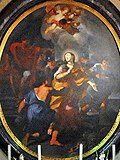 Aurea of OstiaMartyr · Patron of OstiaAug 24
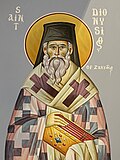 Dionysios of ZakynthosSaint · Archbishop of AeginaAug 24
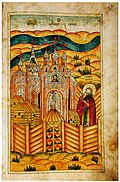 Arsenius of KomelVenerable · Founder of Arseniev Monastery at KomelAug 24
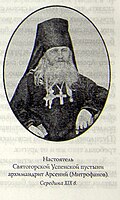 Arsenius of SviatohirskVenerable · Abbot of Sviatohirsk MonasteryAug 24
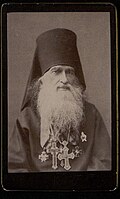 Herman of SviatohirskVenerable · Abbot of Sviatohirsk MonasteryAug 24
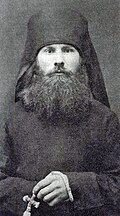 Seraphim ShakhmutHieromartyr · ArchimandriteAug 24
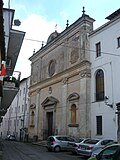 Ptolemaeus of NepiHoly Hieromartyrs · Bishop of NepiAug 24
- Serapion the WonderworkerVenerableAug 24
- AgofridusVenerableAug 24