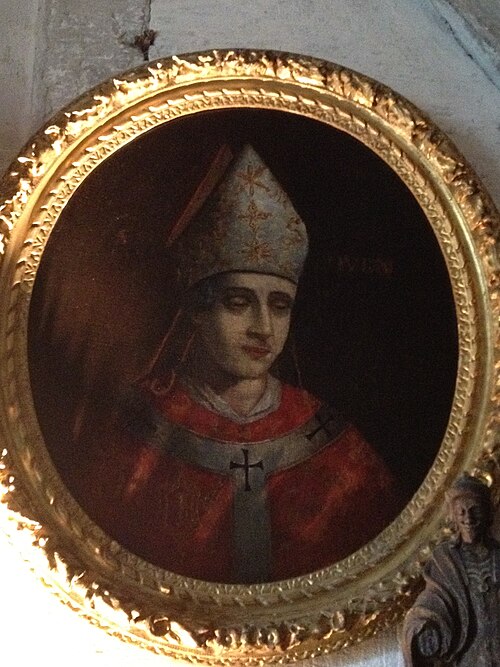
Saint
Ouen of Rouen
Bishop of Rouen
Frankish bishop of Rouen, courtier and hagiographer, author of the Life of St. Eligius, his friend; died 684.
Life
Saint Audoin of Rouen, known in French as Ouen, was bishop of Rouen in the seventh century, an official at the court of the Merovingian kings and the author of the Life of Saint Eligius, his close friend. He passed to the Lord on 24 August 684, at Clichy near Paris. He is venerated mainly in the West and commemorated on 24 August.
Youth and the court
Audoin was born about 600 to 609, in a wealthy Frankish family, with estates in the valleys of the Seine and the Oise. He grew up at Ussy-sur-Marne and studied at the abbey of Saint-Médard at Soissons, and according to some sources also received guidance from Saint Columbanus and Saint Faro. Then he entered the service of the court of Chlothar II, where young nobles received training in arms and letters. Under Dagobert I he was a referendary, that is, an official of the chancery, and under Clovis II he remained in the same office and became counsellor of Queen Bathilde.
He belonged to a group of young courtiers, among them Wandrille and Desiderius of Cahors, and was a close friend of Eligius. The two were royal envoys to persuade Amandus to baptise the son of Dagobert. One historian calls Audoin and Eligius the most influential churchmen in Francia in the seventh century.
In 634 he was ordained priest, and the next year, 635 (according to other sources 636), he founded with his brothers Ado and Rado the abbey of Rebais, on land given by King Dagobert, and made his kinsman Agilus its abbot. He also took part in the founding of the monastery of Saint-Wandrille and of a convent at Fécamp. According to one historian, he spent a year in missionary exile in Spain, just before becoming bishop.
Bishop of Rouen
In 641 he succeeded Romanus on the throne of Rouen. In 644 he held a synod at Chalon-sur-Saône against simony, supported missions among the pagans remaining in his diocese and helped the growth of monasteries, consecrating churches at Fontenelle and elsewhere. He promoted theological studies and took part in the fusion of the rule of Saint Columbanus with that of Saint Benedict. During the regency of Queen Bathilde he was one of her first counsellors. Later he advised Theuderic III and supported the policy of Ebroin, the mayor of the palace, to such a degree that he was involved in the mistreatment of Leodegar.
About 675 he made a pilgrimage to Rome, visited the holy places, gave alms to the poor and gathered relics for Rouen. After the death of Ebroin, in 681, he went to Cologne and succeeded in bringing peace between Neustria and Austrasia.
Death and writings
He died shortly after, on 24 August 684, at the royal villa at Clichy. He was buried in the church of Saint Peter at Rouen, which he had built himself (today Saint-Ouen). His successor, Ansbert, moved him behind the high altar, which was equivalent to a canonisation. The Life of Saint Eligius, written by him, is regarded as one of the most authentic historical monuments of the seventh century and a precious source on the moral and religious education of that time. In the tenth century Frithegod wrote a poem on the life of Audoin, now lost. The Roman Martyrology commemorates him on 24 August.
Commemorated the same day August 24
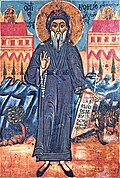 Kosmas the AetolianVenerable Martyr · Missionary and teacher of the GreeksAug 24
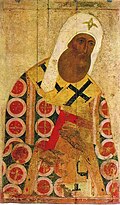 Peter of MoscowSaint · Metropolitan of Kyiv and MoscowAug 24
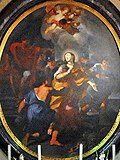 Aurea of OstiaMartyr · Patron of OstiaAug 24
 Maxim of GorliceHieromartyr · Priest of GorliceAug 24
 Dionysios of ZakynthosSaint · Archbishop of AeginaAug 24
 Arsenius of KomelVenerable · Founder of Arseniev Monastery at KomelAug 24
 Arsenius of SviatohirskVenerable · Abbot of Sviatohirsk MonasteryAug 24
 Herman of SviatohirskVenerable · Abbot of Sviatohirsk MonasteryAug 24
 Seraphim ShakhmutHieromartyr · ArchimandriteAug 24
 Ptolemaeus of NepiHoly Hieromartyrs · Bishop of NepiAug 24
- Serapion the WonderworkerVenerableAug 24
- AgofridusVenerableAug 24