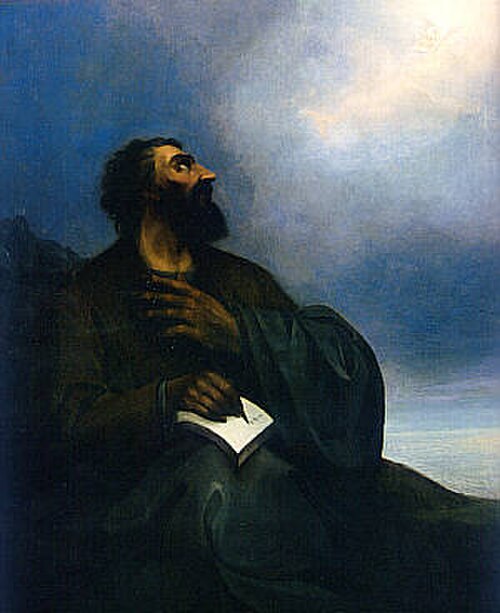
Saint
Mesrop Mashtots
Creator of the Armenian alphabet
Armenian theologian and scholar who devised the Armenian alphabet and began Bible translation.
- Feast
- February 17old style March 2
- Reposed
- 4405th century
- Place
- Vagharshapat
Life
Mesrop Mashtots was an Armenian scholar, monk and missionary of the fifth century, the creator of the Armenian alphabet and the founder of Armenian literature and schooling. He is honoured as a saint by the Armenian Apostolic Church. He lived before the Council of Chalcedon, when the Church was still undivided, and the sources consulted show no commemoration of him in the Byzantine calendars. By putting Holy Scripture into the language of his people, he laid the foundation of Armenian Christianity.
Beginnings
He was born around 361 or 362 in the village of Hatsekats (Hatsik) in the district of Taron, near Lake Van. His father was called Vardan. Nothing is known of his mother, and scholars are divided on whether his father was a priest or a man of standing. His biographer Koriun usually calls him Mashtots, while later historians, beginning with Movses Khorenatsi, call him Mesrop.
He received a good education in a Greek-language school and came to know, besides Armenian, Greek, Persian and Syriac. Around 385 he moved to Vagharshapat, the capital, and entered the service of the court of King Khosrov IV as scribe and secretary of the royal chancery. The sources add that he also served in the army and was loved by his soldiers. The country was passing through hard times: in 387 Armenia had been divided between Byzantium and Persia.
The hermit of Goghtn
Around 394 or 395 he left the court, received the monastic tonsure and withdrew to the mountains, living a severe life as a hermit. He is said to have gathered a band of disciples and set out to preach in the district of Goghtn, in the valley of the Araxes, where many Armenians were still pagan. He worked with the blessing of Catholicos Sahak Partev and with the help of local nobles.
The great difficulty was language. Scripture and the services were in Greek or Syriac, understood by few, and Mesrop had to read and interpret on the spot, since without him the people understood nothing. So he came to judge that the Gospel could not take root without an Armenian script.
The Armenian alphabet
With the support of Catholicos Sahak and King Vramshapuh, an assembly of bishops was held at Vagharshapat and resolved to work toward a script of their own. From Mesopotamia came the so-called letters of the Syrian bishop Daniel. Mesrop used them for about two years to teach children, but they did not fit the sounds of Armenian.
So, with the approval of the king and the catholicos, he set out with disciples for Mesopotamia, to Amida, Edessa and Samosata. He seems to have studied the alphabets of other languages and worked with the Greek calligrapher Rufinus, who gave the letters their final form. Around 405 the alphabet of thirty-six letters was ready, one letter for each sound, written from left to right as in Greek. Two more letters were added much later, in the Middle Ages. According to tradition the first sentence written in them was the opening of the Proverbs of Solomon: To know wisdom and instruction, to perceive the words of understanding.
Koriun compared Mesrop's return to Armenia with the descent of Moses from Mount Sinai, and the work of Mesrop and Sahak with that of the four Evangelists. Some medieval Armenian sources also credit Mesrop with the Georgian and Caucasian Albanian alphabets, which scholars still debate.
Schools and translations
On his return Mesrop founded at Vagharshapat the first higher school of Christian Armenia, and then schools in many districts, where reading, church chant and Scripture were taught. He preached in Goghtn, in Syunik and elsewhere, and around 420 he went to Constantinople, to Emperor Theodosius II, from whom he obtained leave to open Armenian schools in the Byzantine part of the country.
The first Armenian Bible was translated at first from the Syriac text. Later, disciples sent to Edessa, Constantinople and other centres of learning brought back Greek copies, and the Bible was translated again from the Septuagint, a work completed around 434. The decrees of the first councils, the liturgy and works of the holy Fathers were also translated. Among his disciples Koriun, Yeznik of Kolb, Movses Khorenatsi and John Mandakuni stood out. It is also said of Mesrop that he helped prisoners and debtors and that he wrote church hymns (sharakans), which Armenian tradition preserves.
Last years and repose
In 428 the Persians abolished the Armenian kingdom and removed Catholicos Sahak, and Mesrop was left almost alone for a long time. Sahak passed to the Lord in 439, and Mesrop outlived him by only a few months, after a short illness. He fell asleep on 17 February 440 at Vagharshapat. The ruler of Armenia, Vahan Amatuni, and Amayak Mamikonian buried him with honour in the village of Oshakan, where a church was raised over his tomb in 443. It stands there still.
Veneration
Mesrop Mashtots is a saint of the Armenian Church, and the Roman Catholic Church lists him in the Roman Martyrology on 17 February, the day of his passing. The Armenians recall his name in the Liturgy, and one source gives 19 February as the day of his feast. In Yerevan his name is borne by the Matenadaran, the great collection of ancient Armenian manuscripts, and in 1993 the Armenian state founded the Order of Saint Mesrop Mashtots. For the Armenians he is the teacher who gave his people writing, and through writing a living faith in their own tongue.
Commemorated the same day February 17
 MarcianRight-Believing · Byzantine EmperorFeb 17
 Theodore the RecruitGreat Martyr · of AmaseaFeb 17
 Hermogenes of MoscowHieromartyr · Patriarch of MoscowFeb 17
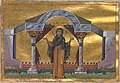 MariamneApostle · Sister of the Apostle PhilipFeb 17
 Barnabas of GethsemaneVenerable · Hieromonk of Gethsemane SketeFeb 17
 Theodore the SilentVenerable · Monk of the Kiev CavesFeb 17
- Theodore of ByzantiumNew MartyrFeb 17
- Michael MavroeidisNew MartyrFeb 17
- Theodore AvalianiSaintFeb 17
- Finan of LindisfarneSaint · Bishop of LindisfarneFeb 17
- Agathangelos of FlorinaNew MartyrFeb 17
- Auxibius of SoliSaint · Bishop of SoliFeb 17