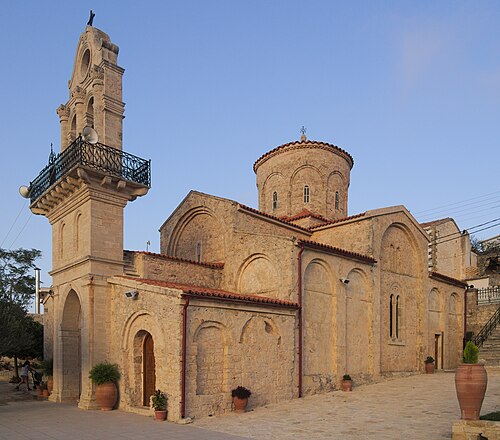
Saint
Myron of Crete
Archbishop of Crete
Bishop of Rhaukos, then archbishop of Crete, called the wonderworker; he lived in the third century under Decius.
Life
Saint Myron, called the Wonderworker, was a bishop of Rhaukos and then archbishop of Crete. According to the sources, he was born at Aurakia near Knossos, lived in the time of the emperor Decius (third century) and died in the year 350 at the age of a hundred. He is commemorated on 8 August.
He was a farmer, married young, and shared his surplus with the poor; his mercy was known far and wide. The Greek source tells that, finding thieves stealing food from his estate, he helped them carry the sacks, saying that to steal they must have been in truly great need. Another source says that he came upon them on his threshing floor and helped them lift a sack onto their shoulders, and the thieves were so ashamed that they began to lead honest lives.
Ordained a priest, he zealously taught the people the Gospel. In the persecution under Decius he strengthened Christians to stand firm in martyrdom. After the death of the emperor and the end of the persecution he was chosen bishop of Crete; the sources call him bishop of Rhaukos or of Knossos, and then archbishop of the island. As bishop he established the commemoration of the martyrs who had suffered for Christ.
His life records many miracles. He is said to have stopped the flood of the river Triton, crossed it as on dry land, and commanded it to flow again in its bed. Although some texts call him a martyr, he seems to have died a natural and peaceful death. According to tradition, his holy body gave off a fragrance like myrrh. The sources do not agree on the time: Decius reigned from 249 to 251, so death in 350 at a hundred remains an uncertain dating, and the Greek source places him in the fourth century.
The village of Rhaukos was renamed Agios Myron, Saint Myron, in his honour. His tomb is one of the most venerated places of pilgrimage in Crete, with a great festival each year. An English source says that Saint Neot named a village in Cornwall after him and that Eynesbury in Huntingdonshire purportedly acquired the saint's body a hundred years after his death. The Serbian Church commemorates him on 8 August by the Julian calendar, that is 21 August by the Gregorian.
Commemorated the same day August 8
 Severus of VienneSaint · Priest at VienneAug 8
- Gregory of SinaiVenerable · Hesychast monkAug 8
 Eusebius of MilanSaint · Archbishop of MilanAug 8
 Gregory the IconographerVenerable · Icon painter of the Kiev CavesAug 8
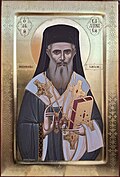 Kallinikos of EdessaSaint · Metropolitan of EdessaAug 8
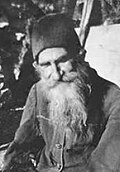 Jacob of TumanVenerable · Monk and doctor of lawAug 8
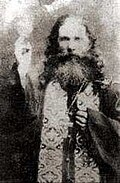 Theodosius of the CaucasusVenerable · HieroschemamonkAug 8
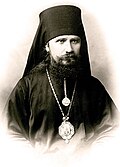 Nikodim KrotkovHieromartyr · Archbishop of Kostroma and GalichAug 8
 Alexandru BaltagăNew MartyrAug 8
- Triantaphyllos the MartyrNew MartyrAug 8
 Zosimus of TumanVenerable · Sinaite hermitAug 8
- Ekvtime of GarejiSaintAug 8