Venerable
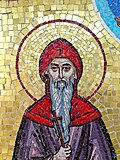
Gregory of Sinai
Hesychast monk
Monk and spiritual writer from Smyrna, who spread hesychasm on Mount Athos in the early fourteenth century.
- Feast
- August 8old style August 21
- Reposed
- 134614th century
- Place
- Paroria Monastery
- Order
- Venerables
Life
Saint Gregory of Sinai was a monk, spiritual writer and teacher of the prayer of the mind, who renewed the Jesus Prayer on Mount Athos at the start of the fourteenth century. He came from Asia Minor, near Smyrna, and fell asleep in 1346. The Church remembers him on 8 August.
He was born in the late 1260s, in the village of Kukulos, or according to other sources at Clazomenae near Smyrna, into a well-off family. In his youth he was taken captive by the Turks and ransomed by Christians of Laodicea, who were deeply moved by the church hymns the captives sang. He then went to Cyprus, where he was tonsured a monk, and then to Mount Sinai, where he received the great schema and lived severe ascetic labours, whence his name, the Sinaite. He served as cook and baker, copied books with a calligrapher's skill, and laboured in fasting, vigil, prayer and the reading of Scripture. The strictness of his life astonished some and stirred envy in others, so he left Sinai and visited Jerusalem, then Crete, where he learned the way of stillness, hesychia, from a monk named Arsenios.
In 1310 he came to Mount Athos and stayed until 1335, at the skete of Magoula near the Philotheou monastery. According to his Life he found there only three monks who knew true stillness, among them Saint Maximus of Kapsokalyvia. He made a cell for the prayer of the mind together with the hard labour of the monk, and spread the teaching of the prayer of the mind in cells and monasteries. His teaching was strict and at times clashed with the old order of communal life. When Turkish raids made life hard on Athos, he left with disciples for the Bulgarian Empire, under the protection of Tsar Ivan Alexander, and founded a monastery near Paroria in the Strandzha mountains. Many disciples came, Greeks and Bulgarians. Among them were Saint Kallistos, later Patriarch of Constantinople, who wrote his Life around 1351, Saint Theodosius of Tarnovo, Romylos of Vidin, Gregory the Younger, Gerasimos of Euripos and Saint Nicodemus of Tismana, honoured also in Wallachia.
He fell asleep on 27 November 1346 in the mountains of Paroria, near present-day Zabernovo in Bulgaria. His writings are in the Philokalia, in five works: commandments and doctrines, chapters on the signs of grace and delusion, on stillness, and on prayer. His teaching became a foundation of Byzantine mysticism of the fourteenth century. Saint Gregory Palamas was, in the view of some, his disciple in spirit.
Commemorated the same day August 8
 Severus of VienneSaint · Priest at VienneAug 8
 Eusebius of MilanSaint · Archbishop of MilanAug 8
 Gregory the IconographerVenerable · Icon painter of the Kiev CavesAug 8
 Kallinikos of EdessaSaint · Metropolitan of EdessaAug 8
 Jacob of TumanVenerable · Monk and doctor of lawAug 8
 Theodosius of the CaucasusVenerable · HieroschemamonkAug 8
 Nikodim KrotkovHieromartyr · Archbishop of Kostroma and GalichAug 8
 Alexandru BaltagăNew MartyrAug 8
- Triantaphyllos the MartyrNew MartyrAug 8
 Zosimus of TumanVenerable · Sinaite hermitAug 8
 Myron of CreteSaint · Archbishop of CreteAug 8
- Ekvtime of GarejiSaintAug 8