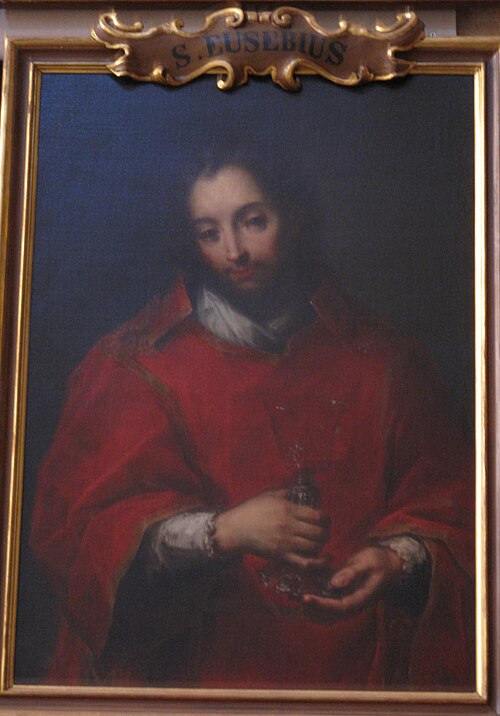
Saint
Eusebius of Milan
Archbishop of Milan
Archbishop of Milan from 449 to 462, honored as a saint.
Life
Saint Eusebius was archbishop of Milan from 449 until his death, in 462. He is honoured as a saint, above all by the Catholic Church. Our sources do not agree on his day of commemoration: one gives 12 August, others 8 August, and our calendar 8 August.
The bishop
According to the writings of Ennodius, bishop of Pavia in the early sixth century, Eusebius was a Greek. It seems that he took part, as bishop of Milan, in a synod held at Rome in 449 which condemned the teaching of Eutyches. Surely it was to him that a letter of Pope Leo the Great was addressed, brought to Milan in 451 by Abundius, bishop of Como, and by a senator, who were returning from Constantinople to northern Italy. The pope commanded him to gather a synod to hear the report of the envoys on their mission in the East and to sign the Tome sent by the pope to Flavian of Constantinople, by which Leo condemned the monk Eutyches and his teaching on the union of the two natures of Christ. In 451 Eusebius gathered a provincial council at Milan, attended by eighteen bishops, by one source twenty. The pope's letter was read, the Tome to Flavian was read, the pope's envoys were heard, and the teaching of Eutyches was condemned. A synodal letter was drawn up, signed by all the bishops present, with Eusebius first, in which the bishops approved the teaching of the Tome as agreeing with Holy Scripture and pronounced anathema against those who hold another teaching.
The invasion of the Huns and the rebuilding
The chief political event of his episcopate was the invasion of Italy by the Huns, led by Attila, in 452. The Huns laid waste Aquileia, then moved east and sacked many cities, among them Padua. They entered Milan too, where Attila occupied the imperial palace and set fire to a large part of the city, destroying also the cathedral of Saint Thecla. Eusebius, with many citizens, fled from the Huns and left the city. They returned to Milan only when Attila was persuaded by Pope Leo to withdraw. Eusebius led the rebuilding of the city, among other things of the cathedral, which was re-consecrated in 453 by Maximus II, bishop of Turin, who on this occasion gave the homily De reparatione ecclesiae mediolanensis. According to an inscription, perhaps of the eighth century, found at Milan in the church of Saint Thecla, Eusebius is responsible for the rebuilding of the cathedral, destroyed by flames, probably in 452.
His repose and commemoration
Eusebius died on 8 August, probably in 462, and was buried in the basilica of Saint Lawrence the Great in Milan. The Catalogue of the archbishops of Milan puts it on 9 August, in an unknown year, and reckons his rule at seventeen years, between Lazarus and Gerontius. One of the poems of Felix Ennodius, written before 521, is dedicated to him, and the bishop of Pavia calls him a friend of God and praises his charity, piety and justice. A later tradition, with no historical basis, links him with the Milanese family of the Pagani.
Commemorated the same day August 8
 Severus of VienneSaint · Priest at VienneAug 8
- Gregory of SinaiVenerable · Hesychast monkAug 8
 Gregory the IconographerVenerable · Icon painter of the Kiev CavesAug 8
 Kallinikos of EdessaSaint · Metropolitan of EdessaAug 8
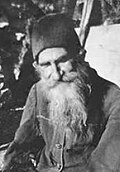 Jacob of TumanVenerable · Monk and doctor of lawAug 8
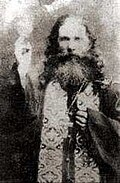 Theodosius of the CaucasusVenerable · HieroschemamonkAug 8
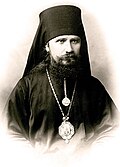 Nikodim KrotkovHieromartyr · Archbishop of Kostroma and GalichAug 8
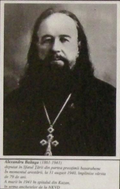 Alexandru BaltagăNew MartyrAug 8
- Triantaphyllos the MartyrNew MartyrAug 8
 Zosimus of TumanVenerable · Sinaite hermitAug 8
 Myron of CreteSaint · Archbishop of CreteAug 8
- Ekvtime of GarejiSaintAug 8