Martyr
Natalia Karikh
Christian woman martyred for the faith of Christ.
- Feast
- September 10old style September 23
- Reposed
- 194220th century
- Order
- Martyrs
Life
Holy Martyr Natalia Karikh (Natalia Semyonovna Karikh, 1885-1942), churchwarden of the church of the Archangel Michael in the village of Romanovo, was born on 18 August 1885 in the village of Romanovo, Lebedyan district of Tambov province, to the peasants Semyon Ivanovich and Anastasia Grigorievna Desyatykh. On 9 November 1903 she married Sergei Alipievich Filonov, who died of consumption on 24 March 1904, and Natalia returned to her parental home. On 8 November 1904 she married a second time, Andrei Feofilaktovich Ustinov; they had five children: Vera, Pelagia, Marina, Andrei and Nicholas. About the 1920s she was widowed again. In Romanovo there lived the widower Mikhail Evdokimovich Karikh, with five children from his first marriage. They had known each other from childhood and lived near each other; Natalia Semyonovna moved into Karikh's house, leaving her own house to her grown children, and married for the third time. From this marriage she had two children: Ivan (born 1925) and Pyotr (1927).
In 1933 she became churchwarden of the church of the Archangel Michael. In September 1937 the priest who served at their church was arrested, and Natalia Semyonovna began to look for another priest, so that the people should not be left without services, and the faithful gathered signatures on a petition that the authorities should not close the church. Meanwhile news spread that the authorities nevertheless intended to close it. As the authorities sometimes carried through decisions to close churches by means of meetings, the faithful awaited each meeting in the village with great anxiety. The meeting tied to the elections to the Supreme Soviet was fixed for 6 December 1937. At the meeting Natalia Semyonovna begged the peasants to stand up for the church and help find a priest. The same day, under NKVD order no. 00447, a case was begun against the churchwarden and the members of the church "twenty".
A witness, the head of the reading hut, said that at the meeting where "The rights and duties of citizens of the USSR" according to Stalin's constitution were discussed, the churchwarden of Romanovo said, "We have nothing to say about this, every day you talk about elections, let us talk about the church, we, who pray, have come here to settle the question of the church, we need a priest." The members of the "twenty" began to shout, "Give us a priest," and the reading of the report had to be interrupted. At the end Karikh asked for the floor and said, "You say that life is good now. Nothing of the kind. Soviet power deceives the people, it has taken everything from them; before, in the old time, life was better, people had cattle, were masters of themselves. I used to weave for myself and clothe the family, everyone had clean shirts, and now there are none, we have come to where there is not even kerosene. See what Soviet power has brought us to, and you deceive us." She also said that we must go to church and pray to God: "As soon as the elections to the Supreme Soviet are over, we shall certainly bring a priest and go to church." A woman witness said the next day that Karikh had made a plainly anti-Soviet speech, saying that "Soviet power and you, pointing to the representatives from the district, deceive the people; the only consolation of the people is the church, and that you want to close, but you will not succeed." Another said that Karikh had said not to give up the keys of the church.
On 10 December 1937 the authorities arrested Natalia Semyonovna, in the group case "The case of the nuns Andreeva, Saprunova and others, village of Romanovo, Lipetsk region, 1937". At the interrogation she said that she did not admit guilt, that at the meeting of 6 December she had been in the club but had done nothing anti-Soviet, and that on that day she had gone round the members of the church "twenty" and proposed that they come to the meeting, since the agent of the district committee had told her to gather them. The village council sent the NKVD a reference on her, in which it wrote that until 1933 she was a peasant, that she then entered as churchwarden of the Romanovo church and was assessed a fixed task, and for failing to fulfil it, as churchwarden, a non-working element, an individual tax. She was sentenced and sent to a camp. In 1942 she was arrested in the camp, in the group case "The case of Evdokia (Andrianova) and 11 other prisoners, Akmolinsk, 1942", accused of counter-revolutionary activity, with anti-Soviet agitation, covered by religious convictions, and on 20 April 1942 the criminal judicial collegium of the Karaganda regional court, in the Akmolinsk branch of Karlag, sentenced her to death. She did not admit guilt. The sentence was carried out; the place of burial is not known. On 30 May 1989 she was rehabilitated by the procurator's office of the Lipetsk region, for the year 1937, and on 14 April 1993 by the law of the Republic of Kazakhstan, for the year 1942. She is commemorated with the Synaxis of the Saints of Lipetsk, on 23 September, with the Synaxis of the New Martyrs and Confessors of the Russian Church (a movable day) and with the Synaxis of the New Martyrs and Confessors of Kazakhstan.
Commemorated the same day September 10
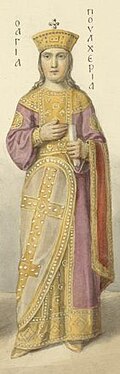 PulcheriaRight-Believing · Empress of ByzantiumSep 10
 Aubert of AvranchesSaint · Bishop of AvranchesSep 10
 Salvius of AlbiSaint · Bishop of AlbiSep 10
 Menodora, Metrodora and NymphodoraHoly Martyrs · Virgin martyrsSep 10
 Benjamin of the Kiev CavesVenerable · Monk of the Kiev CavesSep 10
 Palladius PopovHieromartyr · Priest of IzhmaSep 10
 Victor of ChalcedonMartyr · SoldierSep 10
 Tatiana GrimblitMartyr · NurseSep 10
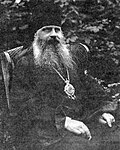 Juvenaly MaslovskyHieromartyr · Archbishop of RyazanSep 10
- Sophia of SicilyMartyrSep 10
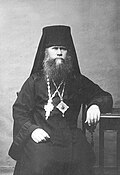 Varus ShmarinHieromartyr · Bishop of LipetskSep 10
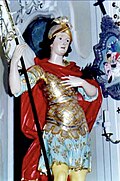 Sosthenes of ChalcedonSaintSep 10